What Was Toyotomi Hideyoshi Famous For?
Toyotomi Hideyoshi rose from peasant origins to unify Japan and built the first Osaka Castle. Who he was, what he did, and why 2026 has put him back at the centre of the castle.
What Was Toyotomi Hideyoshi Famous For?
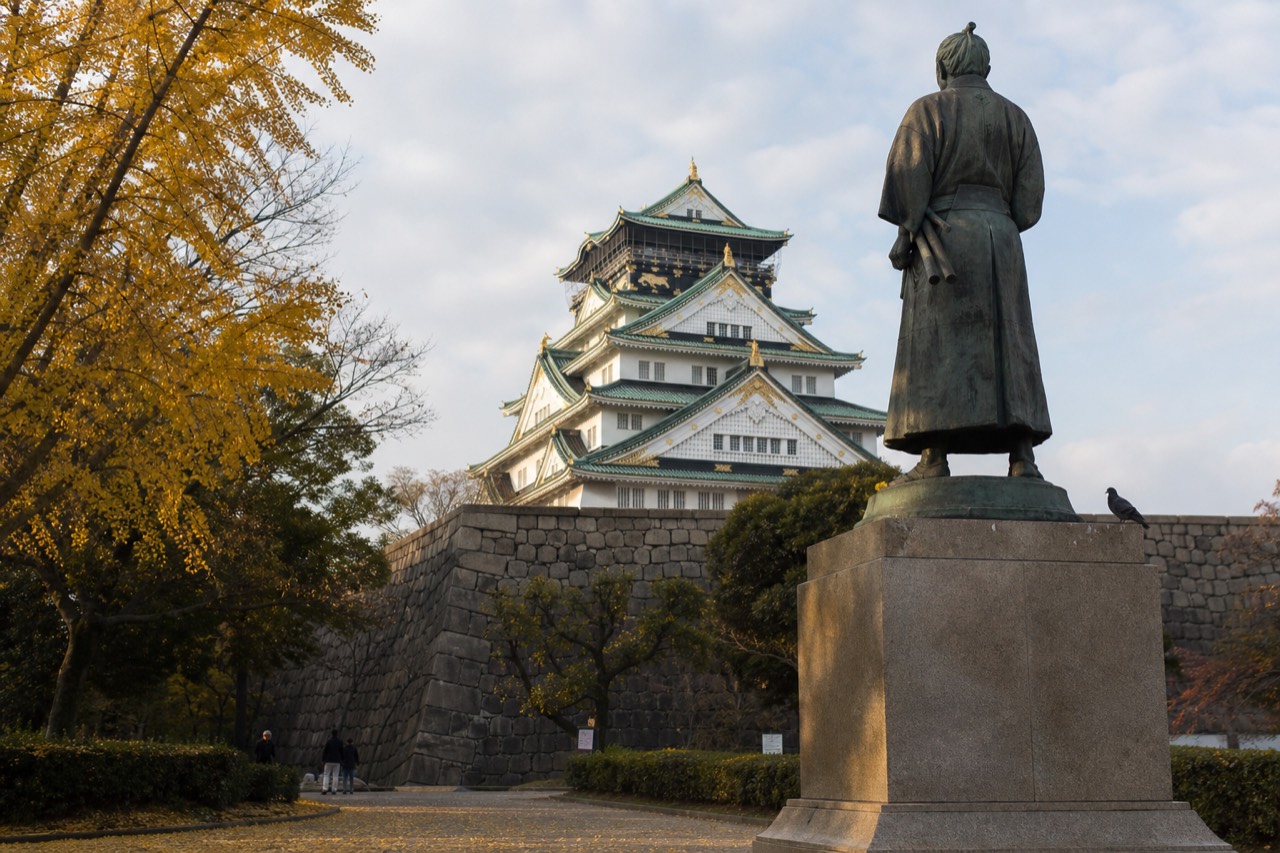
Toyotomi Hideyoshi is famous for three things: rising from a peasant family to the supreme power in Japan, completing the unification of a country that had been at war for a century, and building Osaka Castle in 1583 as the centre of that power. Every visit to the castle today is a visit to his site, even though almost nothing of his castle survives above ground.
The scale of the jump is what makes him famous. He was born in what is now Nakamura-ku in Nagoya, the son of a peasant foot soldier, at a time when Japan's warrior class was broadly hereditary and social climbing was close to impossible. He entered service under Oda Nobunaga as a sandal-bearer and minor laborer, and by Nobunaga's death he was one of the most powerful commanders in the country. Within a decade he had finished what Nobunaga started: the whole of Japan answered to him.
The castle is the other half of the answer. Hideyoshi chose Osaka deliberately. He took the site of the fortified temple complex of Ishiyama Honganji, which had withstood a decade of siege, and decided that Osaka, not the capital, would be the base from which he unified the country. The castle he built there was, according to the park's own official history, four to five times the scale of the present castle, with a gold-gleaming keep at the centre of the honmaru, and it took about fifteen years to finish.
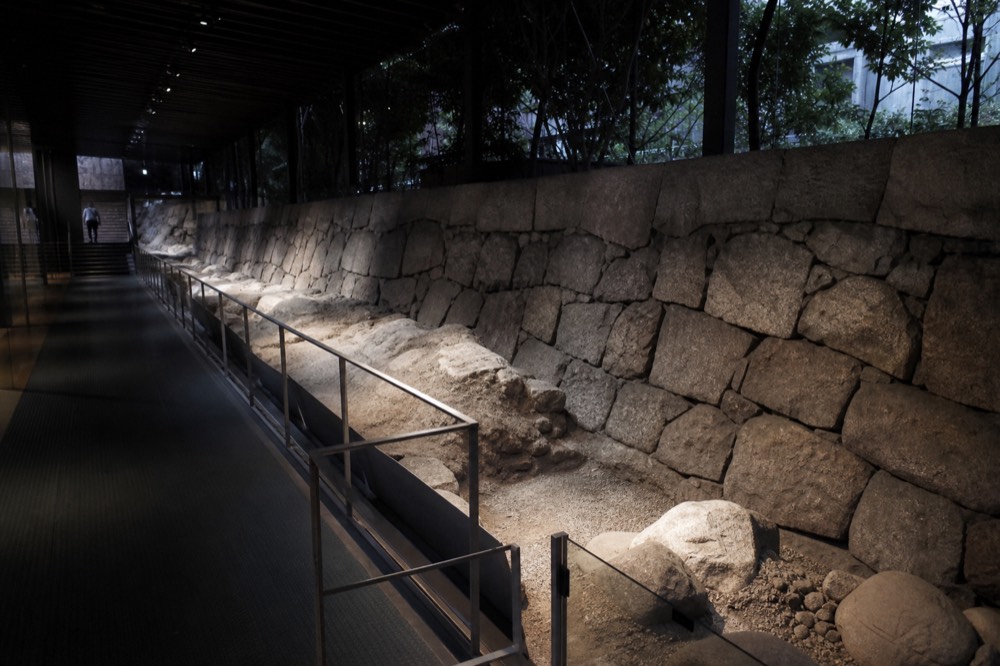
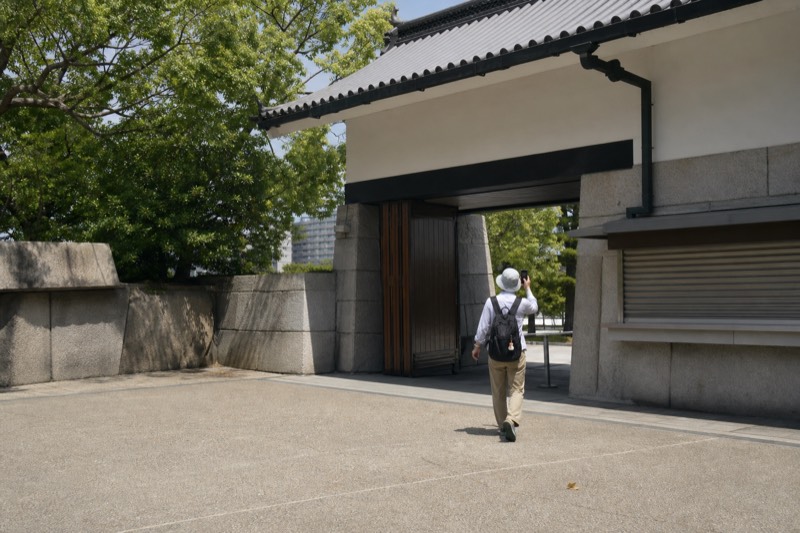
If you are standing in the park reading this, the ground under your feet is layered with his story. When the Tokugawa shogunate destroyed the Toyotomi house in 1615 and rebuilt the castle, it buried Hideyoshi's castle under a mass of fill, and the Toyotomi-period stone walls cannot be seen above ground anywhere. The one place you can now walk down to a surviving section of them is the Osaka Castle Toyotomi Stone Wall Museum, which opened on 1 April 2025 inside the honmaru and is included in the ordinary Main Tower ticket.
Two of the most common ways visitors engage with that story in person are a guided walk of the grounds and an entry ticket for the tower itself, so here they are side by side:
How Did A Peasant's Son Come To Rule Japan?
Hideyoshi's rise ran through Oda Nobunaga's service, from sandal-bearer to siege engineer to general, and then through a lightning succession after Nobunaga's assassination that gave him control of the dead man's domains. He spent years defeating or co-opting every remaining rival, until no one in Japan could challenge him.
The steps themselves are worth listing, because the pattern explains the man: he never stopped converting service into rank, and rank into territory.
| Stage | Event in Hideyoshi's rise |
|---|---|
| Origins | Born to a peasant family in Owari Province, near modern Nagoya, son of a peasant foot soldier |
| Nobunaga's service | Enters Oda Nobunaga's service as a sandal-bearer; rises from menial roles to officer and commander |
| The succession | Nobunaga is betrayed and killed; Hideyoshi avenges him at Yamazaki and inherits the initiative |
| The regency | Appointed imperial regent (kampaku), governing through court legitimacy as well as force |
| Unification | The siege of Odawara completes the unification of Japan |
Two things in that table matter to a castle visitor. First, the regency: Hideyoshi held the ancient court office of kampaku, the emperor's chief advisor, which meant he governed through legitimacy as well as force. Second, the sequence: Osaka Castle was begun in 1583, before the unification was finished, because Hideyoshi needed a headquarters before he needed a monument.
His personal style became part of the legend. He was short, restless, famously talkative, and a collector of nicknames, which is a whole story in itself covered in why Hideyoshi was called a monkey. He was also a builder on an obsessive scale: castles, roads, cadastral surveys that measured every rice field in the country, and a nationwide sword hunt that disarmed the peasantry.
What Did Hideyoshi Actually Build At Osaka Castle?
Hideyoshi's Osaka Castle was enormous, roughly four to five times the scale of the castle you see today, with a gold-decorated keep at the centre of the honmaru and stone walls that contemporaries regarded as the greatest in Japan. When finished it was four to five times the scale of the present castle, and its keep stood on a three-tier platform.
The keep itself was around 40 m above the tsumenomaru surface, according to the castle museum's own curatorial column on the comparative heights of the three towers, with its top at roughly 70 m elevation. That made it about 19 m lower than the Tokugawa tower that replaced it, but height alone understates it: the museum's column notes that Hideyoshi's keep stood on the three-tier structure of the shitanodan, nakanodan and tsumenomaru, which is why it earned the contemporary epithet "unrivalled within the three kingdoms".
The interior of the tsumenomaru, the private quarters at the core, is where Hideyoshi and his wife One lived, and later Yodo-dono and their son Hideyori. That is the wall you can now see in the Stone Wall Museum, discovered in 1984 about 1 m below the current surface. The wall that protected those quarters is the one on display, and the Tokugawa fill that hid it was about 6 m deep at the nakanodan tier, per the museum's own English leaflet.
Visitors often want to know which parts of the current castle are his. The honest answer is none of the visible buildings: everything above ground today is the Tokugawa rebuild or later, which is covered in detail in is Osaka Castle a replica. The walls, the moats, the keep, all of it postdates him. What survives of Hideyoshi's castle is below the surface, which is exactly why the Stone Wall Museum matters.
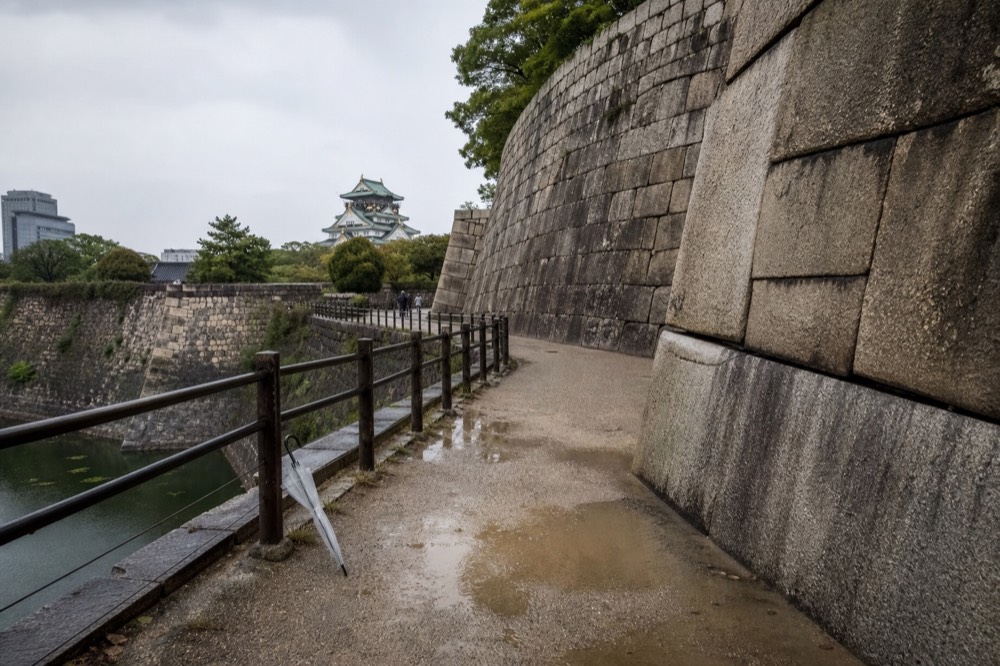
A guided walk of the grounds is one of the better formats for this particular story, because the evidence is distributed: the scale of the walls, the depth of the moats, the position of the gates and the buried original all read as a sequence when someone walks you through them. The tour runs 1.5 to 3 hours with a live English-speaking guide, in private or small-group form, and its base price does not include tower admission, so if you want to see the Stone Wall Museum as well, pick an option that bundles entry.
What Happened To Hideyoshi And His Clan?
Hideyoshi died in 1598, leaving a young son, Hideyori, as his heir, and the regency he designed to protect the boy collapsed almost immediately. The Toyotomi house was destroyed at the Summer War of Osaka in 1615, the castle burned, and the direct line of the clan ended. The Tokugawa shogunate then buried the castle under fill and rebuilt it.
The endgame is one of the great reversals in Japanese history, and it played out on the site the present park occupies. After Hideyoshi's death, Tokugawa Ieyasu outmaneuvered the other regents, won the decisive battle of Sekigahara, and spent the following years manoeuvring the young Hideyori into a corner. The Winter War of Osaka damaged but did not destroy the castle; the Summer War of 1615 ended it, with the Toyotomi side dying in the burning keep.
What the shogunate did next is the detail that still shapes a visit today. It rebuilt the castle from 1620 over roughly ten years, using large-scale earth fill across the whole site to raise the ground and bury the Toyotomi castle, new stone walls and deepened moats, and a keep 15 m taller than the previous one. The official park history is blunt about the intent, describing the burial as being done as if to erase the authority of the Toyotomi family. That is why the rediscovered walls in 1959 and 1984 were described as a "mysterious underground stone wall": nobody had officially forgotten that Hideyoshi's castle existed, but nobody could see it either.
from $7.69 The from-price you see online and the price at the castle window are the same adult admission, so booking ahead costs nothing extra.
Your ticket into the tower
Official E-Ticket
- Osaka Castle Main Tower entry
- Osaka Castle Toyotomi Stone Wall Museum
- QR code entry
- Valid 30 days
- No fixed time slot
- No viewing time limit
Buying the official e-ticket ahead saves you the ticket-purchase line, not money, since the online price matches the window. You exchange nothing at the gate, you simply show the voucher and go in.
The real flexibility here is the voucher's 30-day validity, with no fixed time slot and no set viewing time limit.
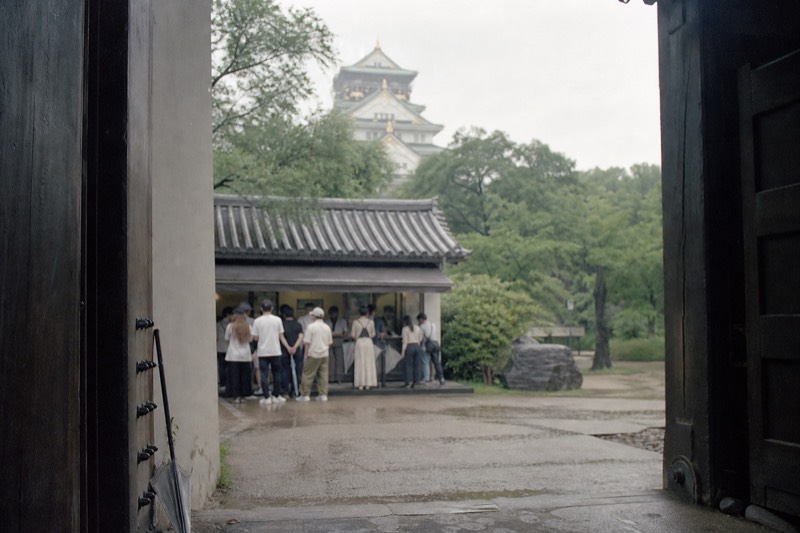
At The Gate
Adult, per person Group rate from 15 paying visitors Free categories at the window
¥1,200
The window price is identical to the online price, so nothing is lost by paying in person. Students and under-15s should buy here, because proof-of-age discounts are handled face to face and not through an e-ticket.
Students with ID and visitors aged under 15, since discounted and free rates are only applied at the window.
See what it covers
Osaka Amazing Pass
One-day pass On sale 25 March 2026 to 31 March 2027
¥3,500
The one-day pass costs 3,500 yen against the 1,200 yen castle ticket on its own, so it only pays off with two or more other paid sights. Add transport and the maths tips further in its favor.
Visitors packing several paid sights plus metro and bus rides into one day, who will clear the pass price easily.
See what it covers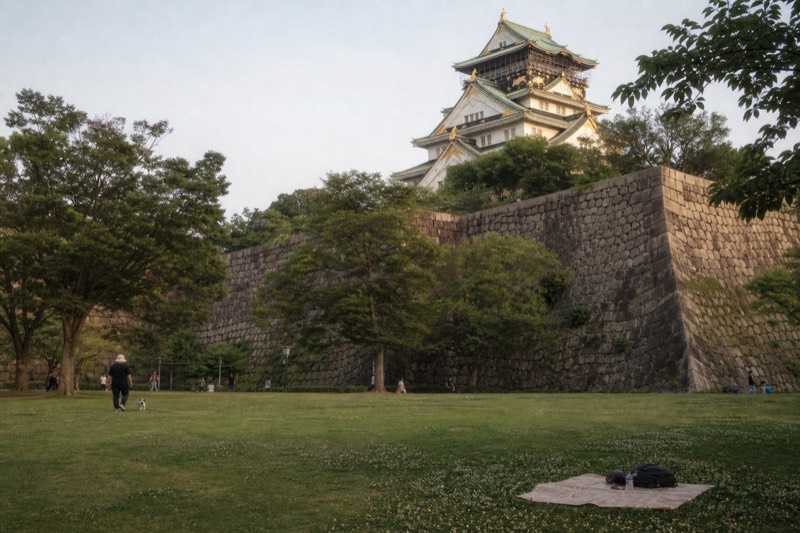
Free Park Areas
No admission charge
Free
The park grounds, moats, stone ramparts and exterior views of the tower cost nothing at all, and they fill a half day on their own. The paid line falls only at the Main Tower entrance and the Toyotomi Stone Wall Museum.
Anyone who wants the castle views, moats and grounds without paying to go inside the buildings.
See what it coversWhether any branch of the clan survived is a separate question with a complicated answer, covered in does the Toyotomi clan still exist. The short version: the direct Hideyoshi and Hidenaga lines ended in 1615, and articles published in January 2026 point to the Kinoshita branch, from Hideyoshi's sister's family, as the surviving bloodline, though that genealogy rests on weaker sourcing.
Why Is Everyone Talking About Hideyoshi In 2026?
Hideyoshi is having a mainstream moment because the 2026 NHK taiga drama "Toyotomi Brothers!", which premiered on 4 January 2026, puts him and his half-brother Hidenaga at the centre of Japan's biggest annual television event, and a linked special exhibition is touring the country. The castle's own exhibitions this year sit in the same wave.
The drama stars Sosuke Ikematsu as Hideyoshi and Taiga Nakano as Hidenaga, the younger brother who was Hideyoshi's most trusted general and is far less known outside Japan. A taiga drama is a year-long weekly historical series, and it reliably drives visitor interest toward the sites it depicts. The linked NHK Taiga Drama Special Exhibition "Toyotomi Brothers!" ran at the Tokugawa Art Museum in Nagoya from 18 April to 14 June 2026, moved to the Osaka Museum of History from 8 July to 31 August 2026, and finishes at the Tokyo Metropolitan Edo-Tokyo Museum from 15 September to 8 November 2026, according to the exhibition's own site.
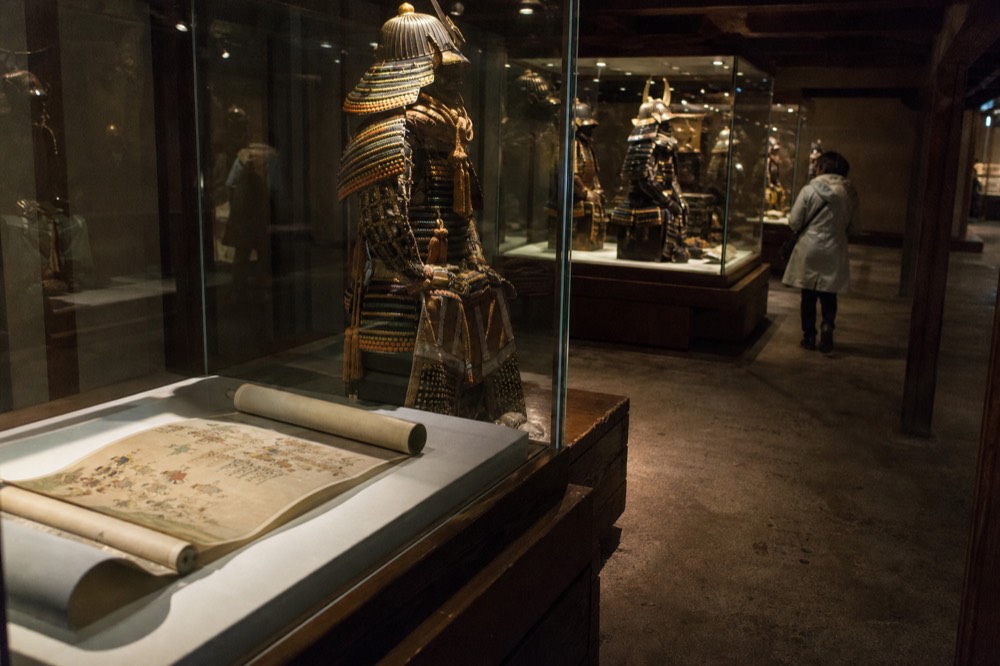
The castle tower itself is part of the same wave. Per the castle museum's own announcements, a Hideyoshi summer special ran in the 3F exhibition room to 7 October 2026, "Osaka Castle Zoo" ran in the 4F room to 8 October 2026, and a Sengoku siblings exhibition held in the Main Tower's exhibition rooms. The 7F floor of the tower is permanently given over to Hideyoshi's life story, so the tower has always sold his biography; this year it is also riding the drama.
The revival of interest has a checkable footprint beyond television. FY2025, running 1 April 2025 to 31 March 2026, saw the Main Tower record 2,813,851 admissions, a provisional all-time record and 105.8 percent of the prior year, per the castle's own press release. What the release does not do is attribute a cause, and neither should any article: the drama, the new Stone Wall Museum, Expo-era travel and inbound growth all sit in the same period. Report the record; resist the neat explanation.
The same pattern extends to museums nationally. Kyushu National Museum held "Toyotomi Hideyoshi and East Asian Diplomacy" from 27 January to 8 March 2026, Kokugakuin University Museum held "The Hideyoshi Brothers and Their Era" from 7 July to 13 September 2026, and Otsu City Historical Museum held "Toyotomi Hideyoshi and Otsu" from 18 July to 30 August 2026. One man, three museum shows, one television series: few figures in Japanese history get a year like it.
What Should Hideyoshi's Story Change About Your Visit?
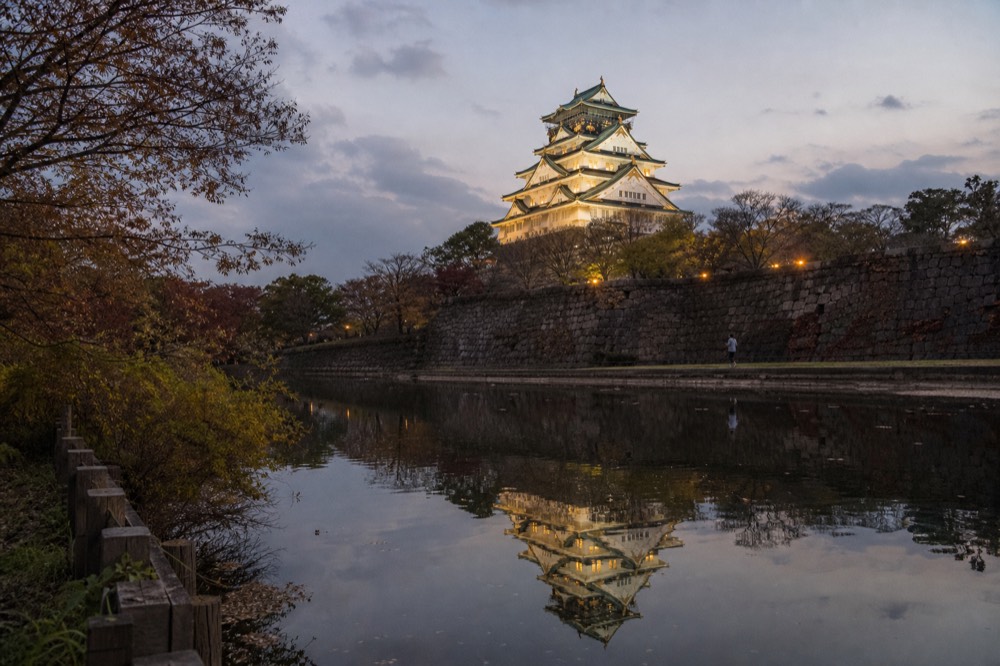
Knowing Hideyoshi's story changes where you look: at the buried walls in the Stone Wall Museum rather than the 1931 keep, at the scale of the moats rather than the gift shop, and at the walls' scars from the fires of 1615. The castle you photograph is Tokugawa; the castle you are standing in is Toyotomi.
Three practical adjustments follow. First, buy the tower ticket knowing that the Stone Wall Museum is inside it, on the same admission, because the museum is the only place the original castle is visible and the keep above it is a 1931 reconstruction, as explained in the castle's full history. Second, look for the fire traces burnt onto the stone faces in the museum's exhibition hall, which the official highlight list names among the things you are actually looking at. Third, when you walk the grounds, remember the deepest burial is under the inner moat: a 1969 boring struck stone about 25 m below the surface on the moat line, per the curatorial column, which puts the fill at the nakanodan tier's 6 m in perspective. This is also where Osaka Castle Tickets comes in: it exists to sell that single admission, plainly and without markup, so the choice is between entry routes rather than between stories.
The full sweep of what he did, from unification to the Korean invasions to the failed succession, is the reason the castle has a 7F exhibition floor at all. If the drama is what brought you here, the tower's own collection is the follow-up; if the walls are what brought you here, a guide on the grounds will point out what the drama's set designers, who built their version of the castle entrance in British Columbia, left out. That detail, that the Shogun production built its castle entrance as a set in Port Moody rather than filming here, is one the castle itself has no reason to tell you, and it is a fair sign of how much of Hideyoshi's world now lives in media rather than on the ground.
Whether you take the walk with a guide or go in alone with a ticket, the two halves of his story split neatly between them: the grounds carry the architecture, the tower carries the man.
Toyotomi Hideyoshi is the man who built the first Osaka Castle in 1583, rose from a peasant family to the regency of Japan, and completed the unification of a country that had spent a century at war. His clan fell at the Summer War of Osaka in 1615, his castle was buried under Tokugawa fill, and the questions below cover the parts of his story a castle visitor most often asks about.
Common Questions About Toyotomi Hideyoshi
What Was Toyotomi Hideyoshi Famous For?
Unifying Japan and building Osaka Castle. Born a peasant in Owari Province, near modern Nagoya, he rose through Oda Nobunaga's service, avenged Nobunaga's death, completed the unification of the country, and built Osaka Castle from 1583 as the centre of his power. He is the reason the castle exists on this site.
Was Toyotomi Hideyoshi A Peasant?
He was born to a peasant family in Owari Province, near modern Nagoya, the son of a peasant foot soldier. His rise from that background to imperial regent and national ruler is the most famous part of his biography and was close to unique in his era.
Is Any Of Hideyoshi's Original Castle Still Visible?
Only one section: the Toyotomi-era stone wall that protected the tsumenomaru, on display in the Osaka Castle Toyotomi Stone Wall Museum, which opened 1 April 2025 and is included in the Main Tower ticket. Everything above ground today, the walls and moats included, is the Tokugawa rebuild or later. The original was buried under fill, about 6 m deep at the nakanodan tier.
What Happened To Hideyoshi's Family?
Hideyoshi died in 1598, leaving his young son Hideyori as heir. The regency collapsed, the Tokugawa took power, and the Toyotomi house was destroyed in the Summer War of Osaka in 1615, with the castle burning. The direct line of the clan ended there; reported claims about a surviving Kinoshita branch through his sister rest on weaker sourcing.
Why Is Hideyoshi In The News In 2026?
The NHK taiga drama "Toyotomi Brothers!" premiered on 4 January 2026, a linked special exhibition toured Nagoya, Osaka and Tokyo across 2026, and the castle tower ran Hideyoshi-themed exhibitions in its 3F and 4F rooms. The tower recorded a provisional record 2,813,851 admissions in FY2025 over the same period, though no official source attributes a single cause.
Did Hideyoshi Live In The Castle?
Yes. The tsumenomaru, the private quarters at the core of the honmaru, is where Hideyoshi and his wife One lived, and later Yodo-dono and Hideyori. The stone wall protecting those quarters is the section now displayed in the Stone Wall Museum.