What Happened At Osaka Castle?
The 1614-1615 Siege of Osaka ended the Toyotomi clan, burned the castle and left the ruins you can still walk today, including the buried Toyotomi stone wall.
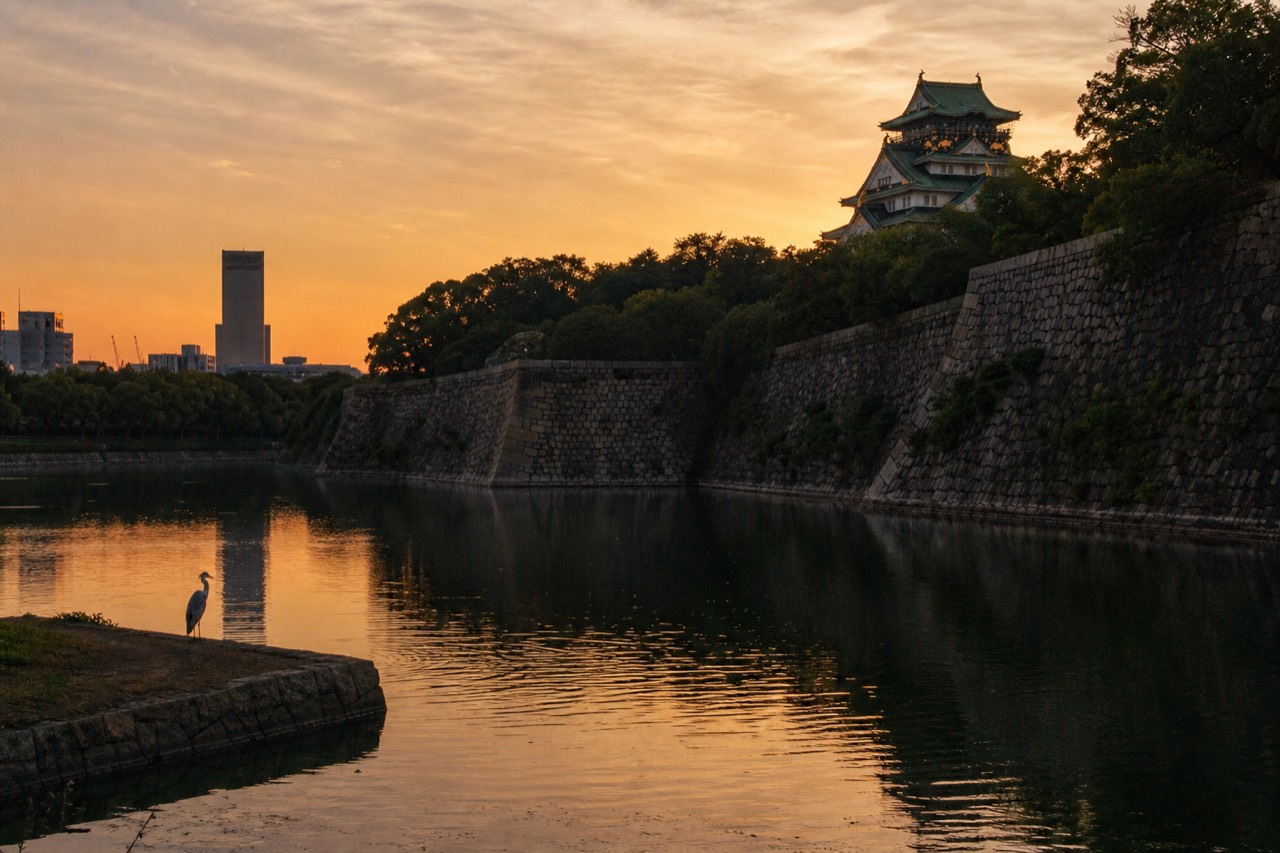
What Happened At Osaka Castle?
The short answer is a war. Between 1614 and 1615 the castle was besieged twice by the Tokugawa shogunate, and in the summer of 1615 it burned, ending the Toyotomi clan that had built it. The Tokugawa then buried the entire Toyotomi castle under metres of fill and rebuilt the site on top, which is why the walls you can see today are not the walls Hideyoshi built.
The castle was founded in 1583 by Toyotomi Hideyoshi, the warlord who unified Japan and made Osaka the centre of his power. It took about 15 years to finish and, per the official park history, stood 4 to 5 times the scale of the present castle, with a gold-gleaming keep at its heart. It was meant to be the headquarters of a dynasty. Instead it became the last obstacle to Tokugawa Ieyasu's control of the country.
The story divides cleanly in two. In the winter of 1614, Ieyasu attacked and could not take the castle. In the summer of 1615, he did, and the castle died with the family. The siege is the single event that explains almost everything a visitor sees: the scale of the moats, the fire marks burnt into the buried stone, the disappearance of the original keep, and even why a wall from the era lies six metres under your feet.
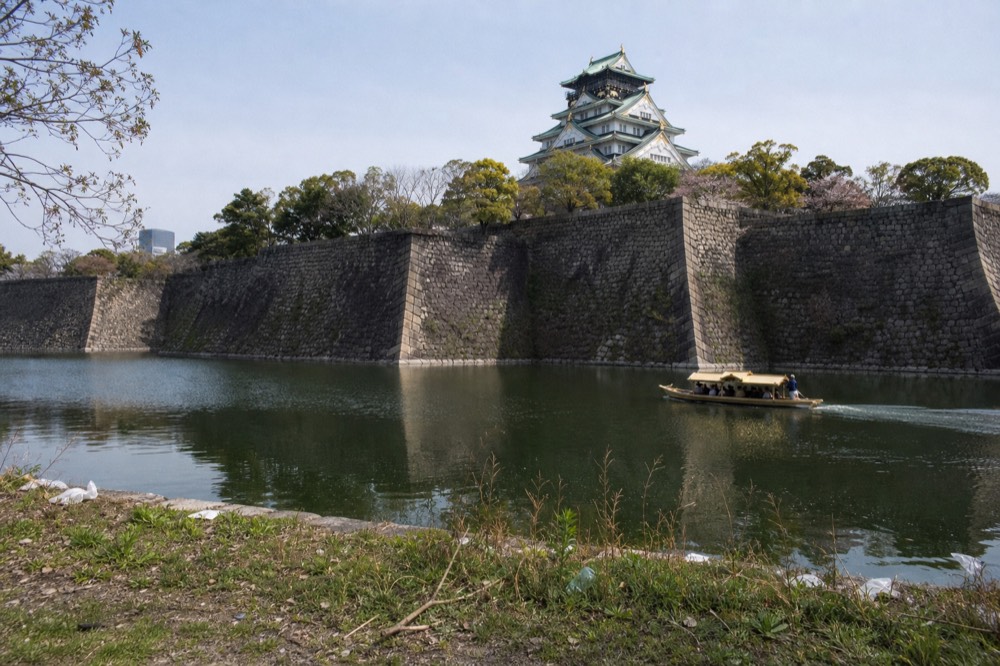
The siege happened where you would be standing on any visit, which is what makes it worth learning before you go. A 1.5 to 3 hour walk with a guide covers the grounds, the gates and the stories in English; the tower itself needs its own admission.
Why Did Tokugawa Ieyasu Attack The Castle In 1614?
Peace on paper, war in fact. Hideyoshi died in 1598 and left a young son, Hideyori, installed at Osaka. Ieyasu, who had won the battle of Sekigahara years earlier, ruled the country in all but name, but Hideyori's existence kept the Toyotomi claim alive, and thousands of loyal ronin gathered inside the castle. The winter campaign of 1614 was Ieyasu's answer to that armed claim.
The official park history records the trigger in classical terms: tension over a temple bell inscription that Ieyasu read as an insult, and the refusal of Hideyori's side to disband. The deeper cause needs no document. As long as Hideyori held the greatest fortress in Japan, with its vast walls and deep moats, the Tokugawa shogunate was provisional.
The winter siege, from late 1614, was enormous by any standard of the age, with vast armies facing each other at the walls. It failed as a storming operation. The castle's defences, the largest in Japan, held. But Ieyasu switched to bombardment, and the fighting ended in a negotiated settlement in which the outer moat of the castle was filled in. The Toyotomi side believed this preserved the fortress.
It did not. The fill work went further than agreed, and the outer defences were dismantled. By the time fighting resumed in the summer of 1615, the castle that Hideyoshi had built to be unassailable had been partially disarmed by its own truce. That sequence, a siege that could not win by assault and a peace that stripped the defences, is what set up the second act.
How Did The Castle Fall In The Summer War Of 1615?
In June 1615 the Toyotomi side sortied from the castle to meet the Tokugawa army in the field, was defeated at the battle of Tennoji, and the undefended castle was stormed and burned the same day. The official park history records Genna 1, 1615: the Toyotomi house was destroyed and the whole castle burned, keep and all.
The summer campaign was shorter and more decisive than the winter one. Hideyori's commanders chose open battle rather than another siege, and the result outside the walls at Tennoji broke the field army. With the defenders beaten in the open, the Tokugawa forces attacked the castle directly, and the wooden structure that had taken Hideyoshi's builders years to raise went up in flames in hours.
What ended that day was more than a building. Yodo-dono, Hideyoshi's widow and Hideyori's mother, died with her son, and the direct Toyotomi line ended, a fact our piece on whether the Toyotomi clan still exists covers in detail. The largest samurai battle of the seventeenth century finished with the family that had unified Japan erased from it.
| Year | Event at Osaka Castle |
|---|---|
| 1583 | Hideyoshi begins building the castle on the site of Ishiyama Honganji |
| 1598 | Hideyoshi dies; his son Hideyori inherits the castle |
| 1614 | Winter siege by the Tokugawa ends in a truce and moat filling |
| 1615 | Summer War of Osaka: battle in the field, castle stormed and burned, Toyotomi line ends |
| 1620 | Tokugawa begins a full rebuild on a buried site |
What Did The Tokugawa Do To The Ruins?
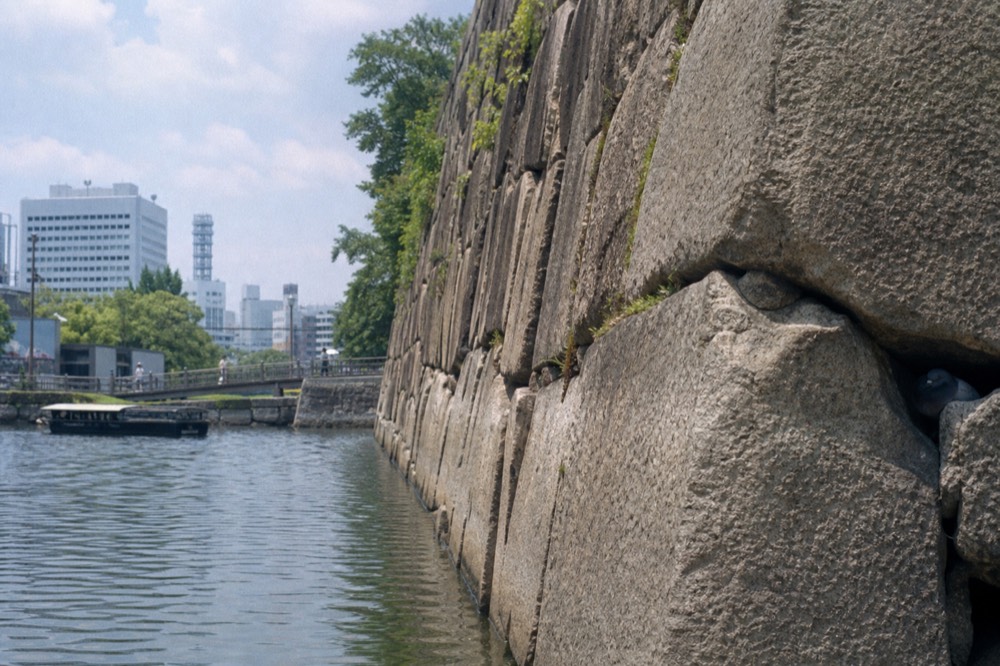
They buried them. From 1620 the shogunate began a rebuild that took 10 years, raising a new castle on a mass of earth fill poured over the ruins of Hideyoshi's, as the official park text puts it, as if to erase the authority of the Toyotomi family. Everything above ground at Osaka Castle today belongs to that Tokugawa rebuild.
The scale of the burial is the fact that surprises most visitors. At the tier where the new ground was laid over the Toyotomi walls, about six metres of fill was piled on top, per the Stone Wall Museum's own English leaflet. On the inner-moat line a boring done in 1969 struck the old masonry about 25 metres below the present surface. The Tokugawa did not just replace the castle, they entombed it.
The new castle was deliberately different. The rebuild involved large-scale earth fill across the entire site, new stone walls and deepened moats, and a keep that the castle's curatorial column calculates at about 58 metres, roughly 3 metres taller than today's tower. The message was political: the shogun's Osaka would dwarf the warlord's.
That Tokugawa keep had its own bad luck. It burned in a lightning strike in 1665 and was never rebuilt. The remaining structures burned again in the turmoil of the Meiji Restoration in 1868, survived the air raids of 1945 only in part, and the tower you see now is a ferro-concrete reconstruction of 1931, paid for by public subscription from Osaka's citizens, as our piece on how many times the castle has been rebuilt traces.
Where Can You Still See The Evidence?
In the ground. The Osaka Castle Toyotomi Stone Wall Museum, opened on 1 April 2025, is an underground gallery beside the keep where you walk down to a section of the wall that protected Hideyoshi's private quarters, rediscovered in 1984 about a metre below the surface and invisible above ground anywhere else in the park.
This is the physical proof of everything above. The exposed section ringed the tsumenomaru, where Hideyoshi and his wife One, and later Yodo-dono and Hideyori, actually lived. It is the most important core of the honmaru, and it carries the fire traces of the Summer War burnt onto the stone faces, a direct material link to 1615.
from $7.69 The from-price you see online and the price at the castle window are the same adult admission, so booking ahead costs nothing extra.
Your ticket into the tower
Official E-Ticket
- Osaka Castle Main Tower entry
- Osaka Castle Toyotomi Stone Wall Museum
- QR code entry
- Valid 30 days
- No fixed time slot
- No viewing time limit
Buying the official e-ticket ahead saves you the ticket-purchase line, not money, since the online price matches the window. You exchange nothing at the gate, you simply show the voucher and go in.
The real flexibility here is the voucher's 30-day validity, with no fixed time slot and no set viewing time limit.
At The Gate
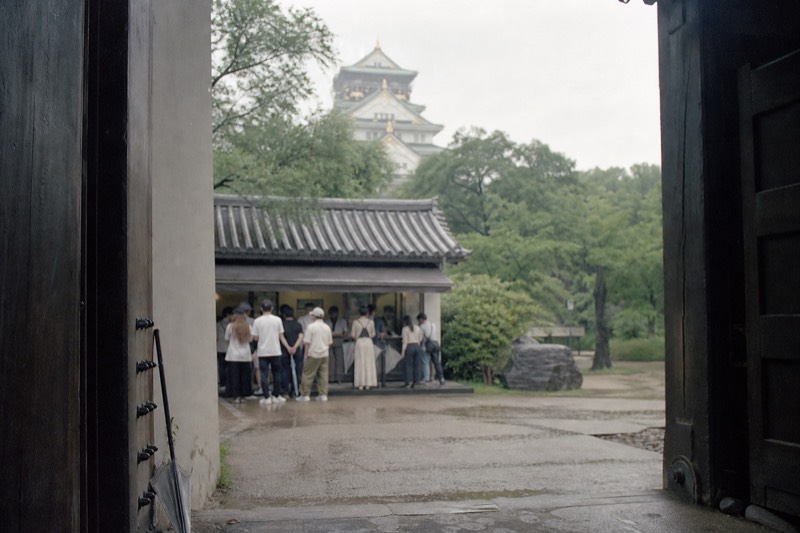
Adult, per person Group rate from 15 paying visitors Free categories at the window
¥1,200
The window price is identical to the online price, so nothing is lost by paying in person. Students and under-15s should buy here, because proof-of-age discounts are handled face to face and not through an e-ticket.
Students with ID and visitors aged under 15, since discounted and free rates are only applied at the window.
See what it covers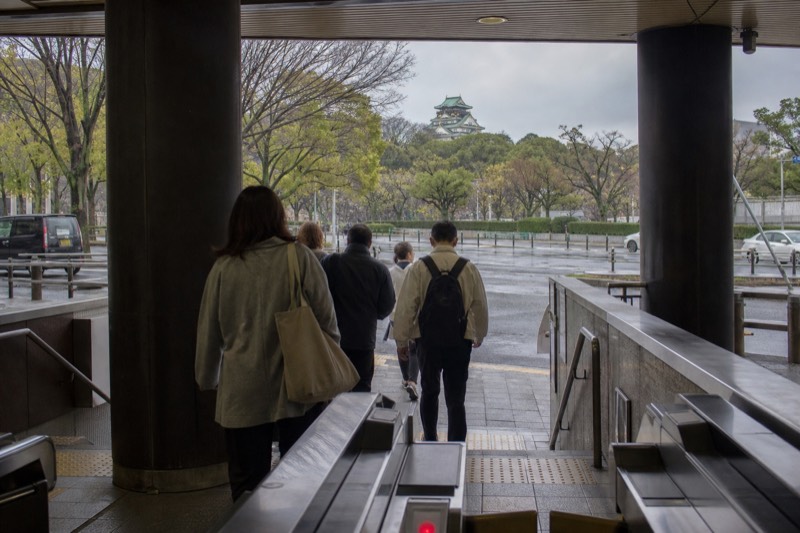
Osaka Amazing Pass
One-day pass On sale 25 March 2026 to 31 March 2027
¥3,500
The one-day pass costs 3,500 yen against the 1,200 yen castle ticket on its own, so it only pays off with two or more other paid sights. Add transport and the maths tips further in its favor.
Visitors packing several paid sights plus metro and bus rides into one day, who will clear the pass price easily.
See what it covers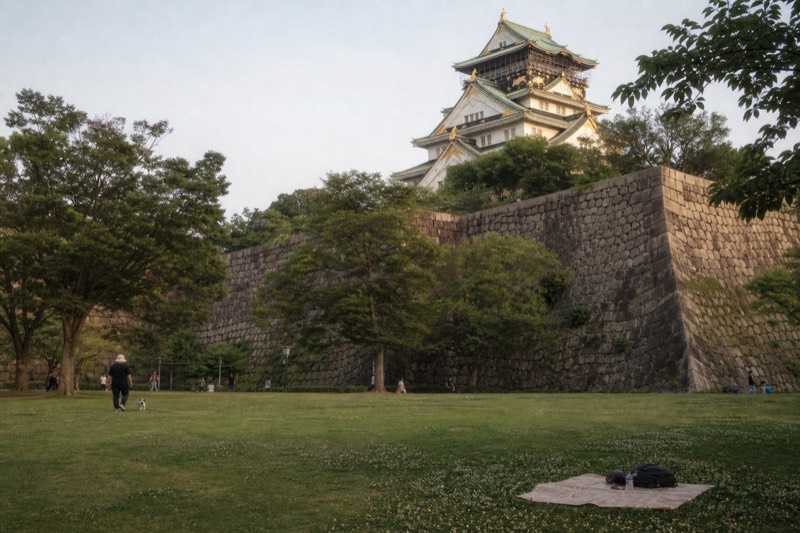
Free Park Areas
No admission charge
Free
The park grounds, moats, stone ramparts and exterior views of the tower cost nothing at all, and they fill a half day on their own. The paid line falls only at the Main Tower entrance and the Toyotomi Stone Wall Museum.
Anyone who wants the castle views, moats and grounds without paying to go inside the buildings.
See what it coversThe museum's own page and leaflet, at osakacastle.net, list what you look at: nozurazumi natural-face masonry, backfill stones packed for drainage, stones repurposed from ancient temples, and an early form of the alternating corner technique. It has no toilets inside, a small practical detail worth knowing before you descend.
There is no separate ticket. The ¥1,200 adult tower admission, about $7.69, includes the Stone Wall Museum, per the castle's own guide page, which you can read at the official guide. Free audio guides in Japanese, English, Korean and Chinese are lent at the tower, but in limited numbers, so arrive early if you want one.
The Surviving Tokugawa Structures
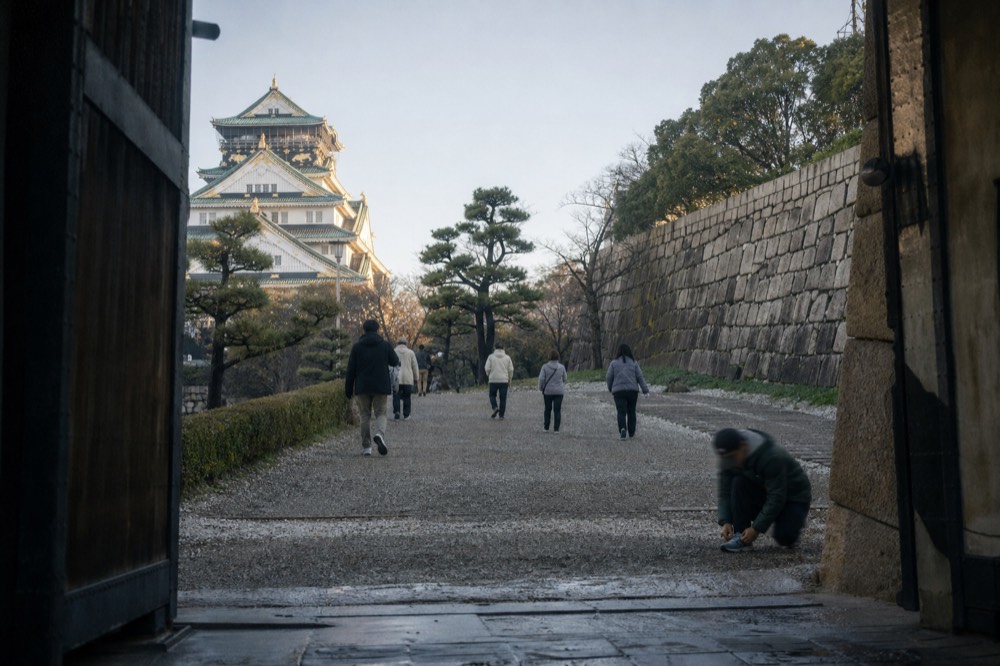
The walls and turrets that did survive 1615's aftermath are the ones the shogunate built after the burial, not the ones Hideyoshi built. The park lists 13 Important Cultural Property structures, including the Otemon gate, the Tamon-yagura and the Sengan-yagura, designated in 1953. The Sengan-yagura and Inui-yagura, both built in 1620 under Kobori Enshu, are together the oldest surviving buildings at Osaka Castle, and they stand in Nishinomaru Garden.
The stone walls themselves are a surviving record of the 1620s rebuild, and the castle museum's own press release calls Osaka the castle with the greatest stone walls in Japan. When a capstone fell from the inner-moat wall in May 2025, Osaka City inspected it within days and scheduled repairs for March 2026, a reminder that these are working structures under active conservation, not set dressing.
Was The Castle Attacked Again Later?
Yes, twice with fire and once with bombs. The Tokugawa keep burned after a lightning strike in 1665 and was never rebuilt; most remaining buildings burned in the Meiji turmoil of 1868; and United States air raids in 1945, heaviest on 14 August, the day before the surrender, damaged the tower site and left the slippage still visible in the tenshudai stone wall.
The 1945 story is its own article, and our piece on WWII damage to Osaka Castle covers it in full. The detail worth knowing on the ground is the bomb that landed a few metres north of the keep: because the 1931 tower was engineered not to load the old stone base, it survived, and the wall distortion it caused was stabilised by corrective work in 1964.
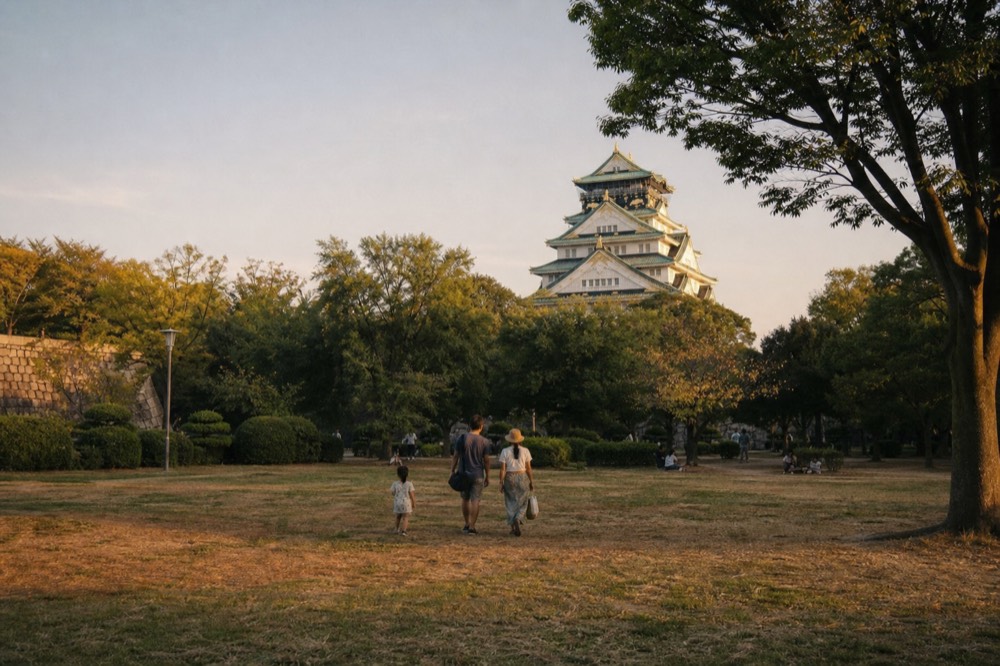
After the war the whole area became a public park, the yagura and storehouses were restored between 1958 and 1966, and the tower was restored to its 1931 appearance in the Heisei repair completed in 1997. The tower has been a museum since the day it was rebuilt, holding collections on Hideyoshi, the Sengoku period and the castle's history, which is the honest answer to the visitor who expects a furnished medieval interior.
The Site's Modern Paper Trail
The story keeps producing documents. The castle grounds hold more history than the tower alone. The entire area is a National Special Historic Site, and most of the surviving old structures are National Important Cultural Properties, which is why the stone walls and buried remains around the park continue to be studied and displayed in the castle's two museums. On 7 November 2025, the castle marked the 94th anniversary of the 1931 reconstruction with commemorative certificates and special lighting, per an Osaka City announcement at the city's notice.
Interest in the Toyotomi has its own 2026 chapter: the NHK taiga drama "Toyotomi Brothers!" premiered on 4 January 2026, and a linked special exhibition is touring Nagoya, Osaka and Tokyo through the year, per the exhibition's own site. The castle's summer Hideyoshi exhibition in the 3F room sits inside that same wave, which is one quiet reason the siege story is drawing fresh crowds.
How Should You Visit The Siege Site Today?
Walk the grounds first, then buy the tower once. The park itself is free and holds almost all the surviving 1620s structures; the tower and Stone Wall Museum share one ¥1,200 adult admission; and the guided walk covers the gates and the story in 1.5 to 3 hours but does not include admission at its base price, so the two products stack rather than substitute.
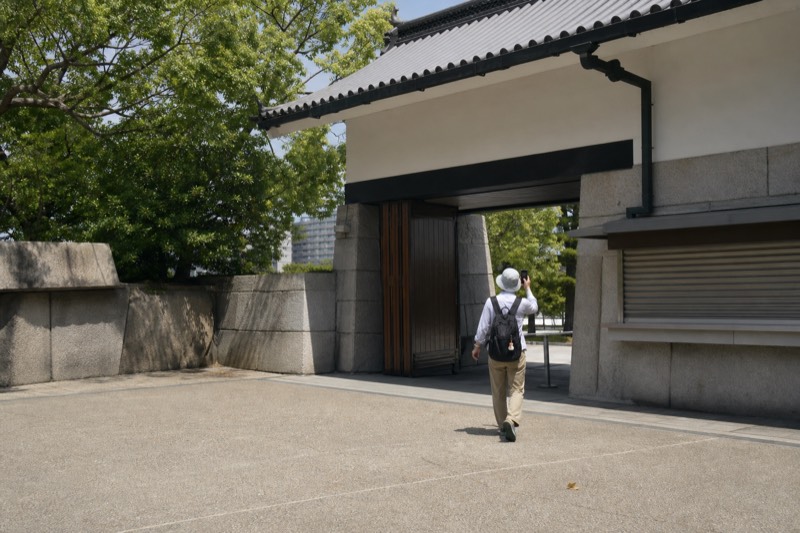
Start with the shape of the site. The moats you cross on the way in, the gates you pass through and the giant stones of the Sakuramon masugata are all Tokugawa work, built after the burial. Then take the Stone Wall Museum's ramp down to the one place the earlier castle breaks the surface, and the fire-marked stone of 1615 is right there at eye level.
Guides earn their fee on exactly this terrain. The narratives of the winter truce, the moat filling and the sortie of 1615 are attached to specific gates and walls, and the operator's live listing carries the current price and availability for the small-group and private options. If you would rather move at your own pace, the free audio guides at the tower, in four languages, cover the same ground in outline.
One planning note: the tower is open 9:00 to 18:00 with last admission at 17:30, and the castle's own guide page warns the ticket-purchase queue can be capped before 17:30 when conditions demand, so morning visits carry less risk. If you are still weighing the options, Osaka Castle Tickets lays out the admission routes side by side, our guide to the castle's opening hours has the full detail, and the wider park context is in our Osaka Castle Park guide.
Whether you come for the history or the photographs, the event is the same one: a castle built to be permanent, burned in a day, buried under a hill, and rebuilt twice. The grounds are quiet about it, but they are not hiding it.
Readers ask versions of the same few questions about the siege, and the answers are short. The castle fell to the Tokugawa in 1615, the Toyotomi clan ended with it, and the only original Toyotomi stonework visible today is the buried wall in the underground Stone Wall Museum. Everything above ground is the Tokugawa rebuild or the 1931 reconstruction.
Common Questions About What Happened At Osaka Castle
What Happened At Osaka Castle?
The castle was besieged twice by the Tokugawa shogunate, in winter 1614 and summer 1615. The Summer War of Osaka ended with the castle stormed and burned, the death of Hideyori and the end of the Toyotomi clan, followed by a full Tokugawa rebuild on a buried site.
Who Destroyed Osaka Castle?
The Tokugawa forces destroyed it in the Summer War of Osaka in 1615. The earlier Toyotomi castle had already survived a winter siege; the family itself was destroyed with it. Our full piece is on the blog post about who destroyed the castle.
Can You Still See The Original Toyotomi Castle?
Only underground. A section of the wall that protected Hideyoshi's private quarters is on display in the Osaka Castle Toyotomi Stone Wall Museum, opened on 1 April 2025 and included in the ¥1,200 tower admission. Everything above ground is the Tokugawa rebuild or later.
Is The Current Tower The Original?
No. The current tower is a ferro-concrete reconstruction completed in 1931 with public donations, and it has been a museum since it opened. The Tokugawa keep burned in 1665 and was never rebuilt.
Was Osaka Castle Damaged In WWII?
Yes. Air raids in 1945, heaviest on 14 August, destroyed several buildings and left the slippage still visible in the tenshudai stone wall. The 1931 tower itself survived because it was built not to load the old stone base.