Why Is Osaka Castle So Famous?
Osaka Castle is famous less for its architecture than for its politics: it is where Toyotomi Hideyoshi built his power, where his line ended in 1615, and where 2.8 million visitors a year now climb a 1931 reconstruction.
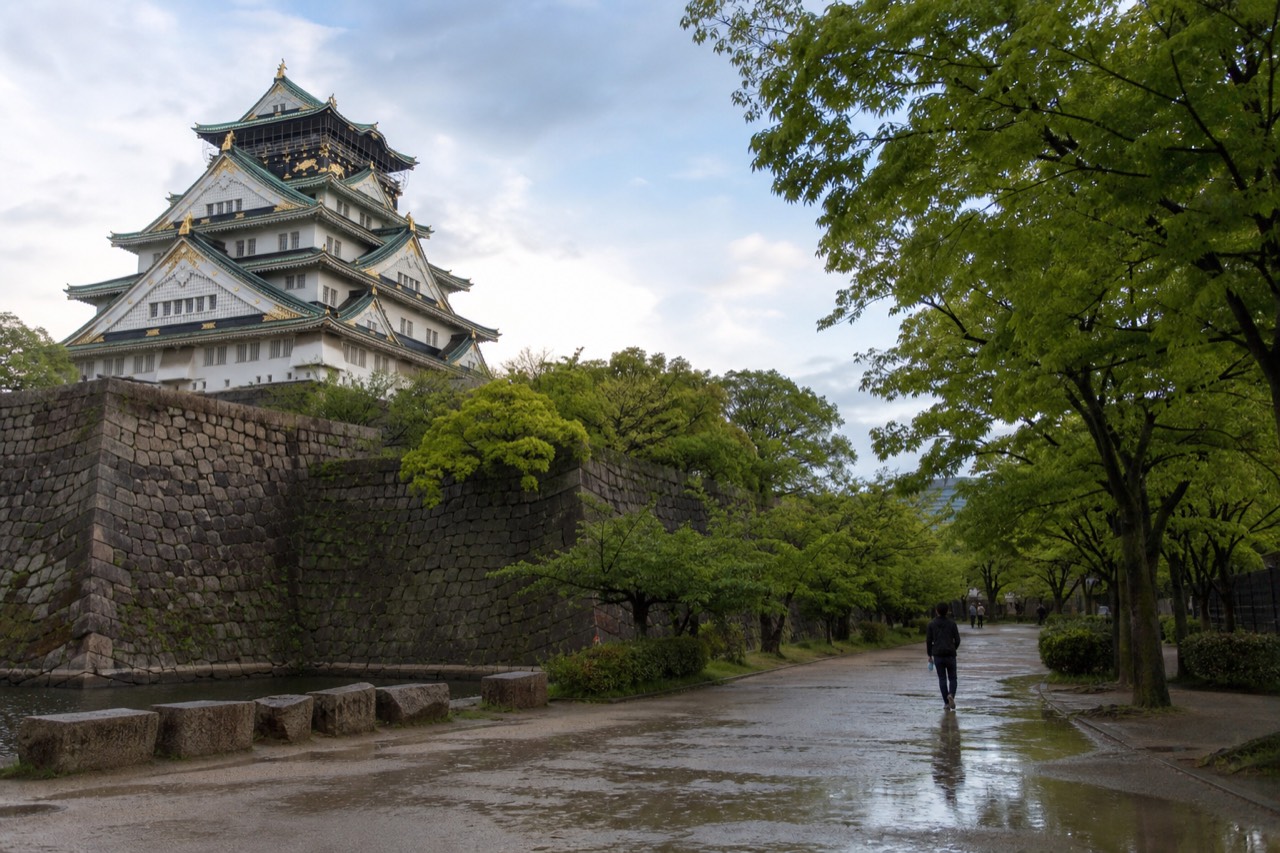
Osaka Castle drew 2,813,851 paying visitors to its Main Tower in FY2025, a provisional all-time record that beat the previous best year, FY2017, after eight years. That is the scale of the fame we are explaining. And the explanation is not the building itself, which is a ferro-concrete reconstruction from 1931. It is the political story: this is the castle Toyotomi Hideyoshi built to rule a unified Japan from, and the castle where his family's line was destroyed in 1615.
Why Is Osaka Castle So Famous?
Osaka Castle is famous because it was the power centre of Toyotomi Hideyoshi, the man who unified Japan, and because it is the place where his clan was wiped out in the Summer War of Osaka in 1615. Everything above ground today is the Tokugawa rebuild, which buried Hideyoshi's castle under metres of fill, and that layered, deliberately erased history is exactly what visitors come to see.
The fame starts with a person, not a wall. Hideyoshi took the site of Ishiyama Honganji, a fortified temple that had held out against warlords for a decade, and began building in 1583. The official park history says the finished castle took about 15 years and was four to five times the scale of the present one, with a gold-gleaming tenshu at the centre of the honmaru. This was not a regional fort. It was the capital of a unified Japan, and everyone in the country knew whose crest flew over it.
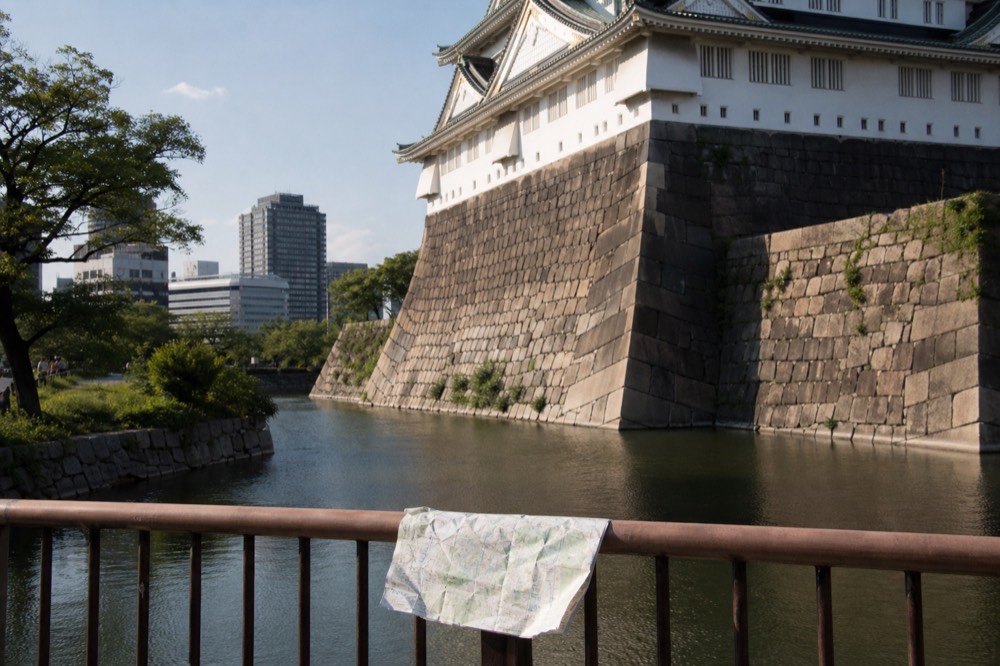
Then came the ending that sealed the legend. In 1615, in the Summer War of Osaka, the Toyotomi house was destroyed and the whole castle burned. The Tokugawa shogunate began its rebuild in 1620, and the official history is blunt about the intent: the new regime piled large-scale earth fill across the entire site, burying Hideyoshi's castle as if to erase the authority of the Toyotomi family. The tenshu it built was 15 m taller, and completely different. When that tower burned in a lightning strike in 1665 it was never rebuilt, so the skyline people photograph today dates only to 1931.
That layered story is why the castle rewards a guide. The grounds are a Tokugawa castle on top of a buried Toyotomi one, and reading the two apart is the whole game.
What Actually Happened At Osaka Castle In 1615?
In the Summer War of Osaka, 1615, the Tokugawa forces destroyed the Toyotomi clan and burned the entire castle, ending the last rival claim to national power. The shogunate then rebuilt the site from 1620 on a completely different plan, burying Hideyoshi's castle under fill, and the Toyotomi name survived only in memory.
The siege was the finale of a decade of political pressure. Hideyoshi died in 1598, leaving a young heir, Hideyori, and a council of regents that included Tokugawa Ieyasu. The standoff resolved at Osaka: a winter campaign, then the summer campaign of 1615, and in the fifth month of Genna 1 the castle fell and the Toyotomi house was destroyed. The official park history records the whole castle burning with it.
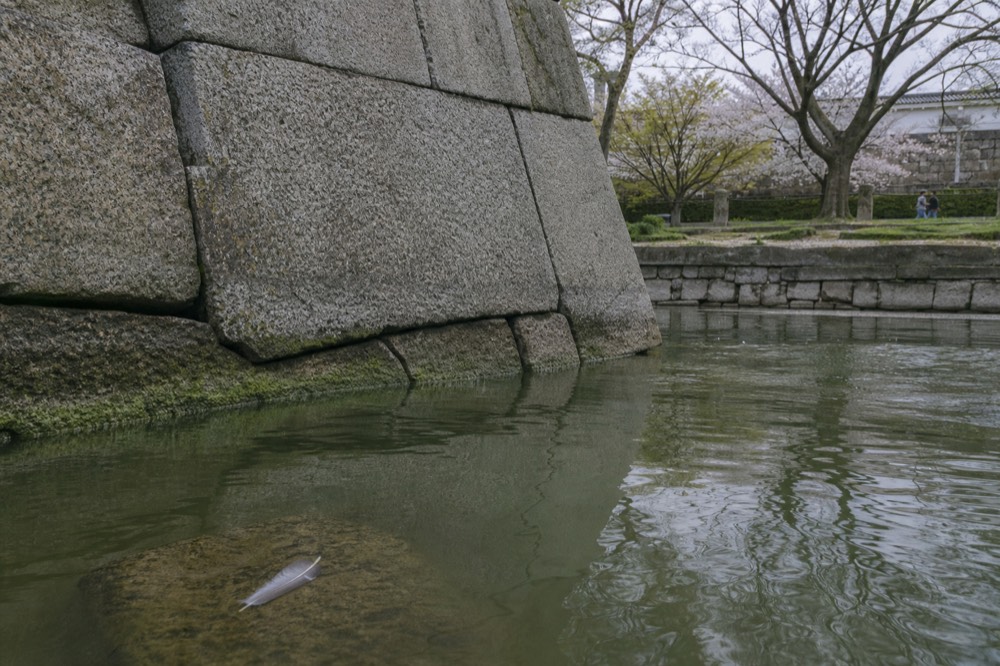
What the victors did next is the detail most visitors miss, and it is the reason the site still matters historically. The rebuild did not reuse Hideyoshi's foundations. It buried them. The English leaflet of the Osaka Castle Toyotomi Stone Wall Museum states it plainly: when the Tokugawa government rebuilt the castle, it piled about six metres of earth up at the nakanodan tier, completely burying the Toyotomi-period stone walls. Over the inner moat line, a 1969 boring struck stone more than 25 m below the present surface. Nothing of Hideyoshi's castle can be seen above ground anywhere.
The buried wall was rediscovered in 1959, and the section that protected the tsumenomaru, the private quarters where Hideyoshi, his wife One, and later Yodo-dono and Hideyori lived, was found in 1984 about a metre below the current surface. Since 1 April 2025 that wall has been visible to the public in the Stone Wall Museum, included in the standard tower admission. For the full background, see what happened at Osaka Castle.
Is The Fame About The Building Or The Story?
The fame is about the story. The current tower is a 1931 ferro-concrete reconstruction, funded by public subscription from Osaka's citizens on the proposal of mayor Seki Hajime, and it has been a museum since the day it opened. Visitors who come expecting a medieval interior are the ones who leave disappointed; visitors who come for the political history are the ones who rate it.
The tower's own registration history tells you what it is. It became a National Registered Tangible Cultural Property in 1997 and an Osaka City Designated Tangible Cultural Property in 2025. It is the third generation of tower, after the Toyotomi and Tokugawa ones, and it was deliberately built so as not to load the original tenshudai, which is why it survived a 1945 bomb that left visible slippage in the stone wall below it. The site around it is a National Special Historic Site, and most of the surviving gates, turrets and storehouses are National Important Cultural Properties, designated in 1953.
The honest complaint exists and is worth repeating. Recent reviewers describe the interior as a modern museum rather than a castle, and some call paying to enter a waste. The praise, equally real, is for the exterior, the observation deck about 50 m above ground, and the historical context of the Toyotomi-Tokugawa story. Both reactions are about the same fact: this is a museum in the shape of a castle, sitting on the buried original.
The story is having a moment, too. The NHK taiga drama "Toyotomi Brothers!", which premiered on 4 January 2026, put Hideyoshi and his brother Hidenaga back on Sunday-night television, and a linked special exhibition toured Nagoya, the Osaka Museum of History and Tokyo through 2026, per the exhibition's own site. Interest in the Toyotomi is up this year for a reason a visitor can feel in the crowds.
How Famous Is It, In Numbers?
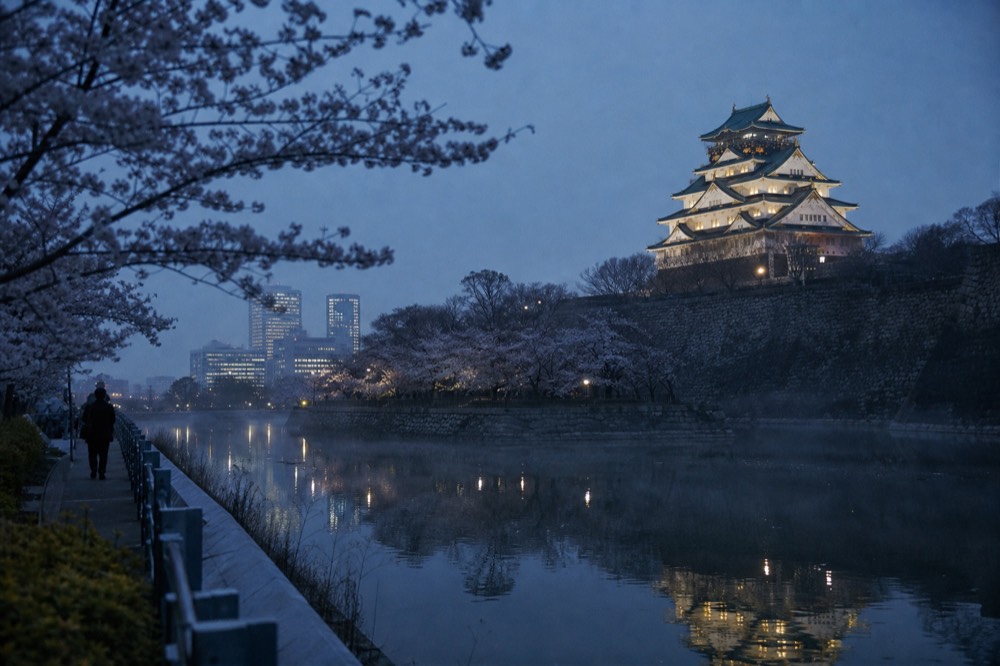
Very: the Main Tower recorded 2,813,851 admissions in FY2025, a provisional all-time record, and a Navitime navigation-data analysis reported by Kyodo News on 23 April 2026 ranked Osaka Castle the most popular castle among foreign visitors to Japan in 2025. It was also the most visited castle of Japan's pre-war reconstruction era, by a wide margin.
The tower's own press release, dated 10 April 2026, gives the full series. Admissions passed 2.8 million in a single year for the first time since the tower opened in 1931. The previous record, FY2017's 2,754,395, stood for eight years. Even the pandemic trough of FY2020, 241,230, recovered within two years to over a million, and the curve since has been steeply upward.
The ranking comes from an analysis, not an official count: Navitime, a navigation-data company, analysed its users' movement data and concluded Osaka Castle was the most popular castle among foreign visitors in 2025, a finding reported by Kyodo News on 23 April 2026. The castle's own admission figures are the primary source; the ranking is the colour.
| Fiscal year | Main Tower admissions |
|---|---|
| FY2013 | 1,555,338 |
| FY2017 | 2,754,395 |
| FY2019 | 2,181,850 |
| FY2020 | 241,230 |
| FY2023 | 2,402,157 |
| FY2024 | 2,659,736 |
| FY2025 | 2,813,851 (provisional, all-time record) |
A walk with an English-speaking guide is the format that turns those numbers from a queue into a story. The guided walking tour covers the castle grounds, the walls and the gates, and runs 1.5 to 3 hours in private or small-group form.
Why Did The Tokugawa Rebuild Matter So Much?
The Tokugawa rebuild, begun in 1620, mattered because it was a political act in stone: the shogunate buried a rival dynasty's castle under its own, made the new tenshu 15 m taller, and turned Hideyoshi's capital into a shogunal monument. The walls you photograph today are that statement, which is why the castle museum calls this the castle with the greatest stone walls in Japan.
The official park history lists what the rebuild involved: large-scale earth fill across the entire site, new stone walls, deepened moats, and a tenshu completely different from Hideyoshi's. A curatorial column on the castle's own site computes the Tokugawa tenshu at about 58 m, roughly 3 m taller than today's reconstruction, with Hideyoshi's tower about 16 m lower than the present one. Height was the argument. The new regime built bigger on top of the old, on purpose.
The surviving structures from that rebuild are the castle's real antiquities. Sengan-yagura and Inui-yagura, both begun in 1620 under Kobori Enshu, are together the oldest surviving buildings at Osaka Castle, and both stand in Nishinomaru Garden. The park lists 13 Important Cultural Property structures in total, from the Otemon gate to the Ensho-gura powder magazine, the only stone powder magazine of its kind in Japan, with walls about 2.4 m thick. For more on what that rebuild left to see, see inside Osaka Castle.
from $7.69 The from-price you see online and the price at the castle window are the same adult admission, so booking ahead costs nothing extra.
Your ticket into the tower
Official E-Ticket
- Osaka Castle Main Tower entry
- Osaka Castle Toyotomi Stone Wall Museum
- QR code entry
- Valid 30 days
- No fixed time slot
- No viewing time limit
Buying the official e-ticket ahead saves you the ticket-purchase line, not money, since the online price matches the window. You exchange nothing at the gate, you simply show the voucher and go in.
The real flexibility here is the voucher's 30-day validity, with no fixed time slot and no set viewing time limit.
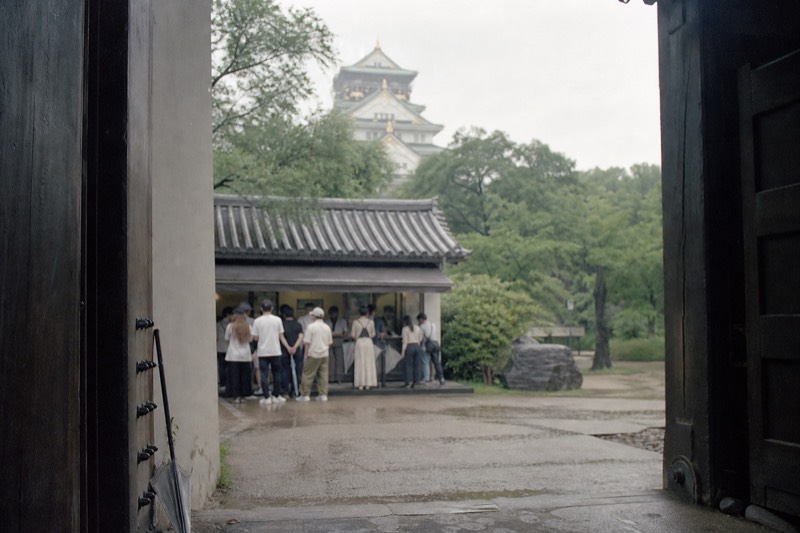
At The Gate
Adult, per person Group rate from 15 paying visitors Free categories at the window
¥1,200
The window price is identical to the online price, so nothing is lost by paying in person. Students and under-15s should buy here, because proof-of-age discounts are handled face to face and not through an e-ticket.
Students with ID and visitors aged under 15, since discounted and free rates are only applied at the window.
See what it covers
Osaka Amazing Pass
One-day pass On sale 25 March 2026 to 31 March 2027
¥3,500
The one-day pass costs 3,500 yen against the 1,200 yen castle ticket on its own, so it only pays off with two or more other paid sights. Add transport and the maths tips further in its favor.
Visitors packing several paid sights plus metro and bus rides into one day, who will clear the pass price easily.
See what it covers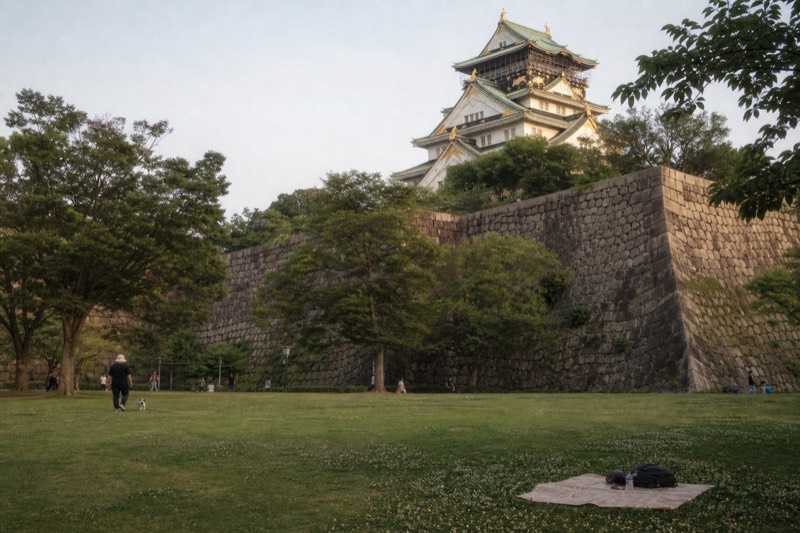
Free Park Areas
No admission charge
Free
The park grounds, moats, stone ramparts and exterior views of the tower cost nothing at all, and they fill a half day on their own. The paid line falls only at the Main Tower entrance and the Toyotomi Stone Wall Museum.
Anyone who wants the castle views, moats and grounds without paying to go inside the buildings.
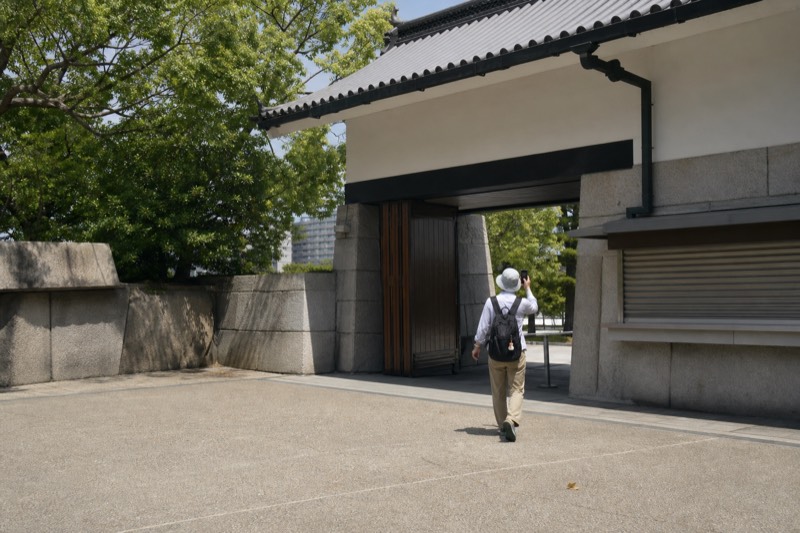
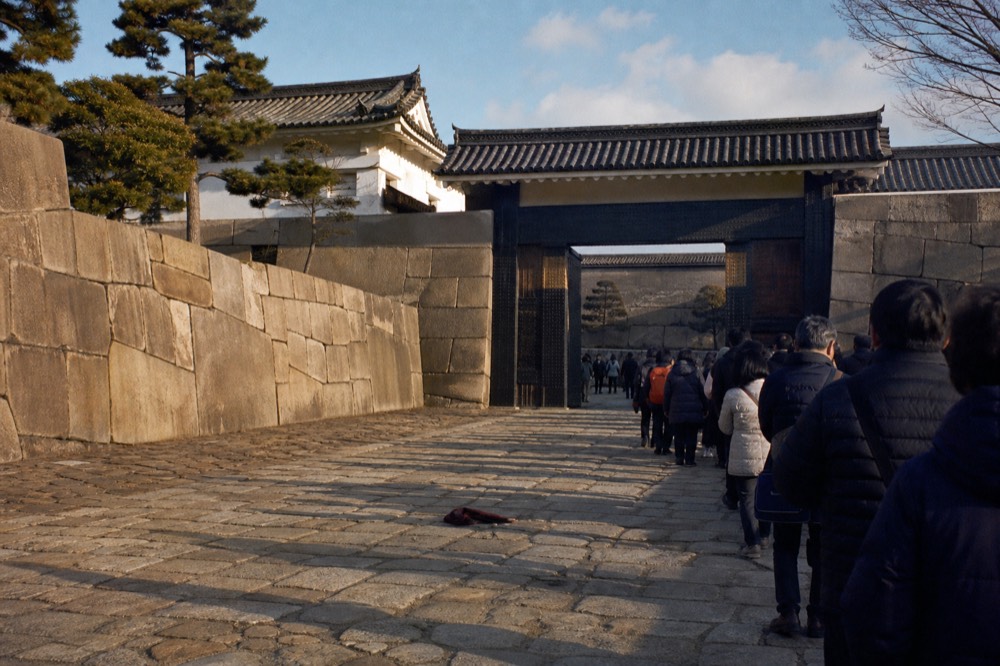
See what it coversThe turret special openings are a good illustration of how the fame is curated now. Per an Osaka City announcement, the Important Cultural Property yagura open to the public on a seasonal schedule, with the exact dates and hours published by the city. People queue to stand inside 1620s guardhouses. That is story-driven fame, not architectural novelty.
Does The Buried Toyotomi Castle Still Drive The Fame?
It does, and more each year: the wall that protected the quarters where Hideyoshi and Hideyori lived was rediscovered in 1984 about a metre below the surface, and since 1 April 2025 the Toyotomi Stone Wall Museum has displayed it inside the standard tower ticket. The buried original is now the castle's most distinctive exhibit.
What you look at, per the museum's own highlight list, is nozurazumi masonry with barely worked stones, traces of the 1615 fires burnt onto the stone faces, backfill stones packed behind the wall for drainage, and repurposed foundation stones carried in from ancient temples. The wall top found in 1959 sits at 23.9 m elevation; the ground Hideyoshi and Hideyori actually walked on lies about a metre below the present surface. You are standing at roughly their eye level, looking at their wall, under a Tokugawa landscape.
This is the layer no other Japanese castle offers in the same way. Himeji is more intact; Osaka is more archaeologically dramatic, a castle consumed by its conqueror and excavated back into view. The curatorial column and the museum's english leaflet, both on the castle's own site, carry the detail, and the museum's opening turned what was a specialist excavation story into something a general visitor can walk through in about an hour.
Admission to the Main Tower covers the Stone Wall Museum on the same ticket, at ¥1,200 for adults, and the two venues share hours, 9:00 to 18:00 with last entry at 17:30. If the buried-wall story is what brought you here, the entry ticket is the product that gets you to it.
Is The Fame Rising Or Fading?
Rising, sharply: FY2025 was the tower's record year, a 2025 Navitime analysis of navigation data, reported by Kyodo News, ranked it the most popular castle among foreign visitors to Japan, and the 2026 taiga drama has renewed Toyotomi interest. The fame is currently at its highest point since records began in this form.
Three currents run together. One is the record admissions, driven in part by the Stone Wall Museum's opening giving the ticket a genuinely new thing to see. One is the pop-culture wave: the taiga drama, and before it the samurai games and series that put feudal Osaka in front of global audiences. One is simple inbound scale: The Main Tower set a new admissions record in fiscal 2025, and the crowds have not let up since.
The fame also has a self-reinforcing quality, because the castle keeps adding layers to its own story. The 2025 cultural-property designation of the 1931 tower, the anniversary events, the seasonal turret openings, the exhibitions running in the tower's 3F and 4F rooms through autumn 2026, per the castle museum's own announcements: each gives a returning visitor a reason to come back, and each gives the site another chapter in a story that is now four centuries and three towers long.
If you want the fuller picture of the man behind it, see what was Toyotomi Hideyoshi famous for. And if you are planning a visit around the fame rather than just reading about it, Osaka Castle Tickets covers the practical side: hours, prices and what each ticket covers.
The questions below are the ones readers ask most about why this castle looms so large: whether the fame is about the original Toyotomi castle or the 1931 tower, how many visitors it draws, and which parts are genuinely old. Each answer draws on the historical record, from the 1615 fall of the Toyotomi to the FY2025 admissions figure of 2,813,851.
Common Questions About Osaka Castle's Fame
Why Is Osaka Castle So Famous?
Because it was Toyotomi Hideyoshi's capital, built from 1583 as the seat of a unified Japan, and because it is where his clan was destroyed in the Summer War of Osaka in 1615. The Tokugawa rebuild then buried the original castle, and that layered political history, plus record modern attendance, keeps it famous.
Is Osaka Castle A Real Castle Or A Reconstruction?
The current tower is a ferro-concrete reconstruction completed in 1931, funded by public subscription from Osaka's citizens. The stone walls, moats, gates and turrets around it are largely the Tokugawa-era originals, and the buried Toyotomi walls survive underground, with a section on display in the Stone Wall Museum since 1 April 2025.
How Many Visitors Does Osaka Castle Get?
The Main Tower recorded 2,813,851 admissions in FY2025, a provisional all-time record and the first year above 2.8 million since the tower opened in 1931. A Navitime navigation-data analysis reported by Kyodo News on 23 April 2026 also ranked it the most popular castle among foreign visitors to Japan in 2025.
What Is The Oldest Part Of Osaka Castle?
Sengan-yagura and Inui-yagura, both begun in 1620 under Kobori Enshu, are the oldest surviving buildings, standing in Nishinomaru Garden. The buried Toyotomi stone wall on display in the Stone Wall Museum is older still, dating to Hideyoshi's original castle.
Why Is The Toyotomi Interest So High Right Now?
The NHK taiga drama "Toyotomi Brothers!" premiered on 4 January 2026, and a linked special exhibition toured Nagoya, the Osaka Museum of History and Tokyo during 2026, per the exhibition's own site. The castle's own summer Hideyoshi exhibition sat inside the same wave.
Does The Tower Ticket Include The Stone Wall Museum?
Yes. There is no separate price: the standard Main Tower admission, ¥1,200 for adults, includes the Osaka Castle Toyotomi Stone Wall Museum, on the same day only. Both venues share hours, 9:00 to 18:00, last entry 17:30.