Why Was Toyotomi Hideyoshi Called A Monkey?
The story behind Hideyoshi's 'monkey' nickname, where it comes from, how he used it himself, and why Osaka Castle's museum still trades on the joke.
Why Was Toyotomi Hideyoshi Called A Monkey?
The nickname comes from "saru", the Japanese word for monkey, and the story usually told ties it to Hideyoshi's small, wiry frame, his pointed features and his constant fidgeting, recorded in tradition as the impression he made on his warlord lord Oda Nobunaga. It was a jab at his appearance and his low birth, and Hideyoshi, remarkably, chose to wear it rather than fight it.
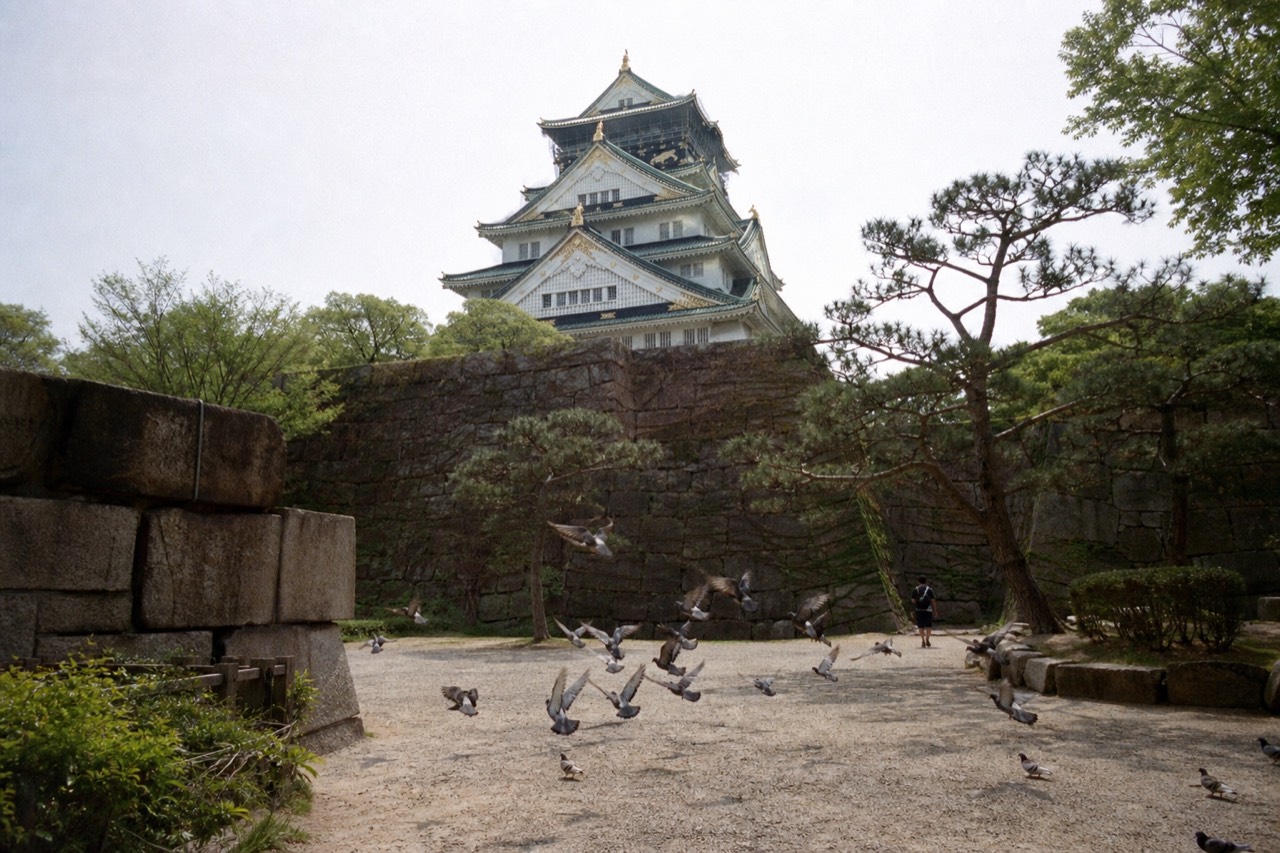
The man who began building Osaka Castle in 1583, on the site of the Ishiyama Honganji temple compound, started life about as far from a castle as a Japanese man of his era could. He was born a peasant's son in Owari province, with no family name worth mentioning and no land. The verified park history records that he took the Osaka site and raised a castle on a scale four to five times the present one, with a gold-gleaming tenshu at its centre. The distance between "peasant's son" and "gold tenshu at the centre of Japan's greatest castle" is the whole backdrop to the monkey story, because every joke about his origins travelled with him on the way up.
The word itself is "saru", monkey, sometimes recorded in the harsher diminutive form meaning "little monkey". Historical tradition attributes the taunt to Oda Nobunaga, the warlord Hideyoshi served from the bottom of the ranks upward. Nobunaga was famous for exactly this kind of contemptuous familiarity with his retainers, and the surviving anecdotes consistently pair his mockery of Hideyoshi's face and manner with his reliance on Hideyoshi's results. A nickname that would have ended another man's career became, in Hideyoshi's hands, a kind of brand.
Where The Monkey Story Actually Comes From?
The sources are anecdotal rather than documentary: no single official paper declares "Hideyoshi is a monkey". The nickname survives through retold episodes of Nobunaga teasing him, through letter-writing conventions of the time, and through the simple fact that everyone repeating the story agreed on the same word, "saru", for the same man. Later portraits and drama scripts inherited it wholesale.
That matters more than it sounds. Hideyoshi is one of the best-documented warlords of his century in official terms, and yet the monkey label reaches us sideways, through social comedy and correspondence, not through decree. The historical convention that Nobunaga used the word in letters is repeated widely, but each retelling depends on the last, and the castle's own published material records his biography rather than his nicknames. So the honest framing is: the tradition is old, consistent and everywhere, but it is tradition.
There is one genuinely strange twist. Monkeys in Japanese folklore are not purely an insult. "Saru" is also a homophone of "leave", and monkey charms were used to encourage bad luck to leave. Warriors sometimes welcomed monkey associations for that reason. Hideyoshi, who was supremely confident in his own luck, appears to have decided that a monkey that climbs is a monkey that wins, and the higher he climbed, from sandal-bearer to castle-builder, the less the word bit.
The nickname also sat comfortably beside a real physical fact: he was small even by the standards of his time, and famously restless. The anecdotes describe a man who could not sit still, who moved fast and talked faster. Comedians in later centuries barely had to exaggerate him. The 2026 NHK taiga drama "Toyotomi Brothers!", which premiered on 4 January 2026 with Sosuke Ikematsu cast as Hideyoshi and Taiga Nakano as his brother Hidenaga, inherited a character already shaped by centuries of that material, per the exhibition site documenting the drama's tie-in shows.
Did Hideyoshi Mind Being Called A Monkey?
The consistent reading of the tradition is that he did not mind, and exploited it. Where other warlords defended their dignity with violence, Hideyoshi answered the "saru" jibes by performing the monkey's virtues, cleverness, agility and relentless climbing, until the insult described exactly the qualities that made him unkillable in politics. The nickname's survival is partly his own public-relations work.
Self-deprecation was a weapon in his position. A peasant's son with no ancestry to invoke gains nothing from standing on ceremony, and loses everything by seeming to pretend. By tolerating, even courting, the monkey image, Hideyoshi signalled that he knew exactly what he was, a self-made man in a world that had never made room for one. The people who laughed at him also underestimated him, and the ones who had underestimated him kept losing.
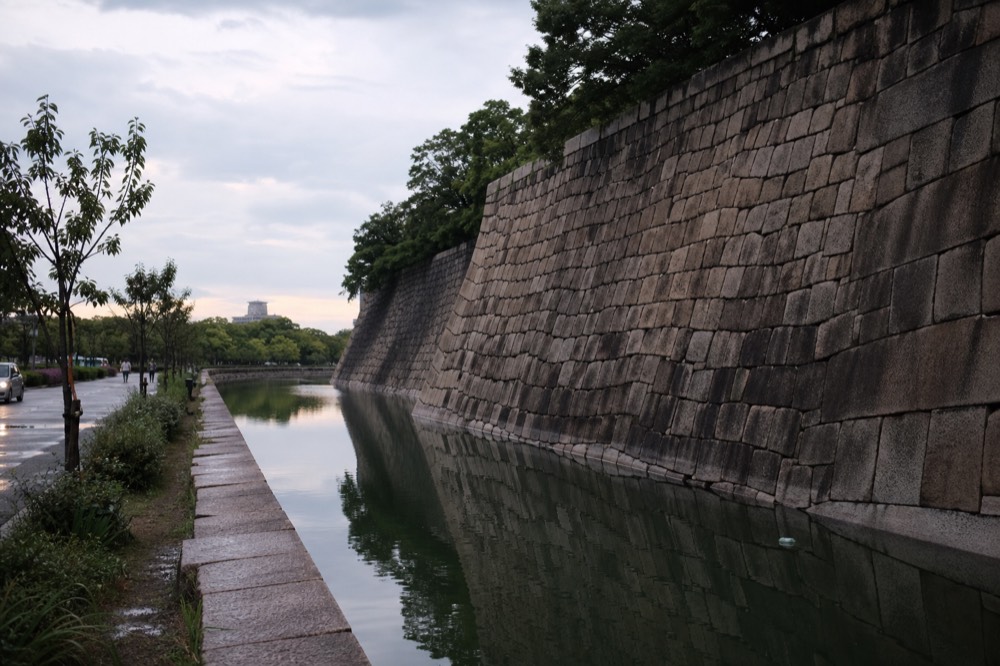
His rise ran through the story of the castle itself. The official park history places the start of construction in 1583, about fifteen years of work, and a finished castle so far beyond the current one in scale that the modern park, at 105.6 hectares, still sits inside the footprint of his ambition. When the Summer War of Osaka destroyed the Toyotomi house in 1615, the Tokugawa shogunate buried the whole thing under fill, as the Toyotomi Stone Wall Museum's own English leaflet puts it, "as if to erase the authority of the Toyotomi family". The monkey's castle, in other words, was so imposing that the victors literally buried it, roughly six metres of earth at the nakanodan tier, and it stayed hidden until the twentieth century.
How Do Museums And Dramas Handle The Nickname Today?
They lean into it. The Osaka Castle Museum, the operator of the Main Tower, presents Hideyoshi's life on the 7th floor of the tower as its central story, and pop-culture treatments, including the 2026 taiga drama, keep the monkey-adjacent, comic-pest energy of the man alive because it is the version audiences recognize. The 2026 drama wave has made the material unusually current.
The museum context is worth knowing for any visitor. The tower is a museum, and has been since its 1931 reconstruction, holding and rotating collections relating to Hideyoshi, the Sengoku period and the castle's history. The floor guide runs from the 8F observation deck at about fifty metres above ground, down through the 7F Hideyoshi life exhibit, the 5F Summer War of Osaka screen exhibit, and the 3F and 4F floors displaying Important Cultural Properties, where photography is banned. The 1F theater room, renewed in March 2025, screens five programmes about Hideyoshi and the castle with Japanese, English, Chinese and Korean subtitles. A visitor who arrives curious about the monkey will find the man himself, not the joke, at the centre of the building, with the buried wall of his original castle visible at the Toyotomi Stone Wall Museum on the same ticket.
The 2026 wave is real and dated. The NHK Taiga Drama Special Exhibition "Toyotomi Brothers!" has been touring Japanese museums alongside the 2026 Taiga drama, and the Osaka leg at the Osaka Museum of History has already closed, so older blog posts recommending that pairing are out of date. The castle's own tower museum still rotates collections on Hideyoshi and the Sengoku period, and it has done so ever since the 1931 reconstruction. The castle's own summer programming at the tower, including special exhibits featuring Hideyoshi artifacts, has drawn local praise on social media. None of that is about the nickname directly, but all of it keeps the man in front of Japanese audiences, and every retelling reintroduces the face and the manner that earned him the word.
The Nickname Versus The Reappraisal
The monkey jokes sit next to a harder conversation. Kyushu National Museum held the feature exhibition "Toyotomi Hideyoshi and East Asian Diplomacy" from 27 January to 8 March 2026, displaying diplomatic documents and gifts related to the Imjin War, his invasion of Korea. Hideyoshi's overseas campaigns caused enormous suffering, and modern Japanese museums increasingly address that record rather than gloss it. The monkey material is the charming half of his image; the diplomatic papers are the sobering half, and a fair telling of his life holds both. The nickname never justified the man, and the man was never only the nickname.
from $7.69 The from-price you see online and the price at the castle window are the same adult admission, so booking ahead costs nothing extra.
Your ticket into the tower
Official E-Ticket
- Osaka Castle Main Tower entry
- Osaka Castle Toyotomi Stone Wall Museum
- QR code entry
- Valid 30 days
- No fixed time slot
- No viewing time limit
Buying the official e-ticket ahead saves you the ticket-purchase line, not money, since the online price matches the window. You exchange nothing at the gate, you simply show the voucher and go in.
The real flexibility here is the voucher's 30-day validity, with no fixed time slot and no set viewing time limit.
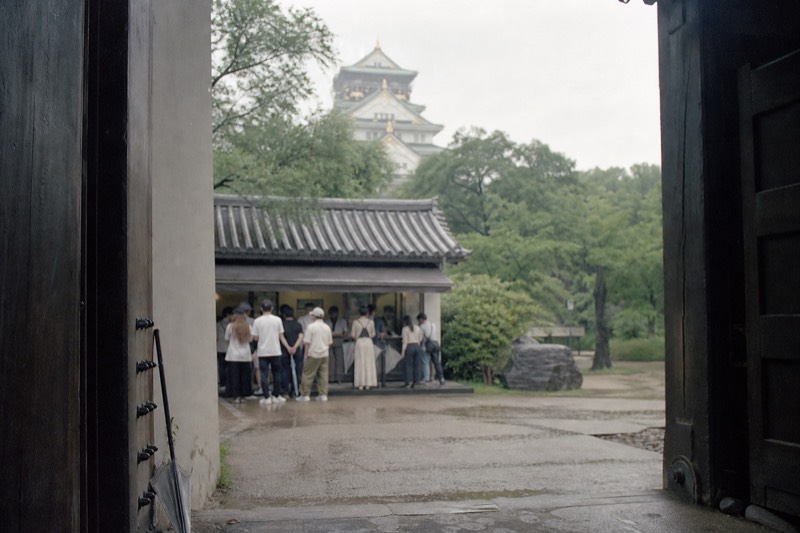
At The Gate
Adult, per person Group rate from 15 paying visitors Free categories at the window
¥1,200
The window price is identical to the online price, so nothing is lost by paying in person. Students and under-15s should buy here, because proof-of-age discounts are handled face to face and not through an e-ticket.
Students with ID and visitors aged under 15, since discounted and free rates are only applied at the window.
See what it covers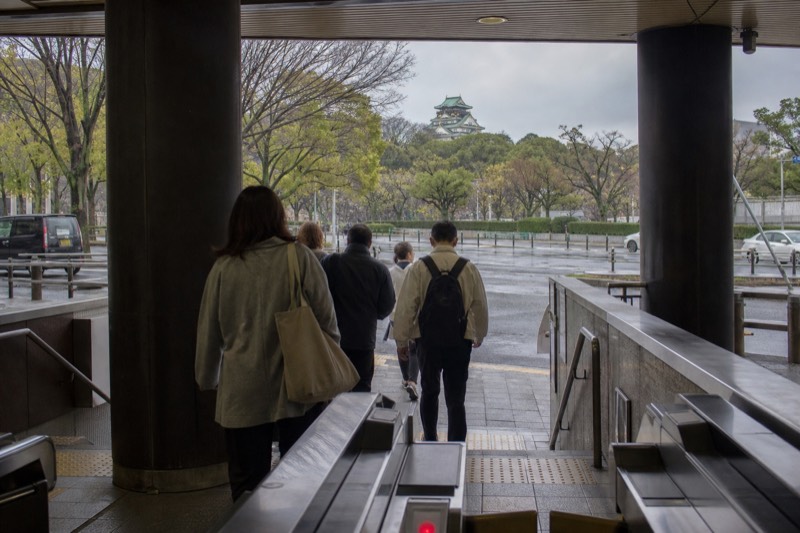
Osaka Amazing Pass
One-day pass On sale 25 March 2026 to 31 March 2027
¥3,500
The one-day pass costs 3,500 yen against the 1,200 yen castle ticket on its own, so it only pays off with two or more other paid sights. Add transport and the maths tips further in its favor.
Visitors packing several paid sights plus metro and bus rides into one day, who will clear the pass price easily.
See what it covers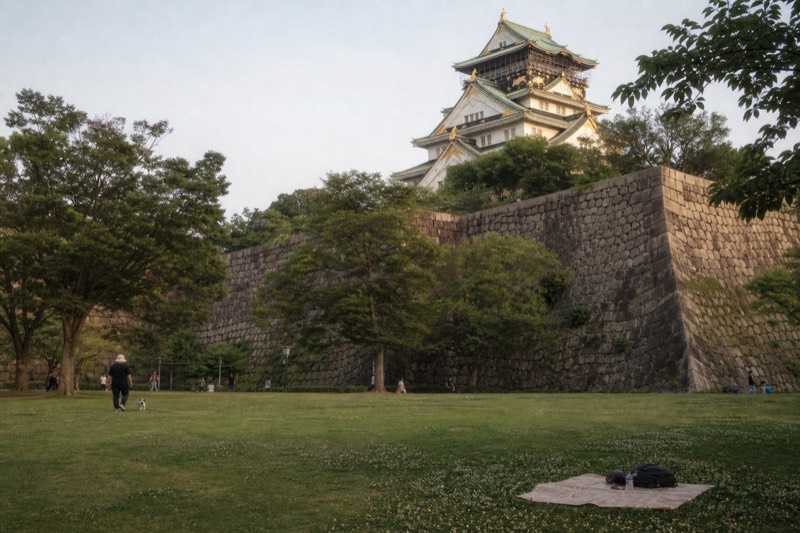
Free Park Areas
No admission charge
Free
The park grounds, moats, stone ramparts and exterior views of the tower cost nothing at all, and they fill a half day on their own. The paid line falls only at the Main Tower entrance and the Toyotomi Stone Wall Museum.
Anyone who wants the castle views, moats and grounds without paying to go inside the buildings.
See what it covers| Where the "monkey" image shows up | What it looks like there | Tone |
|---|---|---|
| Anecdotal tradition of Nobunaga's teasing | Jokes about Hideyoshi's face and stature | Mocking |
| Hideyoshi's own self-presentation | Wears the insult, plays the clever climber | Strategic |
| Osaka Castle Museum, 7F | His life story and era, artifacts and exhibits | Curatorial |
| Taiga drama and tie-in exhibitions, 2026 | A full-blooded characterization by actors | Dramatic |
| Modern museum reappraisals, 2026 | Diplomacy and war exhibits, attributed scholarship | Serious |
What Did The Monkey Build At Osaka Castle?
He built the original Osaka Castle, from 1583, roughly four to five times the scale of what stands today, with a gold tenshu at the centre and a three-tier platform structure beneath it that the castle museum's own curatorial column credits with the epithet "unrivalled within the three kingdoms". The present tower is a 1931 reconstruction; his walls were buried, and are now the heart of the Stone Wall Museum.
The scale claims are not folklore. The park's official history text states the four-to-five-times figure and the fifteen-year build plainly. The curatorial column on castle heights adds detail that the nickname story never captures: the Toyotomi-era tenshu stood about forty metres above the tsumenomaru surface, so its top reached about seventy metres elevation, roughly nineteen metres lower than the later Tokugawa tower, but it stood on the three-tier shitanodan, nakanodan and tsumenomaru platform, with a further wall under it, which is why contemporaries called it unrivalled. A monkey's castle, by the numbers, was one of the wonders of its century.
The stone that survives makes the point physically. The exposed section in the Stone Wall Museum protected the tsumenomaru, the private quarters where Hideyoshi and his wife One lived, and later Yodo-dono and Hideyori. It uses nozurazumi, natural-face masonry with barely worked stones, carries traces of the Summer War fires burnt onto the stone faces, and even repurposes foundation stones carried in from ancient temples. Visitors walking down into that basement gallery are looking at the wall of the monkey's own quarters, rediscovered in 1984 about a metre below the current surface, after the Tokugawa fill had hidden it for centuries.
Readers planning a visit can pair this history with the practical pages: the castle history guide covers the full timeline, the inside-the-castle guide walks the floor-by-floor layout, and what Hideyoshi was famous for tackles his record beyond the nickname. For tickets, Osaka Castle Tickets covers the entry options for the tower and the Stone Wall Museum in one place.
Why Does The Nickname Still Matter To Visitors?
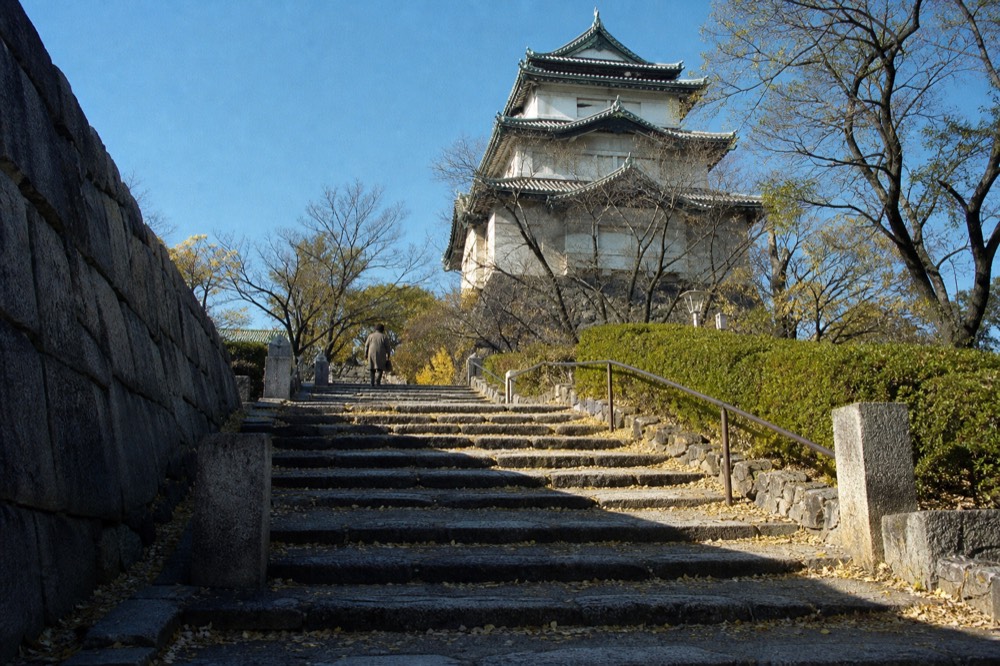
The nickname matters because it is the hook that pulls most visitors toward the man, and the castle is where the hook meets the evidence. Someone who arrives knowing only "the monkey guy" can see the seventh-floor Hideyoshi exhibit, descend to his buried stone wall on the same ticket, and leave with a far larger story: a peasant who unified Japan, built the greatest castle of his age, launched a disastrous war, and had his work erased and rediscovered.
The FY2025 figures hint at how strong that pull currently is. The Main Tower recorded 2,813,851 admissions in fiscal 2025, a provisional figure and an all-time record, 105.8 percent of FY2024, the first time the tower has passed 2.8 million in a year since it opened in 1931. The nickname has kept its grip on popular memory, helped along by television dramas about the Toyotomi era and by the Toyotomi Stone Wall Museum, which puts the man's actual stonework on display. Not all of those visitors come for Hideyoshi, but the drama timing and the new Stone Wall Museum have put his name in front of more travellers than at any point in recent memory.
The honest summary of the nickname is that it is a door, not a verdict. It survives because it compresses a complicated man into a face you can remember, and because the man himself refused to be diminished by it. The castle he built for himself, and the museum that now occupies its successor, do the fuller job.
The nickname survives because it compresses a complicated man into a face you can remember, and because the man himself refused to be diminished by it. These questions cover the origins of the word "saru", Hideyoshi's own response to it, and where visitors can still meet the evidence of his life at Osaka Castle, from the tower museum to the buried wall of his original castle.
Common Questions About Hideyoshi's Monkey Nickname
Why Was Toyotomi Hideyoshi Called A Monkey?
Tradition attributes the nickname "saru", monkey, to his lord Oda Nobunaga, mocking Hideyoshi's small frame, pointed features and restless manner, and his peasant birth. No single official document decrees it; it survives through consistent anecdotal tradition, and Hideyoshi himself wore it rather than fighting it.
Did Hideyoshi Call Himself A Monkey?
The tradition holds that he tolerated and played along with monkey references rather than taking offence, using the image of a clever, climbing monkey as an asset. Self-deprecation suited a self-made man in a status-obsessed age.
Was The Nickname An Insult About His Looks?
Largely, yes, combined with a jab at his origins. The anecdotes pair his appearance with his low birth, both things he could not change, and both things he overcame. Later folklore also gave monkey associations luckier meanings, which helped him reframe it.
Where Can I See Things Connected To Hideyoshi In Osaka?
The Osaka Castle Museum occupies the Main Tower, with his life story on the 7F floor, and the same ticket includes the Osaka Castle Toyotomi Stone Wall Museum, the underground gallery built around the rediscovered wall of his original castle.
Is The Monkey Nickname Used In Modern Japanese Media?
Yes, continuously. The 2026 NHK taiga drama "Toyotomi Brothers!" and its touring exhibition keep his characterization current, and museums presenting his era, including the 2026 diplomacy exhibition at Kyushu National Museum, now sit the familiar image beside the serious historical record.
Does Osaka Castle Have Anything Hideyoshi Actually Built?
Above ground, no: the current tower is a 1931 reconstruction on the Tokugawa rebuild. Below ground, yes: the Toyotomi-era stone wall of the tsumenomaru, buried under about six metres of fill in the 1620s and now displayed in the Stone Wall Museum.