Does The Toyotomi Clan Still Exist?
The direct Toyotomi line ended at Osaka Castle in 1615, but the family story is bigger than one siege. What the records show, what is only reported, and where to see the clan's world today.
Does The Toyotomi Clan Still Exist?
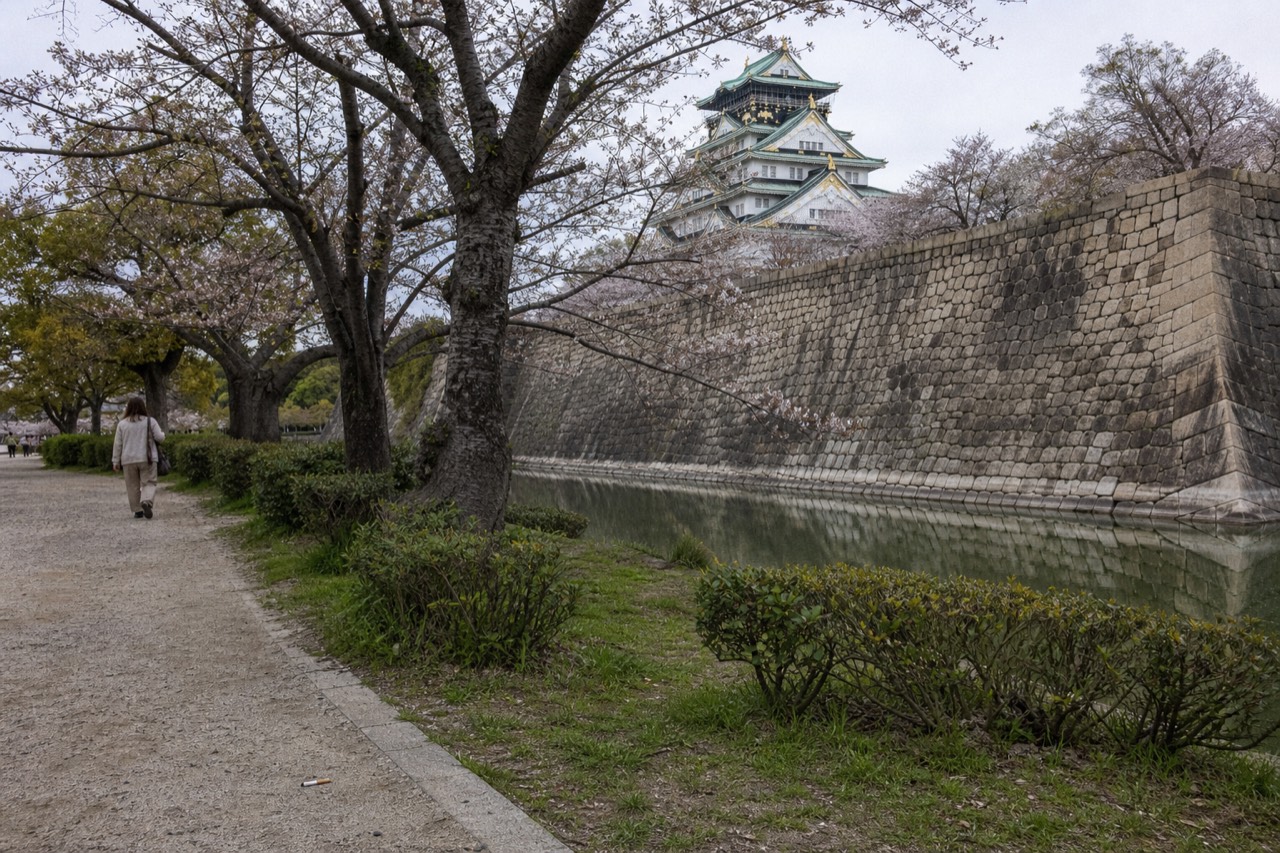
No, not as a continuing house: the direct line of Toyotomi Hideyoshi ended when Osaka Castle fell in the Summer War of 1615, and the castle's own history records the Toyotomi house as destroyed in that siege. Hideyoshi left no surviving heir after his son Hideyori died in the fall, and the Tokugawa shogunate buried the castle itself under fill, as if to erase the family's authority. What survives today is memory, stone, and attention, not a clan.
That is the short answer, and it is the one the official park history supports without qualification. Hideyoshi began building Osaka Castle in 1583 on the site of Ishiyama Honganji, finished it about fifteen years later, and died in 1598. His son Hideyori held the castle against the Tokugawa until the Summer War of Osaka in 1615, when the house was destroyed and the whole castle burned.
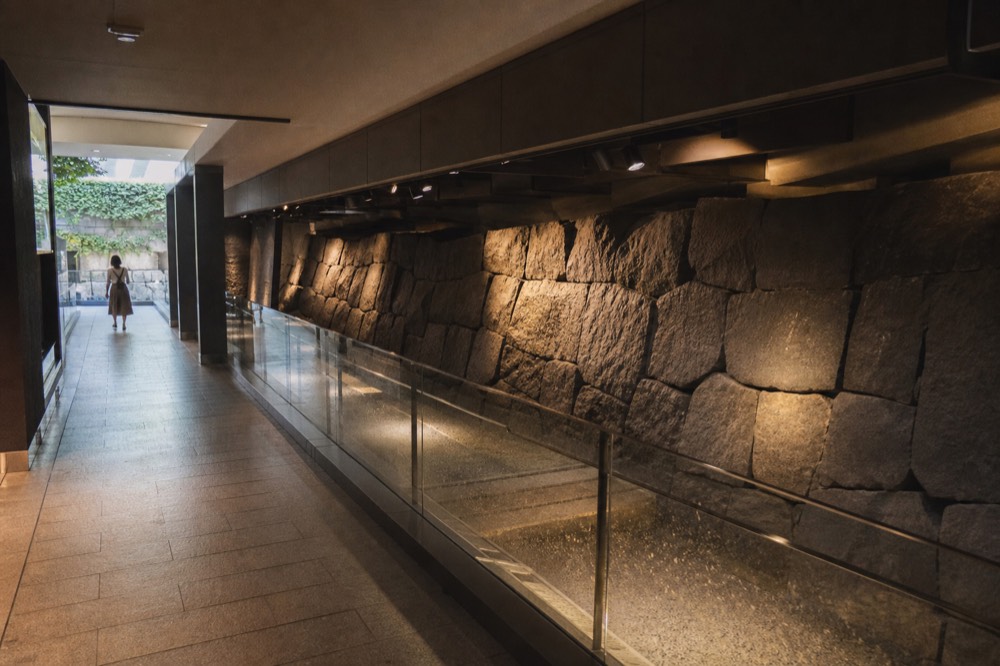
The question is being asked more often in 2026 than it has been for years, and there is a concrete reason: the NHK taiga drama "Toyotomi Brothers!" premiered on 4 January 2026, putting Hideyoshi, his brother Hidenaga, and the family's rise and fall on national television every Sunday evening. Interest in the clan has a visible footprint at the castle itself, in the form of the Osaka Castle Toyotomi Stone Wall Museum, which opened on 1 April 2025 inside the honmaru.
The distinction that matters throughout this article is between what is established and what is reported. The end of the direct line in 1615 is established, stated plainly in the official history of the park. Claims about distant blood relatives surviving through other families are reported in Japanese commentary published amid the 2026 drama wave, and they are worth reading as reported claims, not as settled genealogy.
If the family's story pulls you toward the place it ended, the two products below are the practical ways in: an admission ticket that includes the underground Toyotomi Stone Wall Museum, and a guided walk of the castle grounds with a live English-speaking guide.
Who Were The Last Toyotomi?
The last Toyotomi of the direct line were Hideyori, the son of Hideyoshi, and Yodo-dono, his mother, who held Osaka Castle until the Summer War of 1615 destroyed the house. Hideyoshi himself died in 1598, after a build of roughly 15 years from 1583, and his younger brother Hidenaga, the clan's other pillar, had died before him. After 1615 no one of Toyotomi blood held the castle, the name, or the fortune again.
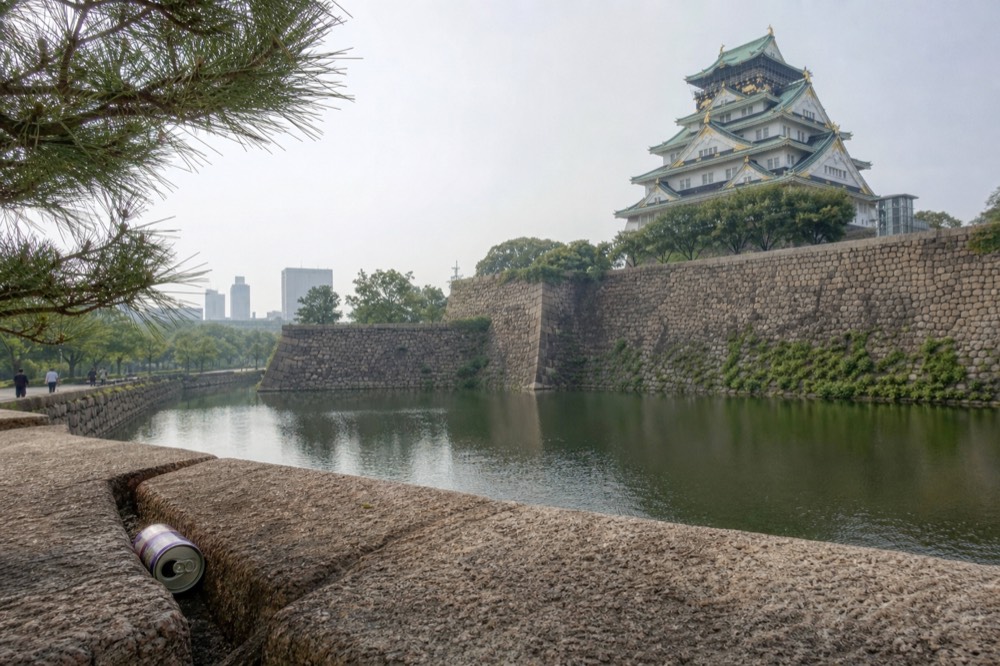
The official park history is unsentimental about what happened. In Genna 1 (1615) the Summer War of Osaka ended with the Toyotomi house destroyed and the entire castle burned. The Tokugawa shogunate began its rebuild in 1620, and that rebuild was not a restoration: it involved large-scale earth fill across the whole site, entirely new stone walls, deepened moats, and a tenshu about 15 m taller than Hideyoshi's. The result, the park's own text says, was completely different from the Toyotomi castle.
The family's private quarters make the story physical. The wall now on display in the Toyotomi Stone Wall Museum protected the tsumenomaru, the innermost compound where Hideyoshi and his wife One lived, and where Yodo-dono and Hideyori lived after them. It was the most important core of the honmaru. When the shogunate rebuilt, it piled about six meters of earth over that ground, and the Toyotomi-period walls have not been visible above ground anywhere since.
There is a detail here that most first-page summaries miss, and it comes from the castle museum's own curatorial column. In the tsumenomaru area, around today's tower and reservoir, the ground Hideyoshi and Hideyori actually walked on lies only about 1 m below the present surface. The burial that hid the family's castle was massive on the moat lines, where a 1969 boring struck stone about 25 m down, but at the heart of the honmaru the Toyotomi world sits almost within arm's reach underfoot. The Stone Wall Museum, whose own page describes the facility, is the one place the public can walk down to it.
Do Toyotomi Descendants Survive Through Other Families?
No descent from Hideyoshi or Hidenaga themselves is established: their direct lines ended, and the verified record stops there. Japanese commentary published in January 2026, amid the drama wave, discusses Toyotomi-related blood continuing through the Kinoshita family, the family of Hideyoshi's sister, who became daimyo and later nobility. That branch is reported, not established, and honest copy keeps the two apart.
The reported claim has a specific shape. Articles published in January 2026 argue that while Hideyoshi's own line and Hidenaga's line ended, the Kinoshita relatives, connected to the clan through Hideyoshi's sister, held domains and later noble status into the modern era. The source is a commercial column, not a peer-reviewed genealogy or an official family register, which is exactly why this site reports it rather than asserting it.
It is also worth being clear about why the question feels urgent this year. The 2026 taiga drama "Toyotomi Brothers!" premiered on 4 January 2026 with Taiga Nakano as Hidenaga and Sosuke Ikematsu as Hideyoshi, and the linked special exhibition toured Nagoya from 18 April to 14 June 2026, the Osaka Museum of History from 8 July to 31 August 2026, and Tokyo from 15 September to 8 November 2026, per the exhibition's own site at toyotomi2026.jp. A national drama about a family naturally sends viewers hunting for its living descendants.
The drama wave has reached the castle's own exhibition rooms, too. According to the castle museum's own X account, a Hideyoshi summer special ran in the 3F exhibition room to 7 October 2026, and an exhibition called "Osaka Castle Zoo" ran in the 4F room to 8 October 2026, with a Sengoku siblings exhibition following across both floors from 10 October to 23 November 2026. Those are the castle's own programming choices, and they are aimed squarely at the audience the drama created.
A family tree can hold all of this in one view:
| Person | Relationship | Fate | Status of the record |
|---|---|---|---|
| Toyotomi Hideyoshi | Founder, began the castle in 1583 | Died 1598 | Established, official park history |
| Toyotomi Hidenaga | Hideyoshi's younger brother | Died before Hideyoshi | Established, official park history |
| One | Hideyoshi's wife, lived in the tsumenomaru | Died before the fall | Established, castle museum material |
| Yodo-dono | Hideyori's mother, held the castle | Castle fell 1615 | Established, official park history |
| Toyotomi Hideyori | Hideyoshi's heir | House destroyed 1615 | Established, official park history |
| Kinoshita line | Relatives via Hideyoshi's sister | Reported to continue as daimyo and nobility | Reported, January 2026 commentary |
Where Can You Still See The Toyotomi World?
The strongest surviving Toyotomi site is the wall of the tsumenomaru itself, on display in the Osaka Castle Toyotomi Stone Wall Museum inside the honmaru since 1 April 2025, included in the ¥1,200 adult tower ticket with no separate fee. The wall shows natural-face masonry, fire traces from 1615, and stones carried in from ancient temples. Above ground, nothing of the Toyotomi castle survives anywhere.
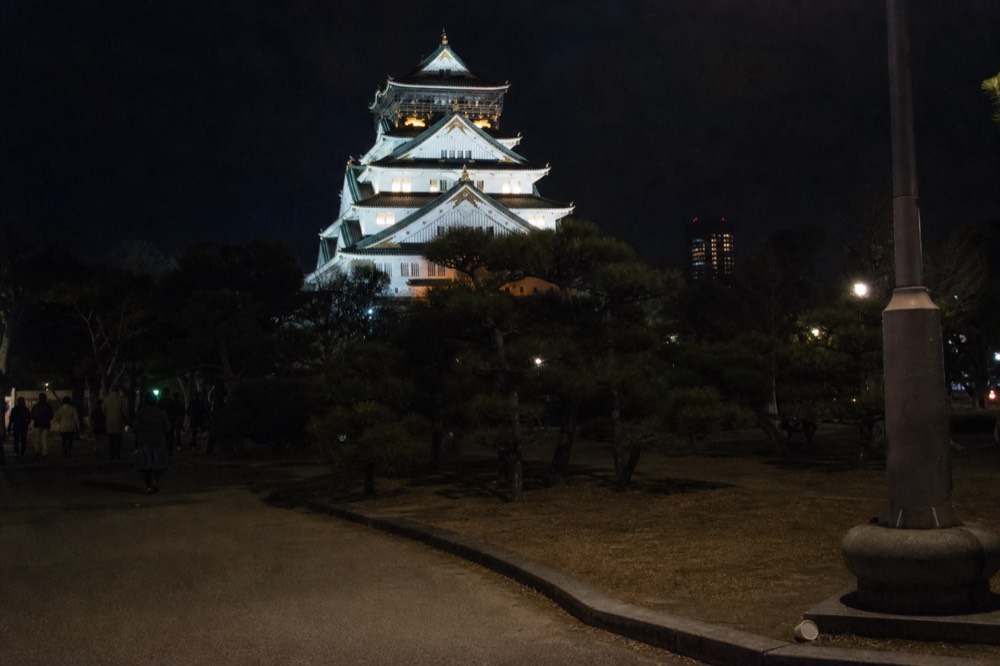
That last clause is the fact most visitors find startling. Everything visible above ground today, walls and moats alike, is the Tokugawa rebuild. The Toyotomi castle was 4 to 5 times the scale of the present castle, with a gold-gleaming tenshu at its centre, and all of it was buried or burned (see Real Gold?). What the museum lets you do is stand at the buried wall of the family's private quarters and look at masonry laid before 1615.
from $7.69 The from-price you see online and the price at the castle window are the same adult admission, so booking ahead costs nothing extra.
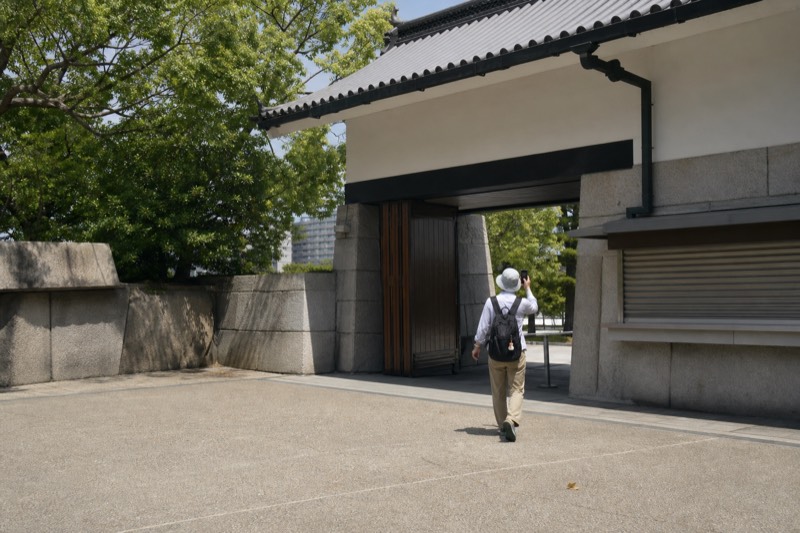
Your ticket into the tower
Official E-Ticket
- Osaka Castle Main Tower entry
- Osaka Castle Toyotomi Stone Wall Museum
- QR code entry
- Valid 30 days
- No fixed time slot
- No viewing time limit
Buying the official e-ticket ahead saves you the ticket-purchase line, not money, since the online price matches the window. You exchange nothing at the gate, you simply show the voucher and go in.
The real flexibility here is the voucher's 30-day validity, with no fixed time slot and no set viewing time limit.
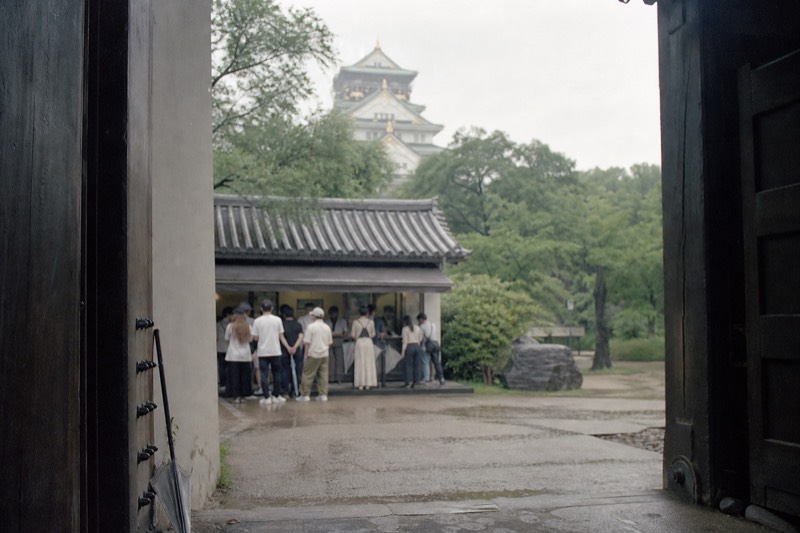
At The Gate
Adult, per person Group rate from 15 paying visitors Free categories at the window
¥1,200
The window price is identical to the online price, so nothing is lost by paying in person. Students and under-15s should buy here, because proof-of-age discounts are handled face to face and not through an e-ticket.
Students with ID and visitors aged under 15, since discounted and free rates are only applied at the window.
See what it covers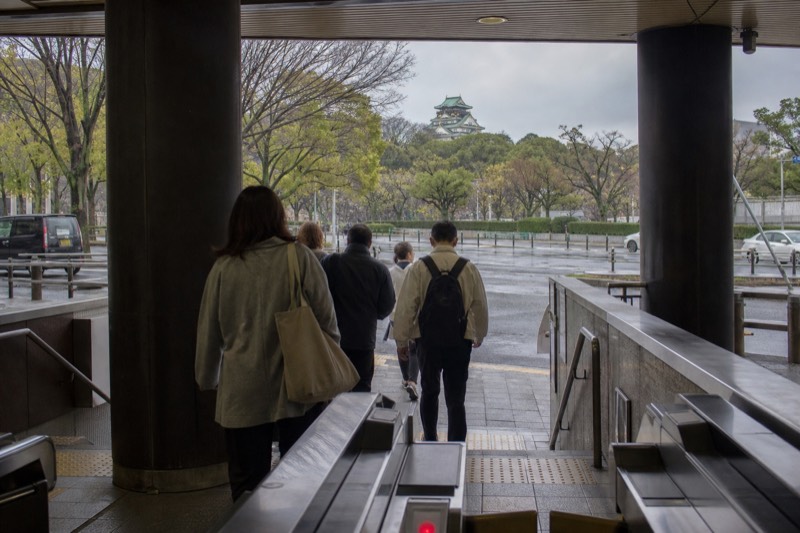
Osaka Amazing Pass
One-day pass On sale 25 March 2026 to 31 March 2027
¥3,500
The one-day pass costs 3,500 yen against the 1,200 yen castle ticket on its own, so it only pays off with two or more other paid sights. Add transport and the maths tips further in its favor.
Visitors packing several paid sights plus metro and bus rides into one day, who will clear the pass price easily.
See what it covers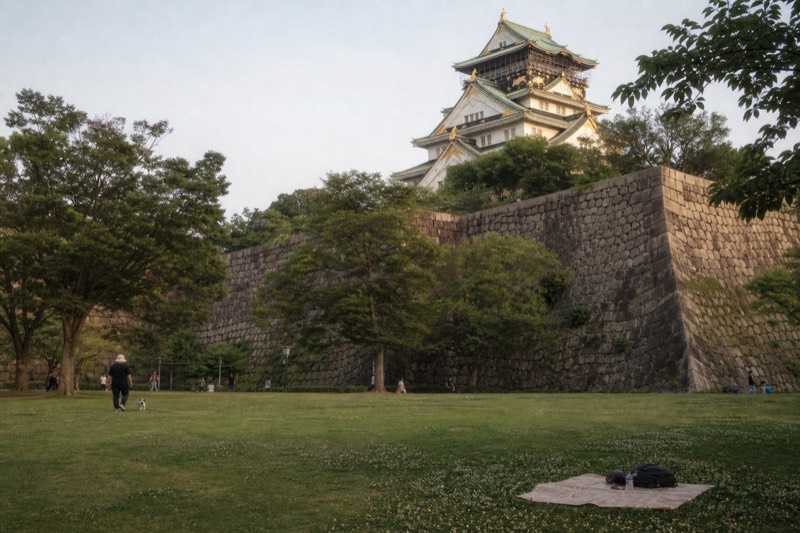
Free Park Areas
No admission charge
Free
The park grounds, moats, stone ramparts and exterior views of the tower cost nothing at all, and they fill a half day on their own. The paid line falls only at the Main Tower entrance and the Toyotomi Stone Wall Museum.
Anyone who wants the castle views, moats and grounds without paying to go inside the buildings.
See what it covers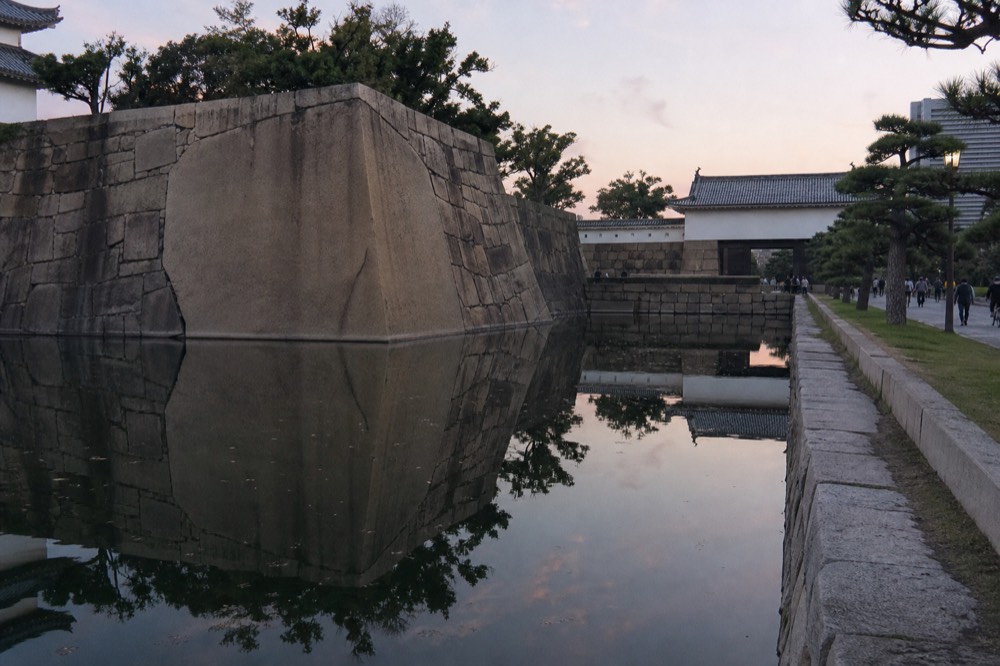
The tower above it adds the family's afterlife as a museum. It has been a museum since the moment it was rebuilt in 1931, holding and rotating collections relating to Hideyoshi, the Sengoku period, and the castle's history. The 7F floor is devoted to the life of Toyotomi Hideyoshi, and the 5F to the world of the Summer War of Osaka folding screen. The castle's own guide page, at osakacastle.net, carries the practical details, including the warning that the ticket-purchase queue can be capped before the 17:30 last admission.
If you want the family's story told to you rather than read off panels, the guided walking tour covers the castle grounds with a live English-speaking guide, private or small group, over 1.5 to 3 hours. Its base price does not include tower admission, so a reader taking the walk and wanting the Stone Wall Museum still needs an admission ticket: the two products stack rather than substitute. The tour is rated 4.7 across 262 reviews and runs from $28.85.
For the self-guided majority, the entry ticket is the simpler purchase. It is admission only, self-guided, with no guide and no headphones bundled, covering the Main Tower and the Stone Wall Museum. The voucher is valid 30 days, with no fixed time slot to pick and no set viewing time limit once you are inside, which suits a visit built around the drama's timeline rather than a rigid schedule. It is rated 4.5 across 3,768 reviews and is listed from $7.69 per adult, which at about 156 JPY/USD is the same as the official ¥1,200 gate price: the ticket buys a skipped ticket-purchase line and guaranteed entry, not a discount.
Students should know the gate arithmetic before buying. High school and university students pay ¥600 with proof, and junior high students and under enter free, while the online listing sells only the one adult ticket type. For those visitors, buying at the gate is the better route. The exemptions are also worth a check: Osaka city residents aged 65 and over enter free with proof, and disability-handbook holders enter free with one carer, per the castle's own guide page.
Timing matters more than it might seem. Since the ticket-purchase queue can be capped before the 17:30 last admission, arriving in the final hour risks missing the tower entirely, so build in buffer if the Stone Wall Museum is your priority. Inside the tower, a natural route is to start on 7F for Hideyoshi's life story, then drop to 5F for the Summer War folding screen, which depicts the very 1615 fighting that scorched the buried wall below.
The exemptions can add up for families. An Osaka resident aged 65 or over visiting with a disability-handbook holder and a grandchild in junior high or younger would pay nothing at the gate, while the 30-day voucher window on the online ticket means everyone else can buy now and choose the day once the forecast is clear.
Why Does The Family Still Draw Crowds In 2026?
Because the drama gave the name a national stage while the castle gave it a physical one: FY2025 admissions to the Main Tower reached a provisional all-time record of 2,813,851, the first year above 2.8 million since the tower opened in 1931, and the period coincides with the 2026 broadcast and the Stone Wall Museum's first year. The family is gone, but its site has never been busier.
The city's own press release of 10 April 2026, at city.osaka.lg.jp, states the figure and calls it provisional, with the confirmed number due later. It beat the previous record year, FY2017's 2,754,395, after eight years. The release does not attribute the record to the drama, and neither does this site: the record and the broadcast overlap, but the cause is not sourced. What can be said is that both are real, and both point at the same family.
There is a quieter strand in the same wave. A March 2025 excavation report documented Toyotomi-period building remains, a moat with Chinese and Korean ceramics, gold-foil roof tiles, and Tokugawa-period stone storage at a site near the castle, and those finds were exhibited at the Osaka Museum of History from 21 January to 30 March 2026. The buried family keeps producing new physical evidence, four centuries after its end, which is as close to a continuing existence as the Toyotomi have.
For a visitor deciding what to do with all this, the honest summary is short. The clan does not exist; its wall does, one meter underfoot, and the cheapest way to stand at it is the standard admission ticket. This article sits alongside a wider set of guides on the site, including what the Toyotomi Stone Wall Museum actually is and the full history of Osaka Castle, if you want the longer versions of these stories. The site's homepage, Osaka Castle Tickets, carries the current ticket details.
Common Questions About The Toyotomi Clan
Does The Toyotomi Clan Still Exist?
No. The direct line of Toyotomi Hideyoshi ended when Osaka Castle fell in the Summer War of 1615, and the official park history records the Toyotomi house as destroyed in that siege. Reported claims about relatives surviving through the Kinoshita family are commentary, not established genealogy.
Who Was The Last Toyotomi?
Toyotomi Hideyori, Hideyoshi's son, who held Osaka Castle with his mother Yodo-dono until the Summer War of Osaka in 1615. Hideyoshi himself had died in 1598, and his brother Hidenaga had died earlier still.
Are There Toyotomi Descendants Today?
None from Hideyoshi's or Hidenaga's own lines: those ended, and the verified record stops there. Japanese commentary published in January 2026 discusses Toyotomi-related blood continuing through the Kinoshita family, the family of Hideyoshi's sister, but that branch is reported, not established.
Why Is The Toyotomi Family In The News In 2026?
The NHK taiga drama "Toyotomi Brothers!" premiered on 4 January 2026, and a linked special exhibition toured Nagoya, the Osaka Museum of History and Tokyo across 2026. The castle itself opened the Toyotomi Stone Wall Museum on 1 April 2025 and ran Hideyoshi-themed exhibitions in its 3F and 4F rooms through 2026.
Can You Still See Anything Of The Toyotomi Castle?
Above ground, no: everything visible today is the Tokugawa rebuild. The one public exception is underground, the tsumenomaru stone wall in the Osaka Castle Toyotomi Stone Wall Museum, included in the ¥1,200 adult tower ticket with no separate fee.
Did The Tokugawa Destroy The Toyotomi Castle?
The castle burned in the 1615 siege that destroyed the house. The shogunate then rebuilt from 1620 with massive earth fill, new walls and deeper moats, deliberately burying the Toyotomi castle, whose walls have not been visible above ground anywhere since.