Nishinomaru Garden: Hours, Admission And The Best View Of The Castle
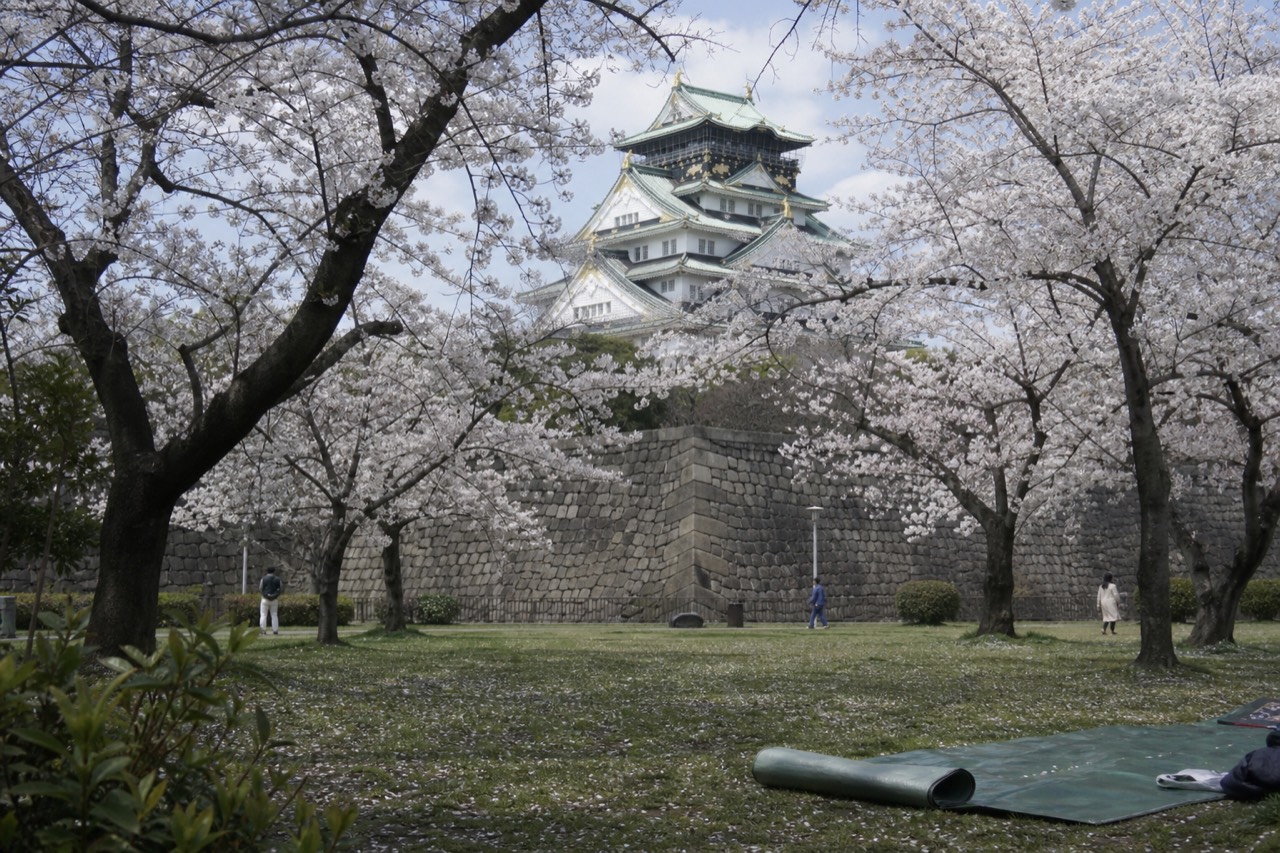
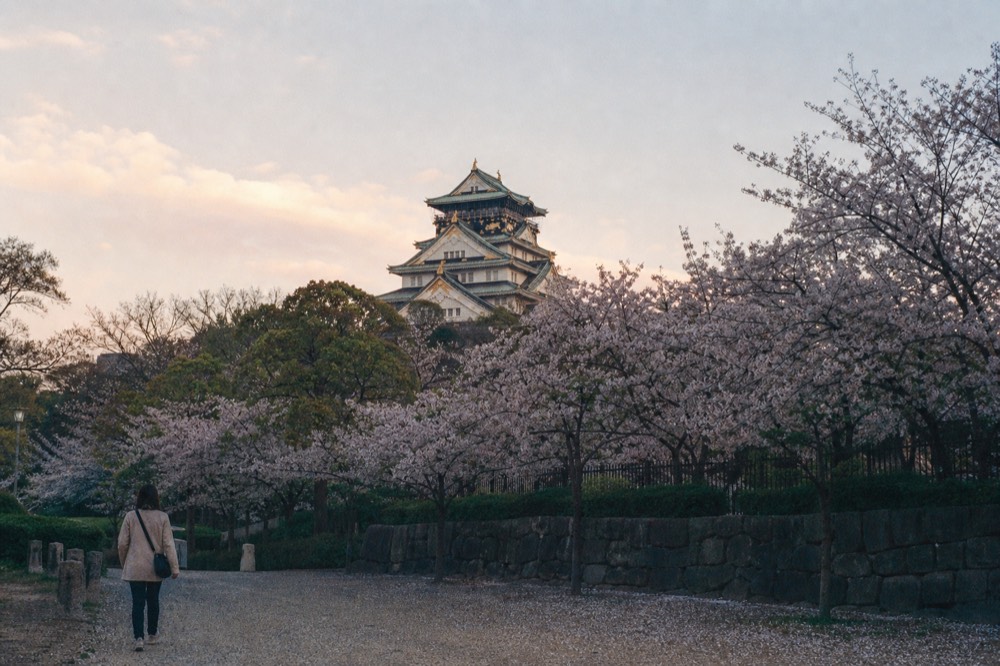
Nishinomaru Garden is the separately ticketed lawn west of the Main Tower, and it is where the classic photograph of the keep framed by cherry blossom is actually taken from. It costs 300 JPY, keeps different hours from the tower, and closes on Mondays.
Short answer
Nishinomaru Garden is a separate 300 JPY ticket (adults, since 1 April 2026), open 9:00 to 17:00 March to October and 9:00 to 16:30 November to February, closed Mondays. During the Kan'o Nighter cherry season it stays open to 21:00 at 350 JPY. It holds about 300 cherry trees and the postcard view of the keep.
What Is Nishinomaru Garden And Why Does It Have Its Own Ticket?
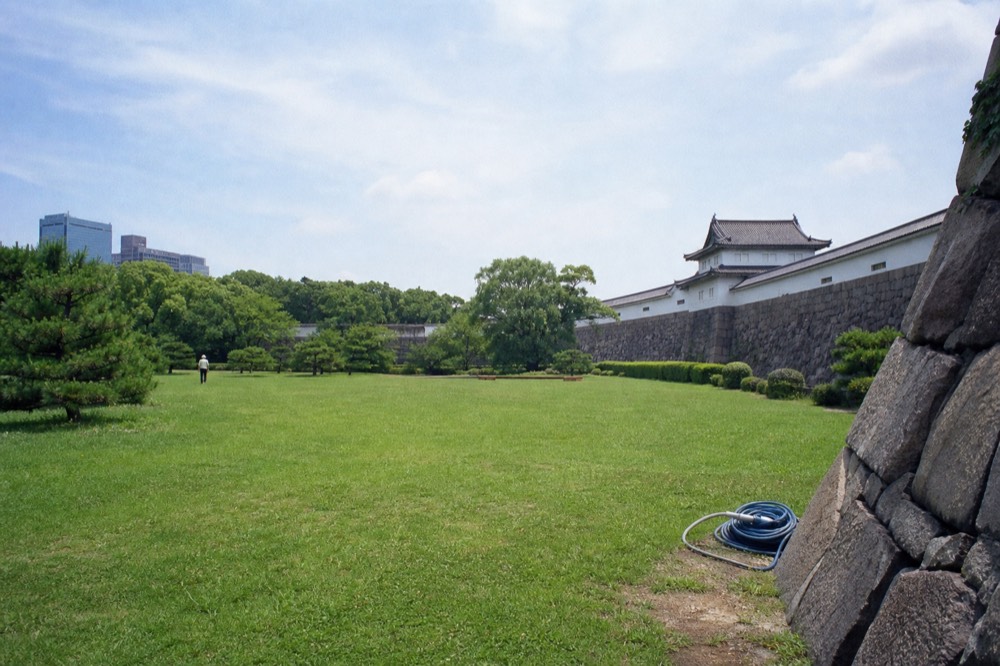
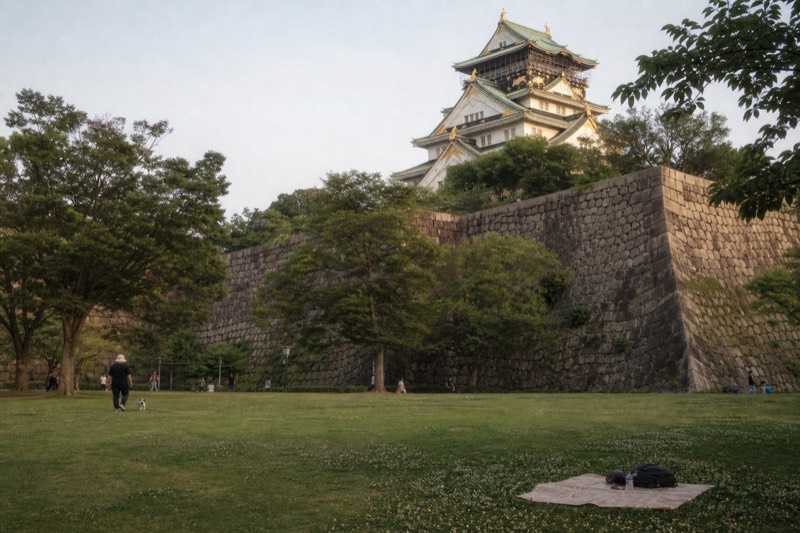
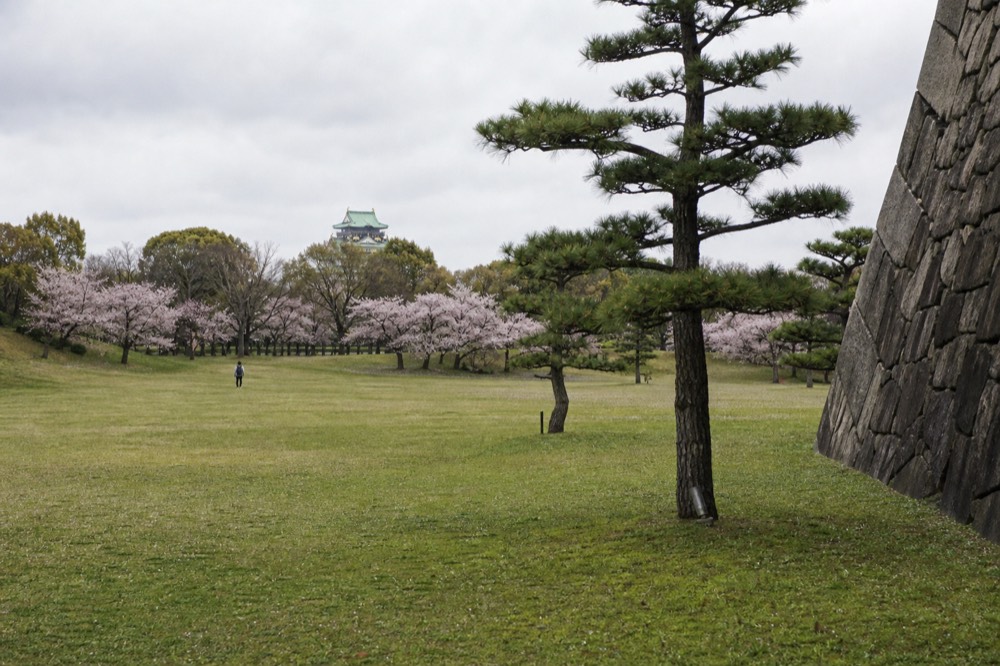
Nishinomaru Garden is the roughly 6.4 hectare lawn and cherry grove on the castle's west side, once the site of Toyotomi Hideyoshi's secondary residence and later the Tokugawa household quarters, and it is fenced, gated and sold as a separate admission from the Main Tower. The castle ticket does not get you in, and the garden ticket does not get you into the tower. Roughly half of it is open lawn, which is unusual at a Japanese castle: most castle grounds are stone, gravel and moss, but here the inner bailey was flattened into a picnic lawn, as covered by the official park chronology, and it has stayed that way. The result is the single best place inside the castle complex to sit down.
The garden opened in 1965, according to the park's own chronology, and it has been the castle's prime hanami spot ever since. About 300 cherry trees stand inside the fence, mainly Somei-Yoshino with some weeping shidarezakura, and they are the reason most visitors pay the extra admission in spring. The rest of the year the draw is quieter: the oldest surviving buildings at Osaka Castle, a 300-year-old granite powder magazine, a tea house donated by the founder of Panasonic, and an unobstructed westward view of the keep that the free outer park cannot match.
The name trips people up. "Nishinomaru" means the western circle, the outermost of the three baileys of a Japanese castle, and it usually held the heir's residence and reception halls rather than the lord's own quarters. At Osaka Castle the Tokugawa shogunate built lavish guest palaces here for imperial visits, none of which survive; the 1620 turrets and storehouses do. So the garden you walk into is a modern lawn wrapped around genuine early Edo structures, and the contrast is part of the point.
It is also the one paid extra most visitors get wrong, in both directions. Some assume the 1,200 JPY tower ticket includes the garden and are turned away at its gate; others skip the garden entirely and spend their whole visit on the free outer paths, never realising the photograph they came for is taken from inside the fence. Neither mistake is expensive, at 300 JPY, but both are avoidable, and the rest of this guide exists to prevent them. For the full picture of what the castle site sells and how the pieces fit, Osaka Castle Tickets lays out both products side by side.
How Much Does Nishinomaru Garden Cost To Enter?
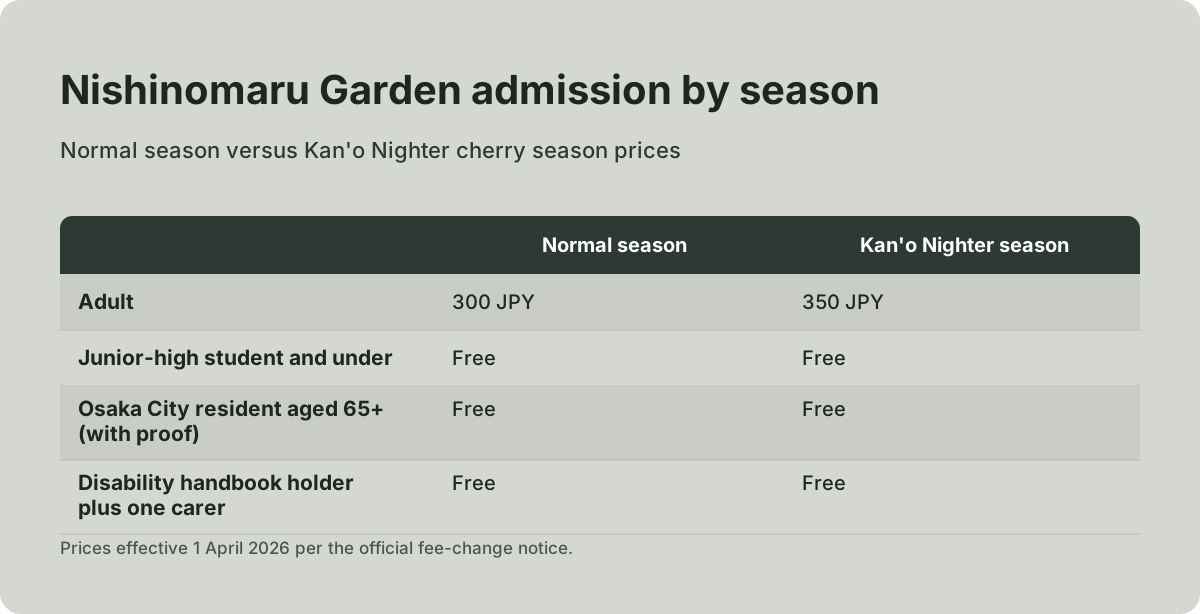
Admission is 300 JPY for adults, a price that took effect on 1 April 2026, with free entry for junior-high students and under, Free entry to the Main Tower for Osaka City residents aged 65 or over with proof, and for disability-handbook holders plus one carer. During the Kan'o Nighter cherry season the price is 350 JPY instead, and that is deliberate: the official fee-change notice states plainly that the normal adult price rose to 300 JPY but the blossom-season price continues at the old 350 JPY, with the dates announced separately each year. It is not a surcharge that appears by accident; it is published policy.
The price history is short and worth knowing. The garden charged 350 JPY for years, and the 1 April 2026 change was its first adjustment in a long time. The change came a year after the Main Tower's own increase to 1,200 JPY on 1 April 2025, so the two venues moved on separate schedules, which is one more reason not to assume they share a ticket. The garden's reference price of 300 JPY also appears on the Osaka Amazing Pass facility list, where the garden is free-admission facility #19, meaning pass holders walk in without paying again.
Who
Normal season
Kan'o Nighter season
Adult
300 JPY
350 JPY
Junior-high student and under
Free
Free
Osaka City resident aged 65+ (with proof)
Free
Free
Disability handbook holder plus one carer
Free
Free
One more ticket interacts with the garden, and it is new. The 2026 Important Cultural Property Yagura special opening, announced by Osaka City, carries its own seasonal ticket, and some versions of that ticket can include Nishinomaru Garden entry alongside the turret visit. That is a different product from anything this site sells, aimed at the seasonal turret interiors rather than ordinary admission, so check the city announcement before assuming it applies to your dates. The turret openings run on weekends and holidays in three seasonal legs.
The garden's 300 JPY normal admission and 350 JPY blossom-season price against the separate 1,200 JPY Main Tower ticket.
For most visitors the arithmetic is simple: the garden is a cheap add-on to a castle day, not a substitute for it. If you are buying the tower e-ticket, from $7.69, which is that same 1,200 JPY gate price with no markup, the garden is 300 JPY more at its own gate, paid on the day. Students should note the asymmetry: high school and university students pay 600 JPY at the tower with proof but enter the garden free, and junior-high and under pay nothing at either. The booking listing sells only the one adult tower ticket type, so student and senior garden entry is handled at the gate.
When Is Nishinomaru Garden Open, And When Does It Close?
The garden is open 9:00 to 17:00 from March to October and 9:00 to 16:30 from November to February, with last entry 30 minutes before closing, and it is closed every Monday plus 28 December to 4 January. Those hours and closures differ from the Main Tower in two ways that catch visitors out. The tower keeps 9:00 to 18:00 year-round with last admission at 17:30 and never closes on Mondays; the garden closes earlier, seasonally, and shuts every week. Turn up on a Monday expecting the castle experience and half of it is locked.
The Monday closure follows the standard Japanese museum convention: if the Monday is a public holiday, the garden closes the following day instead. In blossom season the whole schedule changes, because the Kan'o Nighter extends opening to 21:00 with last entry at 20:30, and that extension applies to the garden only, never to the tower. No official page gives the tower extended blossom hours; the only seasonal hours change published anywhere in the castle complex is this one, for this venue.
Period
Hours
Last entry
Closed
March to October
9:00 to 17:00
16:30
Mondays, 28 Dec to 4 Jan
November to February
9:00 to 16:30
16:00
Mondays, 28 Dec to 4 Jan
Kan'o Nighter 2026 (20 March to 12 April)
9:00 to 21:00
20:30
Check the park announcement
Planning around the closure is mostly a matter of sequencing. A Monday visit still gets you the free park, the outer moats, the stone walls and the tower itself, all of which are open; only the garden's gate stays shut. A Tuesday-through-Sunday visit can do both, and the natural order is the garden first for the west light on the keep in the morning, then the tower, or the reverse in the late afternoon when the garden's lawn faces the sunset. The castle's own guide page notes the tower's ticket queue may be capped before 17:30 on busy days, which is a reason not to leave the tower until last.
Winter visitors should also note the asymmetry with the year-end closure. The tower closes 28 December to 1 January; the garden closes 28 December to 4 January, a longer window. Neither is open on New Year's Day itself, so a year-end Osaka itinerary needs to plan the castle for before 28 December or after 4 January. The free park, the floodlit exterior and the nightly illumination, which runs from sunset to 00:30, remain available throughout.
If you are buying the tower e-ticket in advance, the two schedules matter together: the voucher is valid 30 days with no fixed time slot, which gives you room to reshuffle the day if weather or a Monday catches you out, but the garden is a cash-or-card gate purchase on the day and follows its own calendar regardless.
What Is The Kan'o Nighter, And Why Does The Garden Stay Open Late For It?
The Kan'o Nighter is the garden's official cherry-blossom night opening, and its 2026 edition ran 20 March to 12 April, keeping Nishinomaru Garden open 9:00 to 21:00 with last entry at 20:30 at the special price of 350 JPY. The name, kan'o naita in Japanese, means blossom-viewing nighter, borrowed from baseball's night-game vocabulary, and it is the only time of year the castle complex offers evening admission to anything. There is no event at the castle called a cherry expo; if you see that name anywhere, it is wrong.
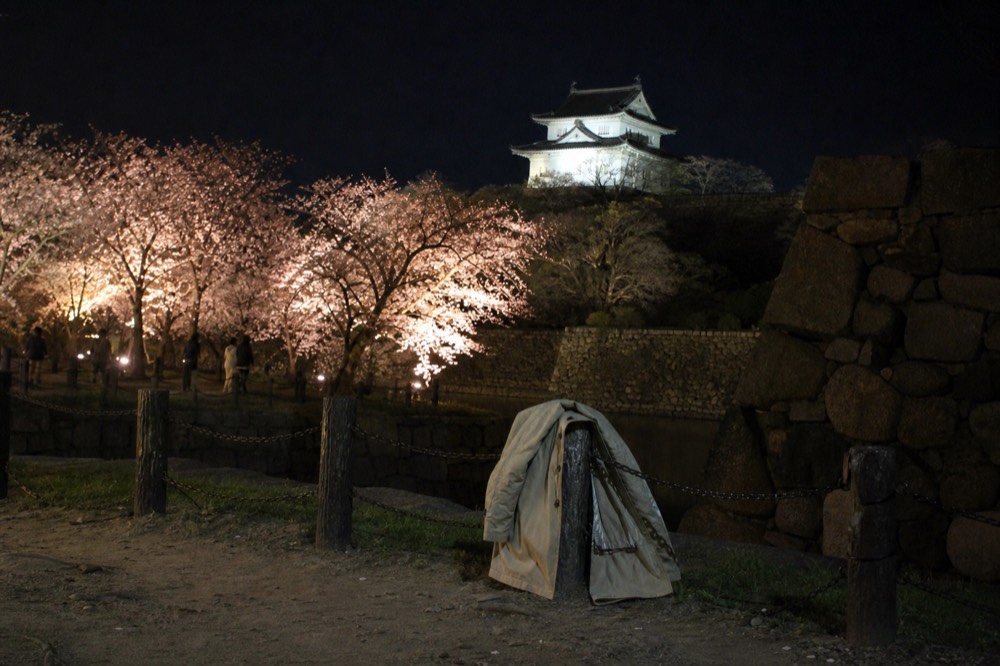
What the night opening actually delivers is the garden's roughly 300 Somei-Yoshino and weeping cherry trees lit from below, with the floodlit white keep rising behind them, from inside the fence rather than from the outer park. Visitors on social media who went in late April 2026 described the full-bloom trees framing the castle from the garden lawn as the highlight of the season, and several noted the tower was extremely crowded even late in the bloom, buying a shrine seal quickly and leaving. The nighter is the castle's answer to that crowding: the same trees, a different crowd rhythm, and three extra hours of daylight-saving at the end of the day.
The dates are announced separately every year, and the official notice says so in terms. The 2026 window, 20 March to 12 April, is the park's own expectation of when blossom will be worth seeing at night, not a bloom forecast. The park deliberately publishes a mechanism rather than a date range for blossom itself: the Japan Meteorological Agency's official Somei-Yoshino specimen tree for the whole of Osaka stands inside this garden, and when the observatory counts five or six flowers open on that one tree, the city's cherry-blossom opening is declared. In 2026 the JMA recorded full bloom on 3 April, inside the nighter window.
There is one more blossom-night event worth knowing, and it is free. On the day the JMA declares Osaka's cherry-blossom opening, the tower itself is floodlit in cherry-pink from sunset until midnight, one night a year, announced only on the day. It is visible from outside the fence, so it pairs naturally with a nighter ticket: pink keep from the outer park, then lit blossom from inside the garden.
What Can You Actually See Inside The Garden?
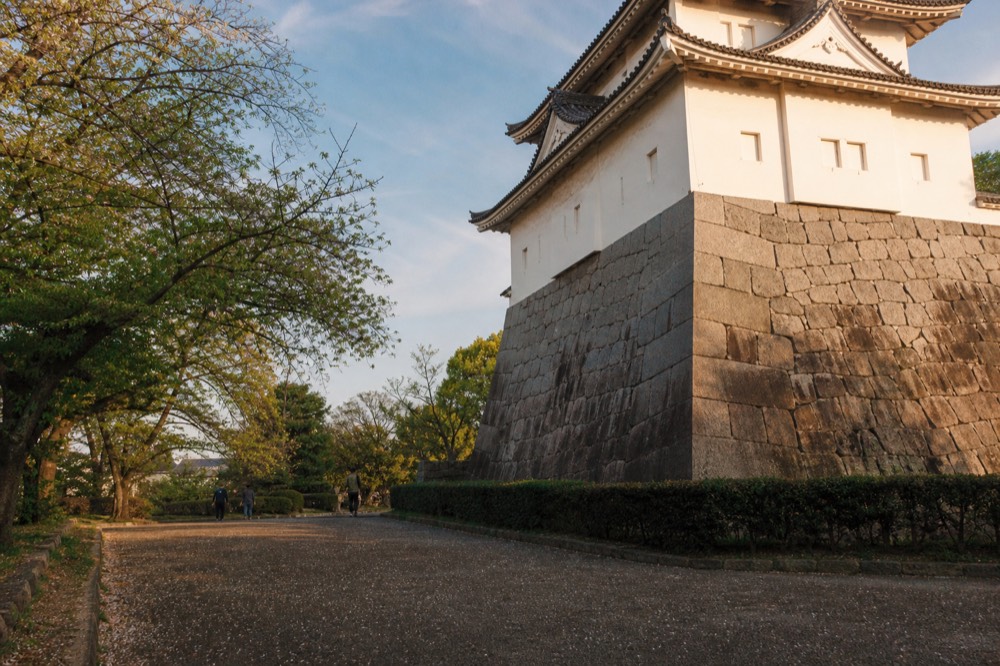
Inside the fence are the two oldest surviving buildings at Osaka Castle, Sengan-yagura and Inui-yagura, both begun in 1620 under the master builder Kobori Enshu, plus the Ensho-gura granite powder magazine, the Hoshoan tea house donated by Konosuke Matsushita, and the Osaka Geihinkan guest house built for APEC in 1995. None of these is part of the Main Tower ticket; they are the garden's own content, and two of them are National Important Cultural Properties designated in 1953.
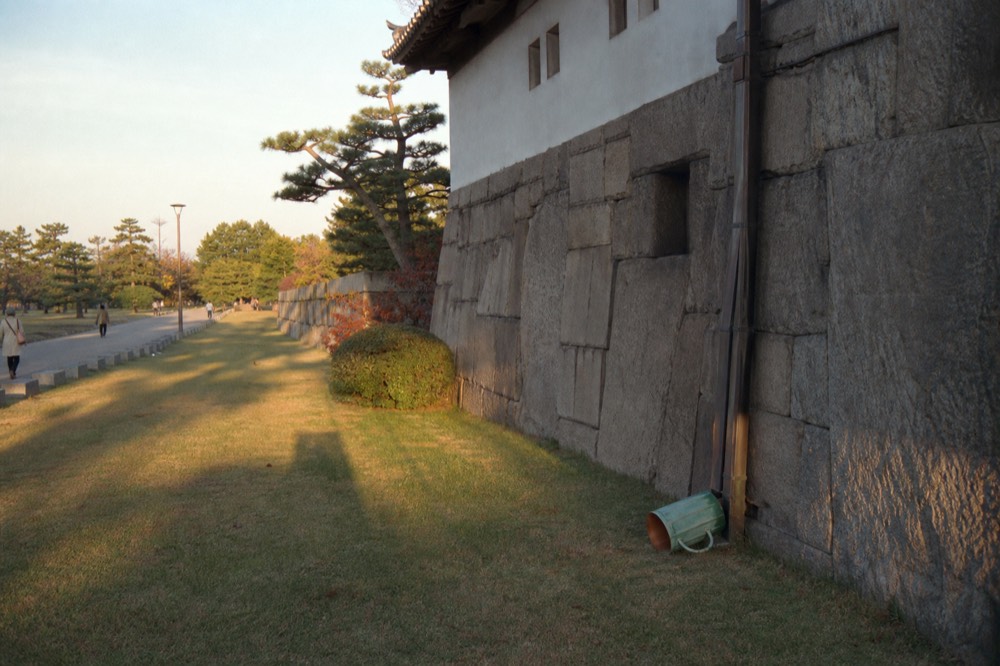
Sengan-yagura is the larger of the two turrets, a two-storey structure of about 13.5 m height whose first floor measures about 217.26 square metres and second floor about 162.95 square metres, and Inui-yagura is the unusual one: an L-shaped, full two-storey turret of about 10.3 m, a form almost never seen at other castles. Both were started in Genna 6, 1620, at the very beginning of the Tokugawa rebuild, which makes them older than every other standing structure in the park and the only buildings at Osaka Castle that were underway while the shogunate's masons were still burying Hideyoshi's walls. Standing at their base is the closest you get, above ground, to the castle of the 1620s.
Ensho-gura, the powder magazine completed in 1685, is stranger than it sounds. Its floor, walls, ceiling and beams are all granite, with stone walls about 2.4 m thick, and it is the only stone powder magazine of its kind in Japan. The logic was fire: gunpowder stored behind two and a half metres of granite does not cook off if the wooden buildings around it burn. It is closed to entry, like the turrets outside the special openings, but the exterior alone explains why it survived everything since.
Structure
Built
What it is
Sengan-yagura
1620 (Genna 6)
Two-storey turret, about 13.5 m tall, Important Cultural Property
Inui-yagura
1620 (Genna 6)
Rare L-shaped full two-storey turret, about 10.3 m tall, Important Cultural Property
Ensho-gura
1685 (Jokyo 2)
Granite powder magazine, stone walls about 2.4 m thick, unique in Japan
Hoshoan
1969
Tea house donated to the city by Konosuke Matsushita
Osaka Geihinkan
1995
Guest house built for APEC, used for the G20 Osaka Summit dinner in 2019
The Hoshoan tea house has its own seasonal life. According to the park's official schedule, a general-public matcha service with seasonal wagashi resumed at the Toyomatsu-an tea room inside the garden on Thursdays and Fridays from September to November 2026, at 1,500 JPY cash only, last entry 15:30. It is a small, dated programme rather than a permanent café, so treat it as a bonus if your visit lands on the right weekday, not a reason to plan around.
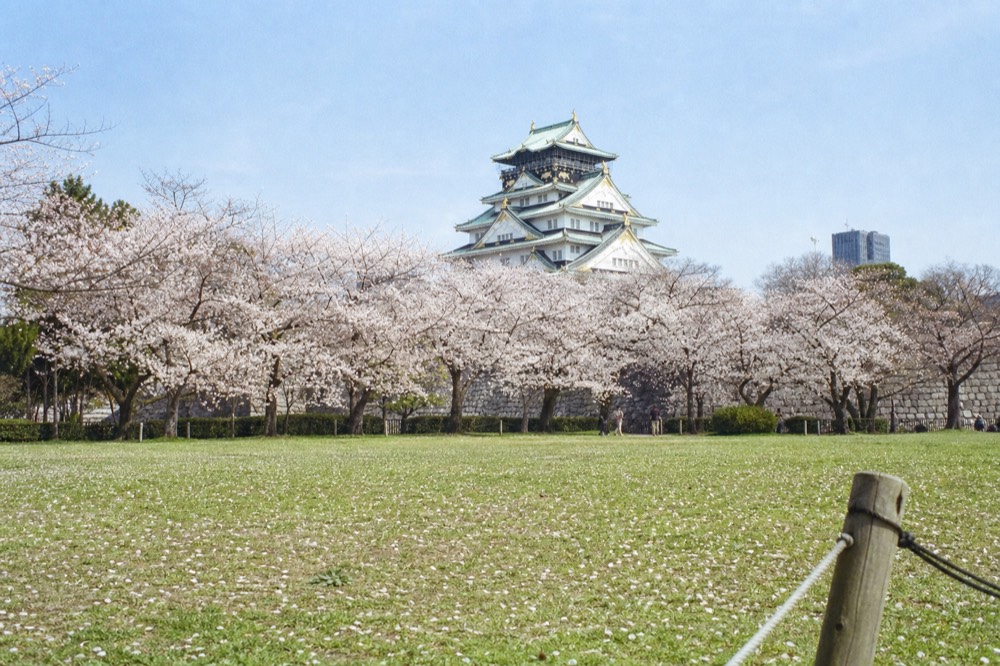
The lawn itself is the fifth attraction, and for many visitors the first. Roughly half the garden's 6.4 hectares is open grass, and in blossom season it fills with picnic sheets from midday onward. If you want the classic shot, the westward sightline from the lawn edge to the keep, framed by cherry branches, is the composition on half the Osaka Castle postcards ever printed, and it exists only from inside this fence.
Why Does The Jma's Official Cherry Tree Stand In This Garden?
The Somei-Yoshino specimen tree inside Nishinomaru Garden is the Japan Meteorological Agency's official reference tree for the whole of Osaka: when observatory staff count five or six flowers open on that single tree, the city's cherry-blossom opening is formally declared. It is a small, unremarkable-looking cherry near the garden's inner edge, and there is no sign of the kind you might expect for a tree with a citywide official function, but every spring news bulletin about Osaka's blossom opening starts with what is happening to that one tree.
The mechanism matters because it explains the castle's odd relationship with bloom dates. The park publishes no fixed cherry-blossom window, for this garden or the wider park, because the official declaration is observational: the tree decides, the JMA counts, and the season is declared after the fact. What the park publishes instead is the Kan'o Nighter window, its own planned schedule of when the garden will be worth visiting at night, which in 2026 ran 20 March to 12 April. In practice the two lined up: the JMA placed first flowering around 26 March 2026 and full bloom on 3 April, comfortably inside the nighter.
So if you are planning a blossom trip, the honest method is this: watch the JMA's blossom announcements for Osaka in the second half of March, and treat the nighter dates as the window the park itself has committed to. The garden's own page and the park's flower calendar carry the live status, and the park's cherry page closes with a "this season has ended, see you next year" message once the bloom is done, which is exactly what it showed when checked after the 2026 season.
The specimen tree also settles a common argument about where to view blossom at the castle. With about 3,000 cherry trees across the whole park, of which about 300 stand inside this garden, the free outer park has far more trees in total. But the official tree, the night lighting, the lawn and the keep in one frame are all inside the fence. Blossom hunters who pay the 300 JPY, or 350 JPY in the nighter, are buying density and framing, not tree count.
Is Nishinomaru Garden Worth The Extra 300 JPY?
For most visitors yes, and the reason is simple: the garden is small, cheap and holds the one view of the keep the free park cannot give you, so it rewards an hour rather than half a day, and at 300 JPY it costs less than the castle ticket by a factor of four. The honest case against is that it is a lawn with a fence, and a visitor in November with no blossom, no tea service and turret interiors closed sees grass, two locked turrets and a granite shed. The honest case for is that the same visitor still gets the oldest buildings at the castle, an unobstructed keep view, and the quietest corner of the whole park for the price of a convenience-store drink.
The seasonal arithmetic changes the answer sharply. From late March to mid-April, with the nighter running, the garden is arguably the best-value ticket in Osaka: 350 JPY for lit blossom, a lit keep, a picnic lawn and the official specimen tree, with evening hours that let you pair it with a daytime tower visit. Outside that window it is a pleasant stop, not a destination. If your castle budget is one paid interior, the tower and the Stone Wall Museum at 1,200 JPY is the stronger buy; the garden is the add-on, not the alternative.
from $7.69The from-price you see online and the price at the castle window are the same adult admission, so booking ahead costs nothing extra.
Your ticket into the tower
Official E-Ticket
Adult, per person
Osaka Castle Main Tower entry
Osaka Castle Toyotomi Stone Wall Museum
QR code entry
Valid 30 days
No fixed time slot
No viewing time limit
Buying the official e-ticket ahead saves you the ticket-purchase line, not money, since the online price matches the window. You exchange nothing at the gate, you simply show the voucher and go in.
The real flexibility here is the voucher's 30-day validity, with no fixed time slot and no set viewing time limit.
Adult, per personGroup rate from 15 paying visitorsFree categories at the window
¥1,200
The window price is identical to the online price, so nothing is lost by paying in person. Students and under-15s should buy here, because proof-of-age discounts are handled face to face and not through an e-ticket.
Students with ID and visitors aged under 15, since discounted and free rates are only applied at the window.
One-day passOn sale 25 March 2026 to 31 March 2027
¥3,500
The one-day pass costs 3,500 yen against the 1,200 yen castle ticket on its own, so it only pays off with two or more other paid sights. Add transport and the maths tips further in its favor.
Visitors packing several paid sights plus metro and bus rides into one day, who will clear the pass price easily.
The park grounds, moats, stone ramparts and exterior views of the tower cost nothing at all, and they fill a half day on their own. The paid line falls only at the Main Tower entrance and the Toyotomi Stone Wall Museum.
Anyone who wants the castle views, moats and grounds without paying to go inside the buildings.
How long you need depends on season. The castle museum's own FAQ says most visitors spend 50 to 60 minutes inside the tower, and 1.5 hours if you look properly; the garden needs less outside the bloom, perhaps 30 to 45 minutes to walk the perimeter and read the structures, and as long as you like during the nighter. A full castle day that does tower, Stone Wall Museum, garden and the free park is comfortably a half-day, which is the planning frame our guide to how long to spend at Osaka Castle works through in detail.
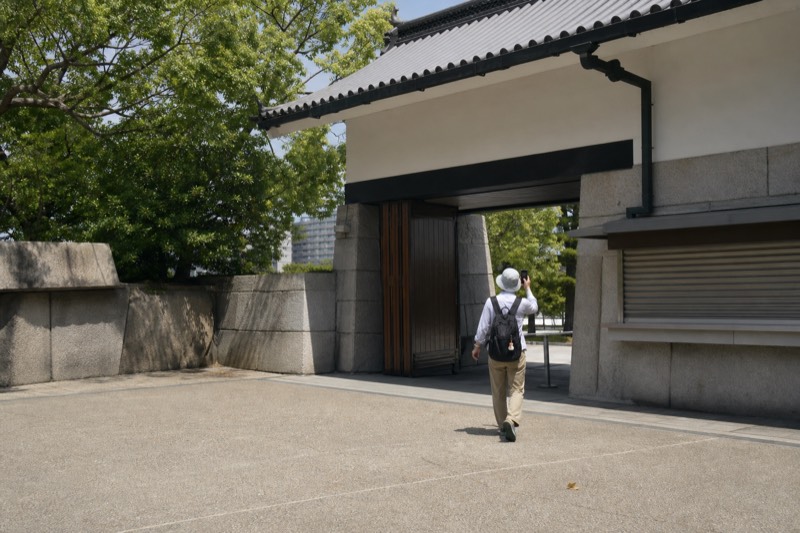
The one practical warning is the gate. The garden's entrance is on its own, inside the outer park but outside the tower's ticket area, and visitors with a tower e-ticket sometimes walk up to it expecting a scan. It is a separate purchase at a separate booth, cash or card, and the free-entry categories, students under high school age, city residents 65 and over, disability handbook holders, are checked with proof at that booth. The Osaka Castle entrance fee guide covers how the two prices and the pass options stack up.
If you are deciding between spending the extra on the garden or on a guide, they answer different questions. The garden is a place; a guided walk is a person explaining the whole grounds, and its base price does not include tower admission, as the listing's own terms state. Some visitors do both, the walk for the story and the garden ticket for the view, and they stack rather than substitute.
How Does The Garden Fit Into A Castle Day?
The garden sits on the castle's west side, between the Otemon approach and the Main Tower, so the natural route is Otemon gate, garden, then the keep, or the reverse if you want evening light on the lawn, and the castle's own map puts every rail station roughly 18 to 21 minutes on foot from the tower. Coming from Tanimachi 4-chome station, the route via the Otemon is the one the castle's own FAQ endorses as comparatively flat and passable by wheelchair, and the garden gate is a short way inside on the right. Coming from Osakajokoen or Morinomiya, you approach from the north or southeast and meet the garden later in the walk.
The castle museum's own map gives roughly 18 to 21 minutes on foot from every rail station to the Main Tower, because the walk crosses parkland and passes through gates rather than along streets, so a garden-plus-tower day is a lot of standing and walking on stone and gravel. The in-park Road Train and Electric Car can shorten the outer legs: the park's own schedule lists them running 9:30 to 17:30, closed the first Thursday of each month, with Road Train fares of 400 JPY for adults and 200 JPY for children and seniors 65 and over, and a 1,000 JPY all-day pass covering both. One leg of the Electric Car route is reserved for visitors with mobility difficulties.
Stop on a castle day
Typical time
Notes
Otemon gate and outer walls
20 to 30 minutes
Free, Important Cultural Property gate
Nishinomaru Garden
30 to 45 minutes, longer in bloom
300 JPY, closed Mondays
Main Tower and Stone Wall Museum
50 to 60 minutes, or 1.5 hours properly
1,200 JPY, last admission 17:30
Free park, moats and plum grove
As long as you like
Open parkland, about 105.6 ha total
Food and toilets are the usual planning gaps. The garden has no restaurant inside; the JO-TERRACE complex and the MIRAIZA building near the park's northern edge carry the cafés and shops, and visitors on social media note they are convenient but crowded on weekends. The tower has accessible toilets on 2F and in the Honmaru plaza, and the Stone Wall Museum has none inside at all, a fact its own page states, so the garden stop is a sensible toilet-and-rest break between the two. Our Osaka Castle Park guide maps the whole ground in more detail.
For photographers the sequencing matters more than the season. Morning light comes from the east behind the keep, which backlights the westward view; late afternoon and evening light the keep's west face, which is the face the garden looks at. The free nightly floodlighting runs from sunset to 00:30, off one inspection day a year, so an evening that ends with the lit keep from the outer park after the garden closes at 17:00 in the off-season still works. In the nighter season the whole question dissolves, because the garden is the evening plan.
What Do Visitors Get Wrong About The Garden?
The three recurring mistakes are assuming the tower ticket includes the garden, turning up on a Monday, and expecting the free outer park to deliver the same view, and all three cost either 300 JPY or the photograph the visitor came for. The first is the most common: the tower e-ticket, the gate ticket and the Amazing Pass all cover the keep and the Stone Wall Museum, and only the pass also covers the garden, so a visitor holding the first two is buying the garden separately at its own booth.
The second mistake is scheduling. The garden's Monday closure is posted but easy to miss when the whole castle complex is otherwise open seven days, and a Monday visitor loses the lawn, the turrets and the specimen tree while keeping the tower and the free park. The third is subtler: the outer park has more cherry trees in total, so plenty of visitors conclude the garden is redundant, then take their keep-and-blossom photograph from the outer path and wonder why it does not look like the postcard. The answer is the fence line. The classic composition, blossom branches in the foreground, lawn in the middle, keep behind, exists only from inside.
A fourth, smaller error is seasonal. Visitors in late April or May sometimes expect the nighter to still be running because "cherry season" feels recent, but the 2026 nighter ended on 12 April and the park's own cherry page had already posted its end-of-season message. The nighter dates are announced separately every year, and the garden's hours revert to 17:00 or 16:30 the day after. Conversely, autumn visitors underestimate the garden: the Momiji-en maple garden in the wider park carries the autumn colour, and the garden's own draw in that season is the matcha service and the low light on the granite of Ensho-gura.
The last mistake is expecting the garden to fill a morning. It will not, and it is not meant to. The garden is a stop on a castle day, the quiet half-hour between the Otemon walk and the tower queue, and the visitors who enjoy it most treat it that way: a bench on the lawn, the keep in view, and the 300 JPY spent without a second thought. For everything the free side of the castle offers instead, see our guide to free things to do around Osaka Castle.
How Do The Garden And The Tower Ticket Work Together?
They are two separate purchases at two separate gates: the tower e-ticket covers the Main Tower and the Toyotomi Stone Wall Museum, the garden is 300 JPY at its own booth, and only the Osaka Amazing Pass covers both in one product. The e-ticket is the castle's admission product, self-guided, with QR entry, a voucher valid 30 days, no fixed time slot and no set viewing time limit once inside. It is the same 1,200 JPY gate price, from $7.69, with no markup: what it buys is a skipped ticket-purchase line and guaranteed entry, not a discount.
The stacking logic is worth stating plainly because the marketing elsewhere blurs it. A full castle interior day is tower plus Stone Wall Museum plus garden, which is 1,200 JPY plus 300 JPY, or 1,500 JPY in total for an adult doing everything. A pass holder pays nothing extra at either gate but has bought the 3,500 JPY pass, which only pays for itself across a day of transport plus several other paid venues. A student with proof pays 600 JPY at the tower and nothing at the garden. Every route is legitimate; they just answer different questions.
Timing the two against each other is the last piece. The tower's last admission is 17:30 and its ticket queue may be capped before that on busy days, a warning the castle's own guide page makes; the garden's last entry is 16:30 in the off-season, 20:30 in the nighter. So in the off-season the garden must come first or not at all on a late-start day, while in blossom season the order can flip, tower by afternoon, garden by night. Visitors on social media in 2026 repeatedly advised early arrival at the castle to beat the queues, and the nighter's evening hours are the one reliable way around the morning crush.
Whether the garden belongs on your list, then, comes down to one question: do you want the photograph and the lawn, or just the interior? If the answer is the photograph, the garden is not optional, it is the location. If it is the interior, the tower and the buried Toyotomi walls are the substance, and the garden is a pleasant 300 JPY afterthought you can take or leave. Either way, buy them knowing they are separate, and the castle day stops surprising you at the gate.
Common Questions About Nishinomaru Garden
Is Nishinomaru Garden Included In The Osaka Castle Ticket?
No. The Main Tower ticket covers the keep and the Toyotomi Stone Wall Museum; the garden is a separate 300 JPY admission at its own gate. Only the Osaka Amazing Pass includes both.
How Much Is Nishinomaru Garden?
300 JPY for adults since 1 April 2026, rising to 350 JPY during the Kan'o Nighter cherry season. Junior-high students and under, Osaka City residents aged 65 and over with proof, and disability handbook holders plus one carer enter free.
When Is Nishinomaru Garden Open?
9:00 to 17:00 from March to October and 9:00 to 16:30 from November to February, with last entry 30 minutes before closing. It is closed Mondays, or the following day if the Monday is a public holiday, and from 28 December to 4 January.
What Is The Kan'o Nighter?
The garden's official cherry-blossom night opening. The 2026 edition ran 20 March to 12 April, 9:00 to 21:00 with last entry at 20:30, at 350 JPY. The dates are announced separately each year.
Can You See Osaka Castle From Nishinomaru Garden?
Yes, and the westward view of the keep over the lawn and cherry trees from inside the fence is the classic postcard composition. The free outer park has more trees in total but not this framing.
Is Nishinomaru Garden Worth Visiting Outside Cherry Season?
It is quieter and cheaper then, and the two oldest buildings at the castle, the 1620 turrets Sengan-yagura and Inui-yagura, plus the granite Ensho-gura powder magazine, stand inside the fence year-round. Blossom season is the peak; other seasons suit visitors who want the view and the calm without the crowds.
Want The Tower And The Garden In One Day?
The Main Tower ticket covers the keep and the Toyotomi Stone Wall Museum. The garden is a separate 300 JPY ticket at its own gate, so plan for both if you want the view from inside the fence. The e-ticket voucher is valid 30 days with no fixed time slot.