Who Destroyed Osaka Castle?
Osaka Castle was destroyed more than once, by different hands: the Tokugawa siege of 1615, a lightning strike in 1665, and the fires of 1868. Here is each destruction and each culprit.
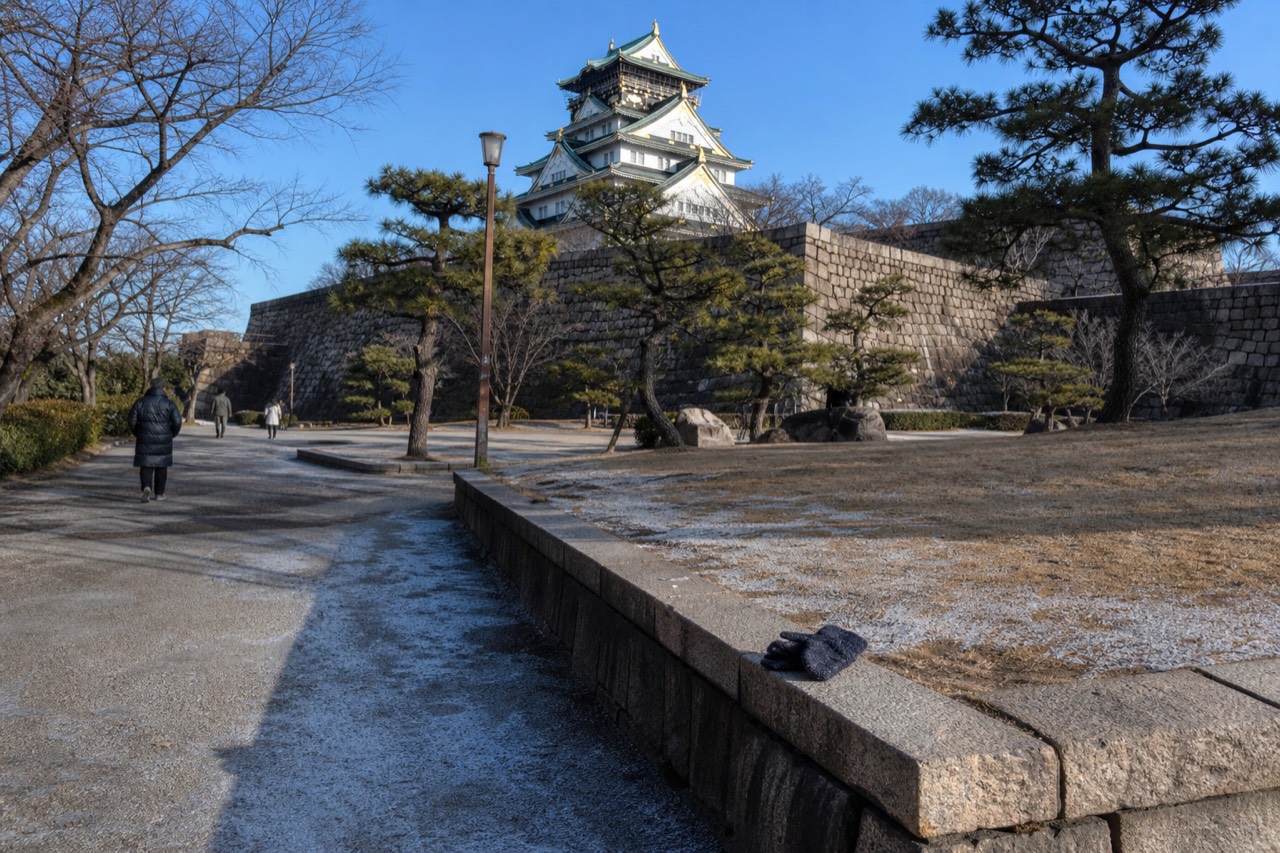
The castle that stands in Osaka today has been destroyed three times, and no single person or army is responsible for all of it. The Tokugawa shogunate's forces ended the Toyotomi castle in the Summer War of 1615, and the victors then buried what remained under a mountain of fill. Lightning burned the Tokugawa replacement tower in 1665, and it was never rebuilt. The fires of the Meiji Restoration in 1868 destroyed most of what was left, spare a handful of gates and turrets. A bomb in 1945 damaged the stone base but spared the 1931 tower that visitors climb now.
Who Destroyed Osaka Castle?
The first destruction belongs to the Tokugawa shogunate, whose forces destroyed the Toyotomi castle in the Summer War of Osaka in 1615 and burned the entire compound. The second culprit was lightning, which struck the Tokugawa rebuild's tower in 1665 and burned it down for good. The third was the turmoil of the Meiji Restoration in 1868, when fires destroyed nearly every remaining structure except a few gates and turrets that still stand today.
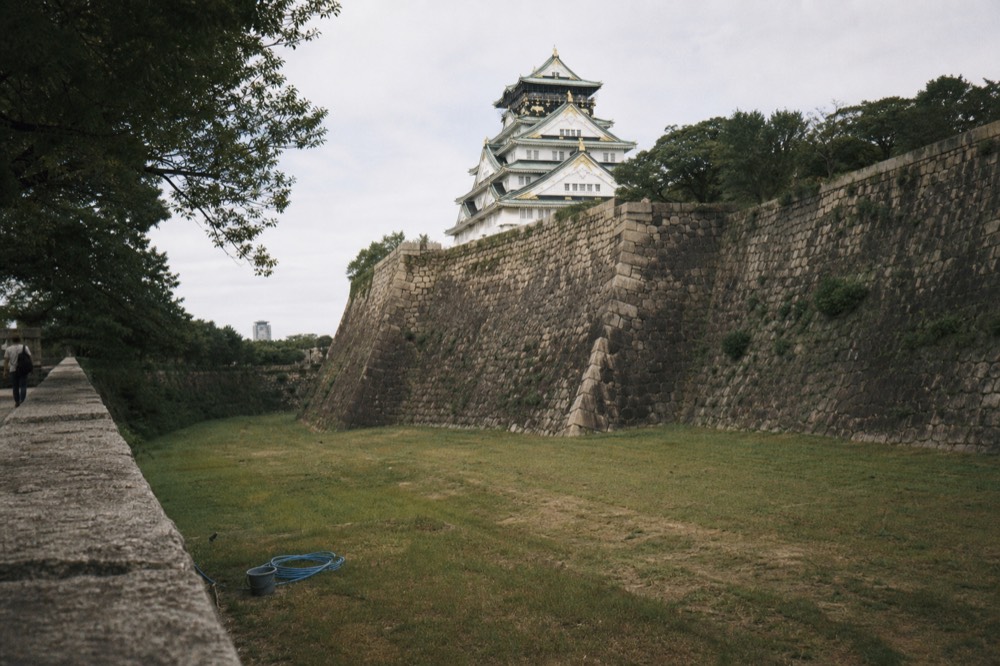
Each destruction removed a different castle. Hideyoshi's original, begun in 1583, was four to five times the scale of the present castle and took about 15 years to finish, with a gold-gleaming tenshu at the centre of its honmaru. When the Tokugawa shogunate began its own rebuild in 1620, it did not simply repair the ruins: it piled earth across the whole site, raised new stone walls, deepened the moats, and made the new tower 15 m taller, producing a castle the park's own history text calls completely different from Hideyoshi's. The official park history records all of this, and it is the backbone of the answer.
That layered history is also why a visit today rewards going inside, and it is the story Osaka Castle Tickets exists to help readers walk through. The tower that survived into the 20th century is gone above ground, but the Toyotomi-era stone walls were buried, not demolished, and a section of them is now visible again in the Osaka Castle Toyotomi Stone Wall Museum, which opened on 1 April 2025 inside the honmaru. The ¥1,200 adult tower ticket includes it, with no separate fee.
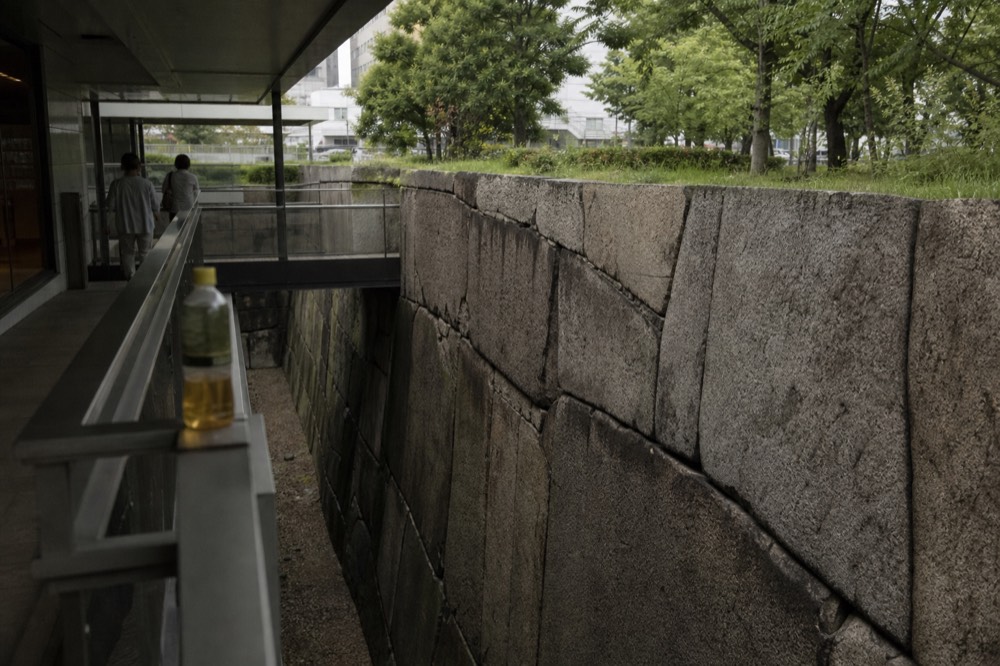
The three destructions are worth separating because the popular versions of the story blur them. Many accounts say "Osaka Castle was destroyed in the Siege of Osaka," which is true of the Toyotomi castle and false of the one standing now. Others say "it burned down," which happened twice, two generations apart, for entirely different reasons. Getting the culprits straight also explains the strange archaeology under the modern honmaru, where the ground Hideyoshi and his son Hideyori walked on lies about 1 m below today's surface.
Who Destroyed Hideyoshi's Castle In 1615?
The Tokugawa shogunate destroyed Hideyoshi's Osaka Castle in the Summer War of Osaka, 1615. The Toyotomi house was extinguished and the whole castle burned. The shogunate then buried the ruins under a mass of fill during its 1620 rebuild, hiding the Toyotomi stone walls below ground, where they stayed hidden until excavations in 1959 and 1984 found them again.
The war came in two campaigns, a winter campaign that ended in a settlement weakening the fortress, and a summer campaign that ended the Toyotomi house entirely: the official park history states that in Genna 1 (1615) the Toyotomi house was destroyed and the whole castle burned. Hideyori and Yodo-dono died in the fall, and with them the direct line that had governed the castle since 1583.
What the victors did next is the part most visitors never hear. Rather than clear the site, the Tokugawa shogunate began a rebuild in 1620 that took 10 years and involved, in the park's own words, large-scale earth fill across the entire site. The English leaflet of the Toyotomi Stone Wall Museum puts a number on it in one place: the shogunate piled about six meters of earth up at the nakanodan tier, completely burying the Toyotomi period stone walls. Over the inner moat the burial was far deeper. A 1969 boring, done before the EXPO'70 Time Capsule was buried in the honmaru, struck stone at about 25 m below the surface.
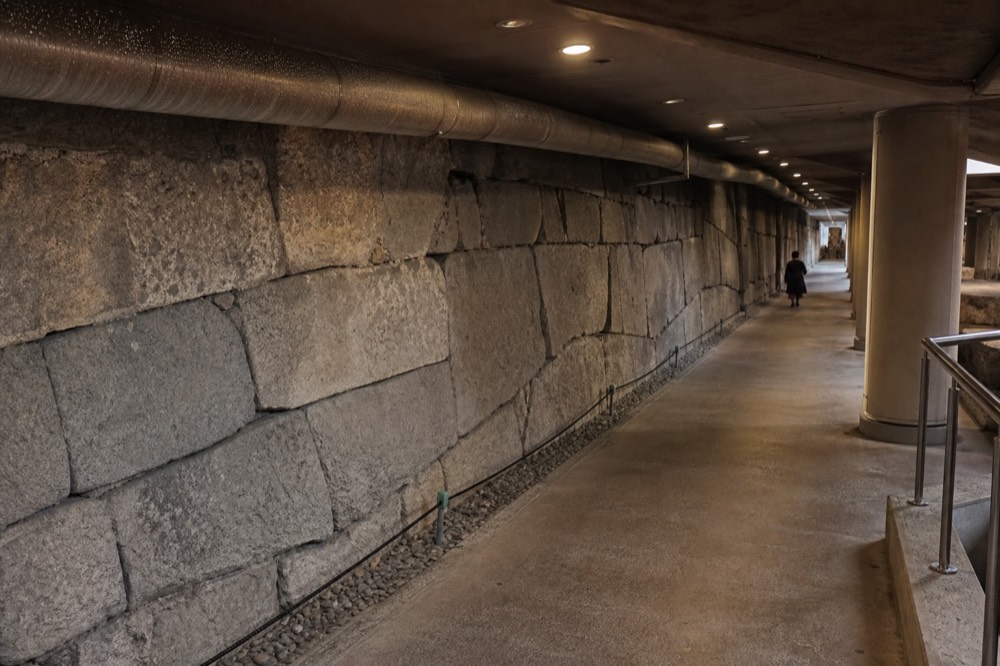
The wall now on display protected the tsumenomaru, the private quarters where Hideyoshi and his wife One, and later Yodo-dono and Hideyori, lived. It was rediscovered in 1984 about 1 m below the current surface, more than three and a half centuries after the castle fell. A 2025 excavation report documented by the Osaka Museum of History adds physical evidence of the destruction itself: Toyotomi-period building remains, a moat containing Chinese and Korean ceramics, gold-foil roof tiles, and traces of fire on the stone faces in the underground gallery, burnt there during the 1615 fall.
| Destruction | Year | Culprit | What was lost |
|---|---|---|---|
| Summer War of Osaka | 1615 | Tokugawa shogunate's forces | The entire Toyotomi castle, burned; ruins then buried under fill from 1620 |
| Lightning strike | 1665 | Lightning | The Tokugawa tenshu, never rebuilt |
| Meiji Restoration turmoil | 1868 | Fires in the unrest | All buildings except Otemon, Tamon-yagura and a few other structures |
For readers who want the fuller narrative of the siege and the Toyotomi end, the companion piece what happened at Osaka Castle walks the campaigns in order, and the story of the castle's rebuilds picks up where this one leaves off.
What Destroyed The Tokugawa Tower In 1665?
Lightning destroyed the Tokugawa-era tenshu in Kanbun 5 (1665). The tower burned in the strike and was never rebuilt, so from 1665 until the 1931 reconstruction the castle had no main tower at all. The stone walls, gates and turrets around it survived, and most of those are the structures visitors walk past today.
This is the destruction with no villain. The Tokugawa tower was the tallest of the three castles: the museum's own curatorial column computes its height at about 58 m from period drawings, putting its top at about 89 m elevation, roughly 3 m higher than today's reconstructed tower's shachi. It stood for only 45 years. When lightning brought it down in 1665, the shogunate chose not to replace it, and the skyline of Osaka went without a main tower for more than two and a half centuries.
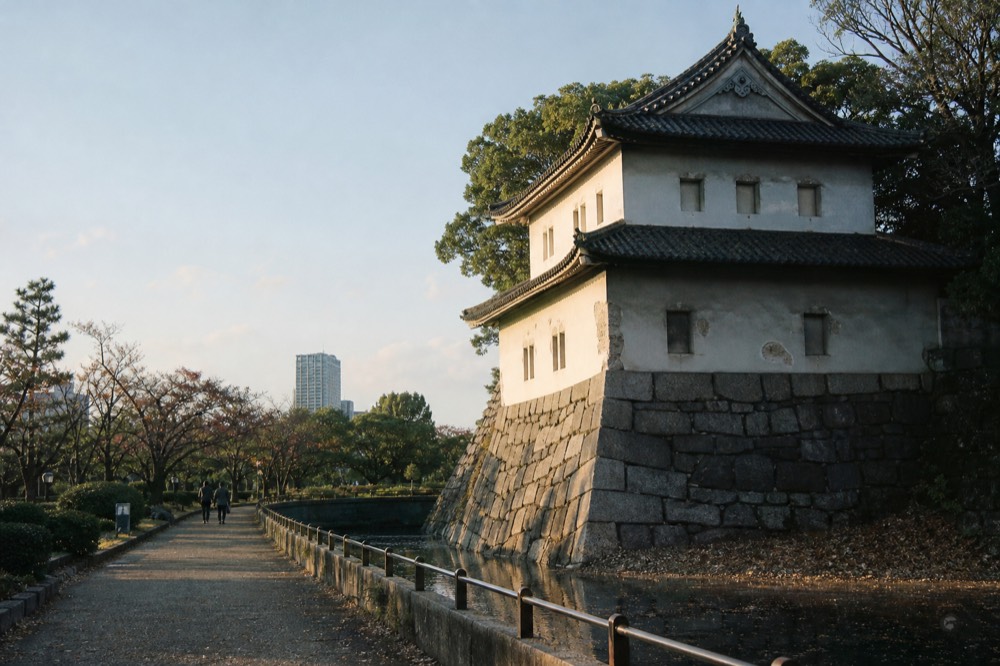
The 13 surviving structures designated National Important Cultural Properties in 1953, within a park that is a National Special Historic Site, all predate or survived that fire: the Otemon, the Tamon-yagura, Sengan-yagura, Inui-yagura, the Ensho-gura powder magazine and others, most built in the 1620s rebuild. The Sengan-yagura and Inui-yagura in Nishinomaru Garden are the oldest surviving buildings at the castle, both raised under Kobori Enshu in Genna 6 (1620). In a real sense the 1665 fire is why the castle's authentic fabric today is gates and turrets rather than a keep.
The tower's absence also shaped the 1931 story. When the then mayor, Seki Hajime, proposed rebuilding, there had been no tenshu on the tenshudai since 1665. The tower that citizens funded by public subscription was the third generation, after the Toyotomi and Tokugawa towers, and it has been a museum since the moment it opened. The castle's own homepage records that it became a National Registered Tangible Cultural Property in 1997 and an Osaka City Designated Tangible Cultural Property in 2025.
A live English-speaking guide makes this layering legible on the ground, since the surviving structures are scattered across the grounds and their dates are the whole point. The guided walking tour of the castle grounds runs 1.5 to 3 hours in a private or small-group format, and its base price does not include tower admission, so readers wanting both should plan for the two together.
What Happened To The Castle In 1868?
Fires in the turmoil of the Meiji Restoration destroyed Osaka Castle's remaining buildings in 1868, sparing only parts such as the Otemon and the Tamon-yagura. The site then passed out of castle use entirely: it became an army arsenal under the new government, and the grounds were not opened as a public park until 1931, the year the tower was rebuilt.
The third destruction was political rather than military in the classic sense. No siege battered the walls in 1868; the fires came with the unrest that accompanied the fall of the shogunate, and they removed the residential and administrative buildings the 1665 lightning had spared. What remained afterwards was the stone infrastructure, the gates, the turrets and the empty tenshudai, plus a garrison. The park's chronology records the sequence plainly: 1868 fires, then decades of military use, then the 1931 reconstruction and the opening of Osaka Castle Park on 7 November of that year.
That arsenal history matters for the fourth and final attack on the castle, because it explains why the site was a bombing target at all. Readers deciding how much of the grounds to explore can see the whole arc in one loop; the guide to Osaka Castle Park covers the layout, the gardens and the surviving structures, and the history guide goes deeper into the timeline.
Was Osaka Castle Destroyed In World War II?
Osaka Castle was attacked but not destroyed in World War II. The heaviest air raid came on 14 August 1945, the day before the surrender, and a bomb landing a few metres north of the tower produced visible slippage in the tenshudai stone wall. The 1931 ferro-concrete tower itself was unaffected, because it had been built so as not to load the stone base.
from $7.69 The from-price you see online and the price at the castle window are the same adult admission, so booking ahead costs nothing extra.
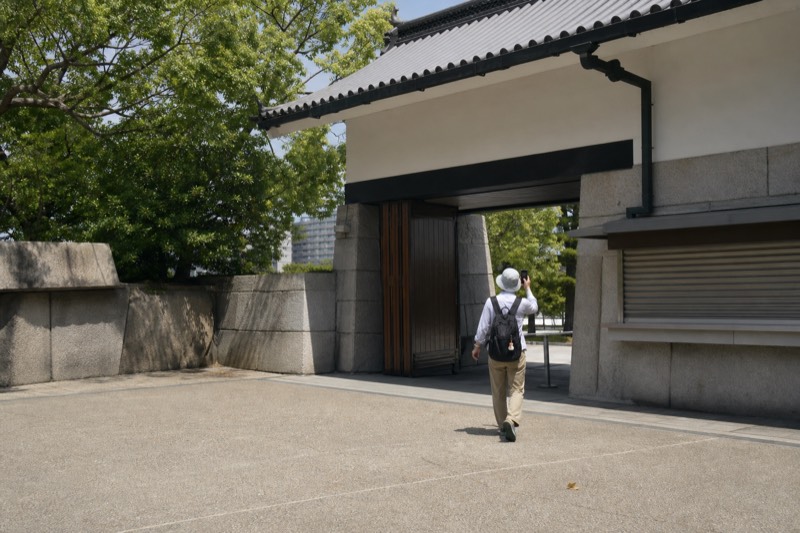
Your ticket into the tower
Official E-Ticket
- Osaka Castle Main Tower entry
- Osaka Castle Toyotomi Stone Wall Museum
- QR code entry
- Valid 30 days
- No fixed time slot
- No viewing time limit
Buying the official e-ticket ahead saves you the ticket-purchase line, not money, since the online price matches the window. You exchange nothing at the gate, you simply show the voucher and go in.
The real flexibility here is the voucher's 30-day validity, with no fixed time slot and no set viewing time limit.
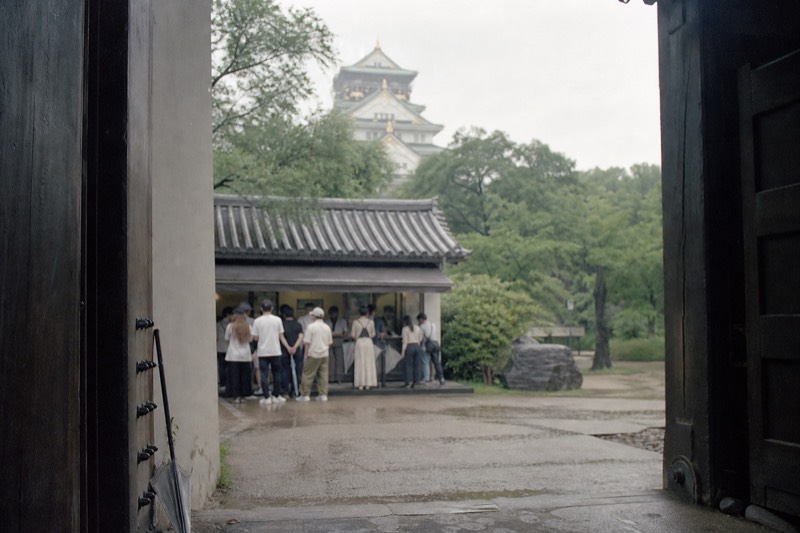
At The Gate
Adult, per person Group rate from 15 paying visitors Free categories at the window
¥1,200
The window price is identical to the online price, so nothing is lost by paying in person. Students and under-15s should buy here, because proof-of-age discounts are handled face to face and not through an e-ticket.
Students with ID and visitors aged under 15, since discounted and free rates are only applied at the window.
See what it covers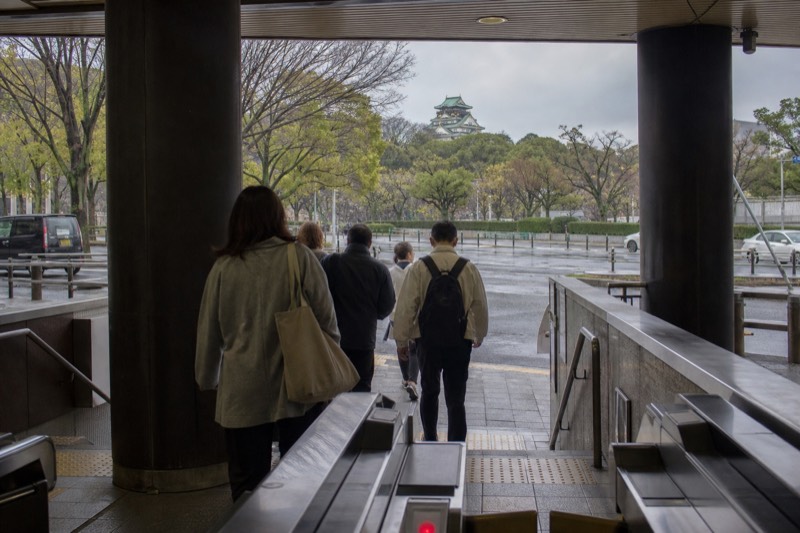
Osaka Amazing Pass
One-day pass On sale 25 March 2026 to 31 March 2027
¥3,500
The one-day pass costs 3,500 yen against the 1,200 yen castle ticket on its own, so it only pays off with two or more other paid sights. Add transport and the maths tips further in its favor.
Visitors packing several paid sights plus metro and bus rides into one day, who will clear the pass price easily.
See what it covers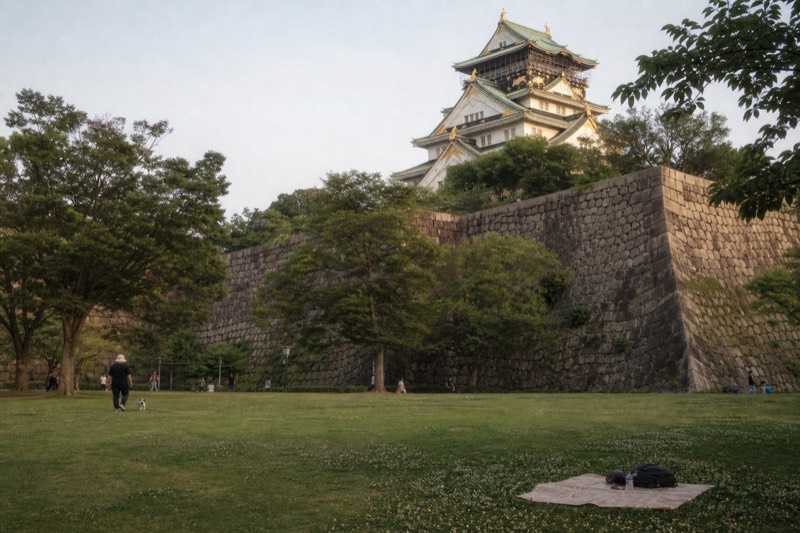
Free Park Areas
No admission charge
Free
The park grounds, moats, stone ramparts and exterior views of the tower cost nothing at all, and they fill a half day on their own. The paid line falls only at the Main Tower entrance and the Toyotomi Stone Wall Museum.
Anyone who wants the castle views, moats and grounds without paying to go inside the buildings.
See what it coversThe park's own history text carries the detail. Because the reconstruction was engineered to carry its own weight rather than rest on the Tokugawa-era tenshudai, the distortion in the stone wall from the bomb did not propagate into the building. Corrective work to stop the slippage progressing was carried out in Showa 39 (1964). Several other buildings in the castle grounds were destroyed or damaged in the raids, but the tower that had been rebuilt by citizens' donations 14 years earlier stood through them.
The postwar chapter is a quiet coda to three destructions. The yagura and storehouses were restored between 1958 and 1966, the whole area became parkland, and the Heisei Great Repair of 1997 returned the tower to its 1931 appearance. In 2025 the tower was designated an Osaka City Tangible Cultural Property, announced on 10 July, closing a loop that began with a citizen-funded rebuild in the year the park opened.
Visitors who want the full picture in one ticket should know what the entry covers. The Osaka Castle Museum and Tower entry ticket is admission only, self-guided, covering the Main Tower and the Toyotomi Stone Wall Museum, with QR entry, a voucher valid 30 days, no fixed time slot and no set viewing time limit. The official gate price it matches is ¥1,200 for adults, about $7.69, with high-school and university students paying ¥600 with proof at the gate and junior-high age and under free, so student visitors do better buying at the gate than online, where only the adult ticket type is sold.
Why The Castle Keeps Getting "Destroyed" Online
The castle is regularly described as destroyed or fake because each destruction left a different artefact behind, and casual accounts merge them. The 1931 tower is a ferro-concrete reconstruction, the walls above ground are the Tokugawa rebuild, and the Toyotomi castle survives only as buried stone, so a single sentence about "the castle" can be simultaneously true of one layer and false of another.
The honest framing, the one the castle's own operator uses, is generational. First the Toyotomi castle, destroyed in 1615 and buried. Then the Tokugawa castle, its tower lost to lightning in 1665 and its buildings to the 1868 fires, but its walls, gates and turrets still standing and designated. Then the third-generation tower of 1931, a museum from birth, damaged-but-standing in 1945 and repaired since. Nothing above ground is Hideyoshi's, and the only place to see his castle at all is the underground gallery in the Stone Wall Museum.
That is also the answer to the follow-up questions this page attracts. The tower is not a fake so much as a documented reconstruction, and the question of whether it counts as real has its own treatment in is Osaka Castle a replica?. The deeper history of the man who built the first castle, and the interest driving this year's Toyotomi exhibitions, is covered in what was Toyotomi Hideyoshi famous for?.
The short answer is that three different culprits destroyed three different castles on the same site: the Tokugawa shogunate's forces burned the Toyotomi castle in 1615, lightning took the Tokugawa tower in 1665, and the fires of the Meiji Restoration removed most of the remaining buildings in 1868. The questions below take each one in turn, plus the 1945 air raid that damaged but did not destroy the 1931 tower.
Common Questions About Who Destroyed Osaka Castle
Who Destroyed Osaka Castle?
The Tokugawa shogunate's forces destroyed the Toyotomi castle in the Summer War of Osaka in 1615, lightning destroyed the Tokugawa replacement tower in 1665, and fires during the Meiji Restoration turmoil of 1868 destroyed most of the remaining buildings. No single actor destroyed all three castles.
Did Osaka Castle Burn Down More Than Once?
Yes, twice for keeps. The whole Toyotomi compound burned in the 1615 fall, and the Tokugawa tenshu burned after a lightning strike in 1665 and was never rebuilt. The 1868 fires destroyed further buildings without a siege, and the 1945 air raids damaged the stone base but not the 1931 tower.
Is Any Of Hideyoshi's Original Castle Still Visible?
Only underground. The Tokugawa rebuild buried the Toyotomi stone walls under fill, and the section that protected the tsumenomaru is now on display in the Osaka Castle Toyotomi Stone Wall Museum, opened 1 April 2025. The ¥1,200 tower ticket includes it.
Why Does The Current Tower Look Old If It Is From 1931?
The 1931 reconstruction was built to the appearance of the earlier towers and funded by public subscription from Osaka's citizens. It is ferro-concrete, has been a museum since it opened, and was restored to its 1931 look by the Heisei Great Repair of 1997.
Was Osaka Castle A Target In World War II?
Yes, because the site had been an army arsenal since the Meiji era. The heaviest raid, on 14 August 1945, caused slippage in the tenshudai stone wall from a bomb that landed a few metres north of the tower, but the tower itself was unaffected and the wall was corrected in 1964.