How Many Days In Osaka Is Enough?
Two, three and five day Osaka itineraries, with Osaka Castle placed honestly in each, plus the crowds, weather and holidays that decide how long you actually need.
How Many Days In Osaka Is Enough?
Two full days is enough for Osaka's core: the castle, Dotonbori, one food street and one observation deck. Three days is the comfortable answer, because it absorbs queueing at the castle and a half-day in either Minami or the bay area. Five days only pays off if you are bolting on Himeji, Nara or Kobe, which are day trips rather than Osaka itself.
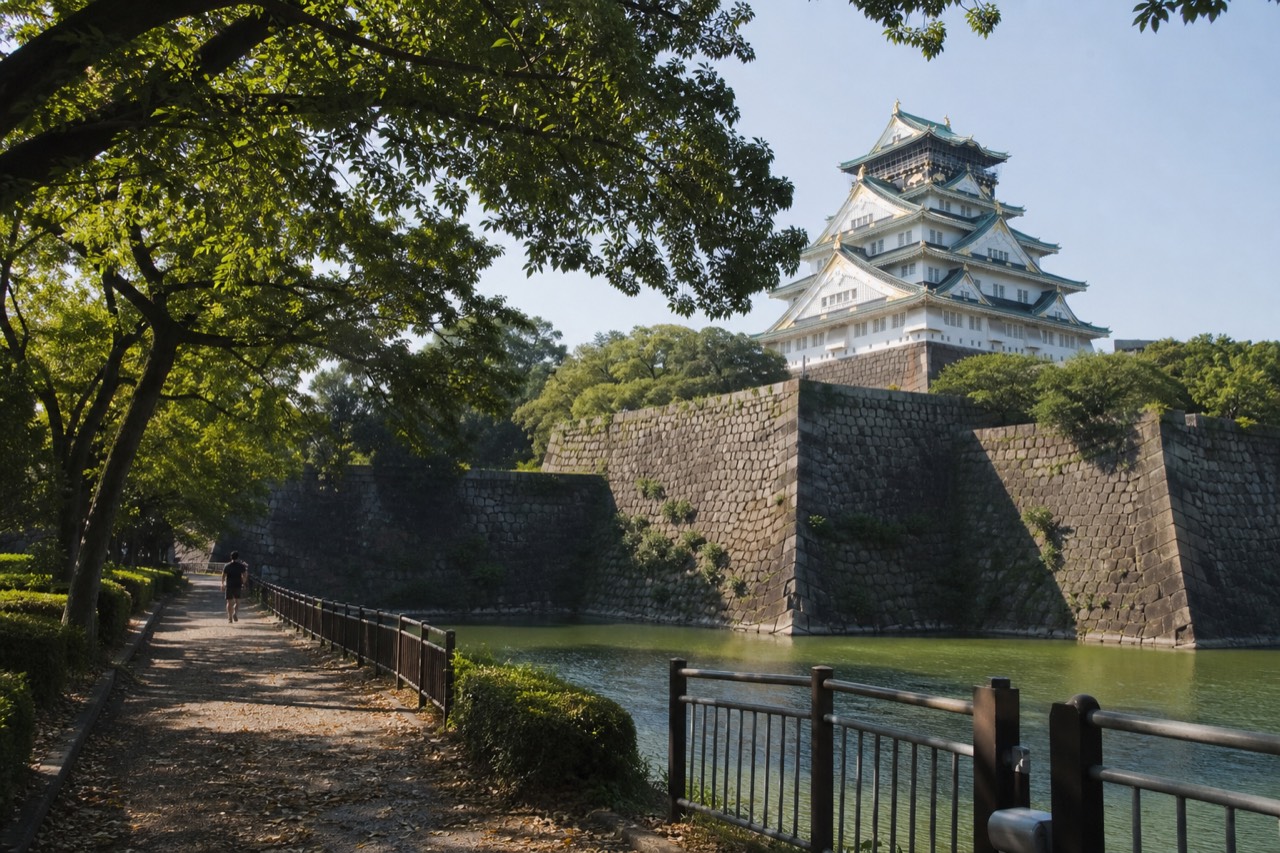
Most first-time visitors underestimate one number: the castle is not a photostop you tick in twenty minutes. The castle museum's own FAQ says most visitors spend 50 to 60 minutes inside the tower, an hour and a half if you look properly, and that is before you cross the park, pass through the gates and queue. Add the walk from any station, which the official park map puts at roughly 18 to 21 minutes on foot, and a half-day at the castle and its park is the honest budget. Squeeze that into a rushed one-day city dash and it becomes the thing you photograph from outside.
Recent visitors report the same shape. Reviews and travel threads through 2025 and 2026 describe total castle visits of 1.5 to 3 hours including the grounds, and 45 minutes to an hour for those who only walk the exterior and park. Those are reported opinions, not the castle's own figures, but they line up with the museum's FAQ, and they are the reason a two-day itinerary needs the castle scheduled into a morning, not squeezed between lunch and shopping.
Crowding has changed the calculation too. The tower admitted 2,813,851 people in FY2025, a provisional all-time record, and the castle's own guide page warns that the ticket-purchase queue can be capped before the 17:30 last admission when conditions demand it. In a record-crowd year, the difference between two days and three is often just the difference between queueing and not.
If the castle is the anchor of the trip, this is the ticket decision to make first:
The entry e-ticket covers the Main Tower and the Toyotomi Stone Wall Museum, from $7.69 per adult, which at current exchange rates is the same as the official ¥1,200 gate price. It buys a skipped ticket-purchase line and guaranteed entry, not a discount. The guided walking tour is a different product entirely: a live English-speaking guide for the castle grounds, from $28.85, whose base price does not include tower admission. The two stack rather than substitute, so a reader taking the walk still needs entry.
What Does Two Days In Osaka Actually Get You?
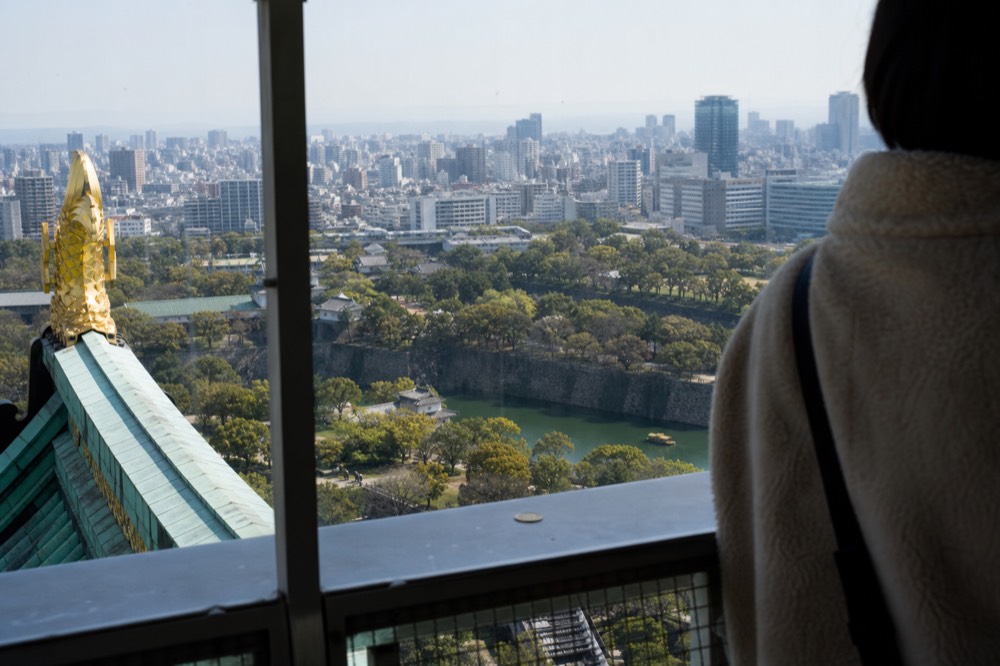
Two days covers Osaka's essentials at a brisk pace: day one for the castle, the park and Umeda, day two for Minami, Dotonbori and a food street. What it does not absorb is a Himeji or Nara day trip, a Universal Studios Japan day, or the queueing that a record-crowd year produces at the castle tower. Two days is enough for Osaka the city, not the region around it.
Day one belongs to the castle, and the earlier the better. The tower opens at 9:00 and closes at 18:00, with last admission at 17:30, and the queue-capping warning attached to that final hour is a real constraint, not boilerplate. A 9:00 arrival gives you the tower, the Toyotomi Stone Wall Museum (included in the same ticket, same hours) and a loop of the park grounds before lunch. The park is 105.6 hectares, about 3,000 cherry trees and 13 Important Cultural Property structures, so even a selective walk takes the rest of the morning.
Afternoon on day one goes north: Umeda for shopping and one observation deck, or the Osaka Museum of History beside the castle if you would rather stay in Chuo ward. Note that the old combined ticket between the History Museum and the castle ended on 27 December 2024, so the pairing now means two separate admissions. Day two flips to Minami: Dotonbori, Shinsaibashi and either Kuromon Market or a street-food crawl, with the evening under the Glico sign. How much Dotonbori you need depends entirely on your tolerance for crowds; half a day is the honest figure for first-timers.
Two days works when Osaka is one stop on a wider Kansai itinerary, when you are changing cities anyway. What it costs you is slack: a rainy morning, a queue at the tower, or an unplanned two-hour lunch in Kuromon all have to come out of something else. The JMA's 1991-2020 climate normals put June as Osaka's wettest month at 185.1 mm of precipitation and mean temperatures of 27.7°C in July and 29.0°C in August, so summer heat and rain are exactly the kinds of things a two-day plan has no buffer for. The castle's current hours are published on its own guide page, which is the page to check before locking any morning schedule.
When Is Three Days The Right Answer?
Three days is the answer for most first-time visitors: day one for the castle and Umeda, day two for Minami and Dotonbori, day three for the bay area, Tennoji or a slower castle-return morning. The third day is what converts Osaka from a checklist into a trip, because it absorbs queueing at the tower, a lie-in after Dotonbori, and the practical reality that the castle walk alone is 18 to 21 minutes each way.
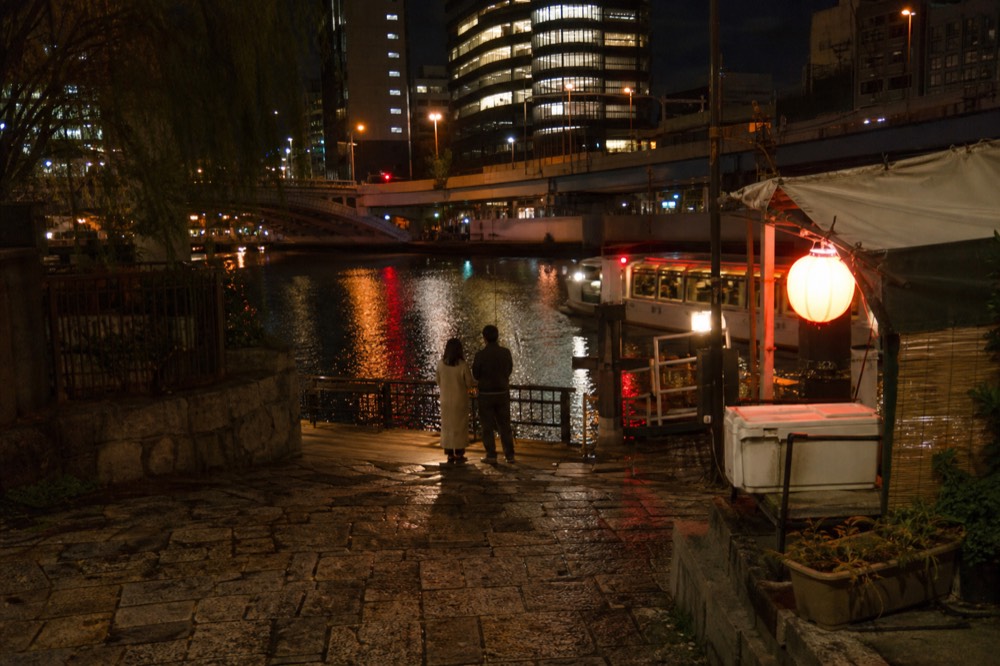
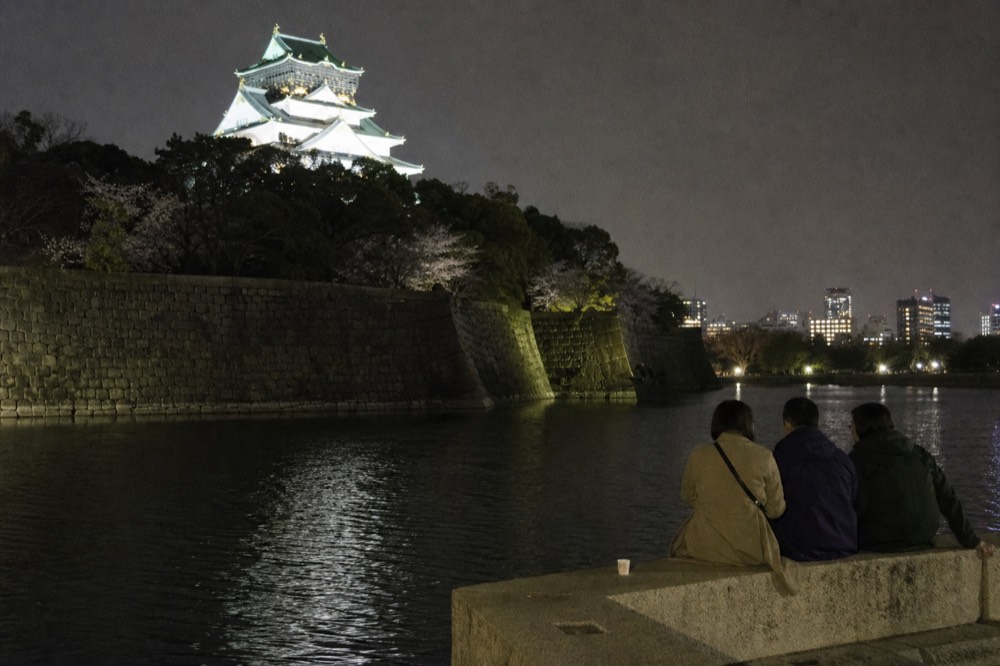
The third day is where honest scheduling pays off. A return morning at the castle park, without the tower, costs nothing: the grounds, moats and gates are free to walk, and the exterior illumination runs from sunset until 00:30 at no charge. If you missed the Toyotomi Stone Wall Museum on day one, or the weather killed your observation-deck plan, the third morning is where it goes. Tennoji, Shinsekai and Abeno make a natural afternoon, and the bay area (the aquarium, the Tempozan ferris wheel) is the classic third-day family option.
Three days also changes what a sightseeing pass is worth. The Osaka Amazing Pass costs ¥3,500 for one day or ¥5,000 for two consecutive days, includes the Main Tower and the Toyotomi Stone Wall Museum on the same day only, and is on sale from 25 March 2026 through 31 March 2027. Against a ¥1,200 castle ticket, the pass only pays for itself when you stack it with transport and several other paid venues, which a three-day trip is far more likely to do than a two-day one. The pass's own official information page is the place to check the current facility list before deciding.
One cost that applies however long you stay: Osaka Prefecture revised its accommodation tax effective 1 September 2025, with a 200 yen band for room rates of 5,000 to 14,999 yen per person per night, 400 yen for 15,000 to 19,999, and 500 yen from 20,000 up, according to the prefecture's own tax page. It is small money, but it lands on every night of a longer stay, and the exemption threshold dropped to 5,000 yen, so few central hotels escape it.
| Trip length | What fits comfortably | What gets cut | Castle's role |
|---|---|---|---|
| 2 days | Castle tower, park, Umeda, Dotonbori, one food street | Day trips, USJ, bay area, second museums | One full morning, arrive at opening |
| 3 days | All of the above plus Tennoji, bay area or a slow castle return | Usually only one of Himeji/Nara/Kobe | Morning one, optional free return on day three |
| 5 days | The city plus two or three regional day trips | Nothing major, only pace | One scheduled morning, revisits at leisure |
Is Five Days Too Many For Osaka Alone?
Five days is too many for the city by itself: Osaka's own headline sights genuinely run out around day three. Five days earns its keep only when the extra days become trips out, and Himeji, Nara and Kobe are all comfortable returns-to-base from Osaka. Within the city, day five is for second-tier museums, neighbourhoods and revisits, which suits slow travellers and frustrates checklist travellers.
from $7.69 The from-price you see online and the price at the castle window are the same adult admission, so booking ahead costs nothing extra.
Your ticket into the tower
Official E-Ticket
- Osaka Castle Main Tower entry
- Osaka Castle Toyotomi Stone Wall Museum
- QR code entry
- Valid 30 days
- No fixed time slot
- No viewing time limit
Buying the official e-ticket ahead saves you the ticket-purchase line, not money, since the online price matches the window. You exchange nothing at the gate, you simply show the voucher and go in.
The real flexibility here is the voucher's 30-day validity, with no fixed time slot and no set viewing time limit.
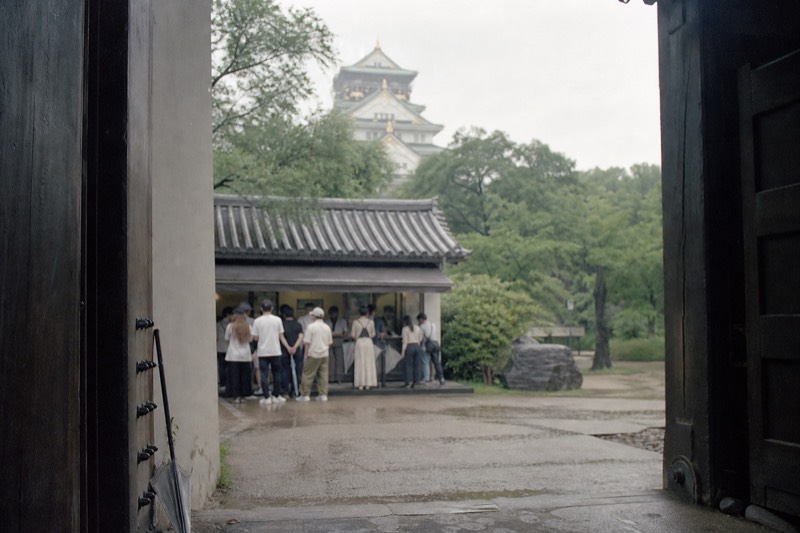
At The Gate
Adult, per person Group rate from 15 paying visitors Free categories at the window
¥1,200
The window price is identical to the online price, so nothing is lost by paying in person. Students and under-15s should buy here, because proof-of-age discounts are handled face to face and not through an e-ticket.
Students with ID and visitors aged under 15, since discounted and free rates are only applied at the window.
See what it covers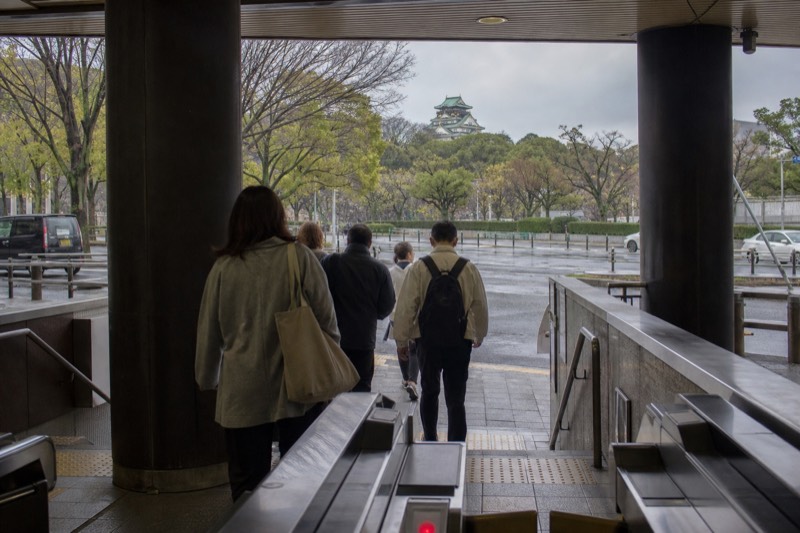
Osaka Amazing Pass
One-day pass On sale 25 March 2026 to 31 March 2027
¥3,500
The one-day pass costs 3,500 yen against the 1,200 yen castle ticket on its own, so it only pays off with two or more other paid sights. Add transport and the maths tips further in its favor.
Visitors packing several paid sights plus metro and bus rides into one day, who will clear the pass price easily.
See what it covers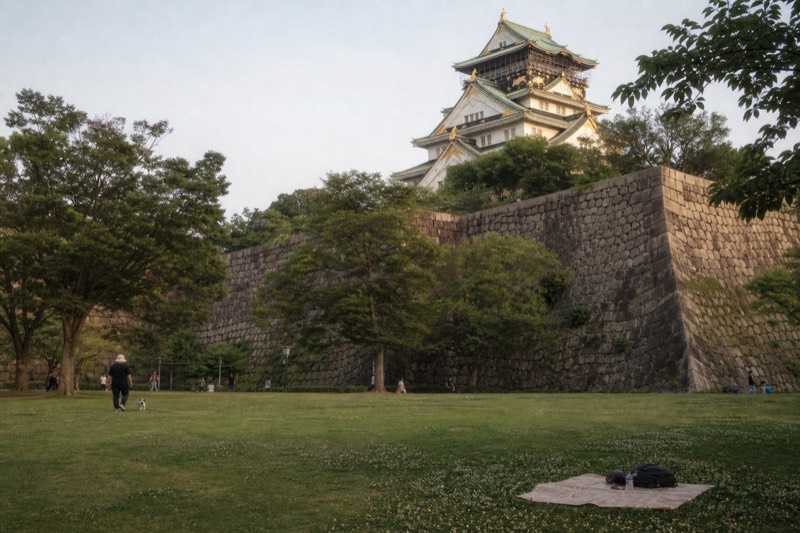
Free Park Areas
No admission charge
Free
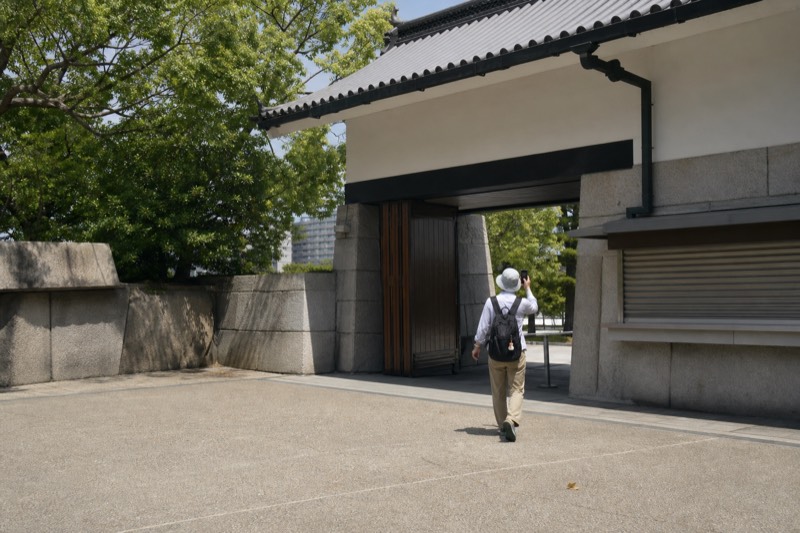
The park grounds, moats, stone ramparts and exterior views of the tower cost nothing at all, and they fill a half day on their own. The paid line falls only at the Main Tower entrance and the Toyotomi Stone Wall Museum.
Anyone who wants the castle views, moats and grounds without paying to go inside the buildings.
See what it coversThe honest version of five days is three in the city plus two out. Himeji Castle is the comparison every castle visitor eventually makes, and the calculus changed in 2026: Himeji City introduced dual pricing effective 1 March 2026, charging non-residents aged 18 and over 2,500 yen while the resident rate stayed at 1,000 yen, per Himeji's own tourism site. That is more than double Osaka Castle's ¥1,200, and it is a real input into whether Himeji earns one of your days. Our fuller comparison lives in the Osaka Castle versus Himeji guide.
Nara needs no ticket at all for its core experience: the deer park, the approach to Todaiji and the lantern-lined paths are free, and a half-day is the standard budget. Kobe is the third option, mountaintop views and waterfront in another half-day-to-day. If none of those appeal, five days in Osaka proper means slowing down deliberately: the National Museum of Art, Sumiyoshi Taisha, a deeper food itinerary, an evening return to the castle park for the free illumination. That is a legitimate trip. It is just a different trip from the one the question is usually asking about.
Which Time Of Year Changes The Day Count?
The season you visit can add or subtract a day. Cherry-blossom season and the biggest holiday weeks push toward three days minimum, because crowds stretch queue times at the castle and transport everywhere; late autumn and midwinter, when the park is quiet, let a two-day plan breathe. The JMA's 1991-2020 normals put June as the wettest month and August as the hottest, so summer trips should budget buffer days for heat and rain.
Blossom season is the peak of peaks. The park itself publishes a mechanism rather than a bloom window: the official Somei-Yoshino specimen tree stands inside Nishinomaru Garden, and the Japan Meteorological Agency declares Osaka's blossom opening when five or six flowers show on it. The park's own blossom-season programming, the Kan'o Nighter night viewing in Nishinomaru Garden, ran 20 March to 12 April in 2026 with extended 9:00 to 21:00 hours. In 2026 the JMA recorded full bloom in Osaka on 3 April. Those are single observed facts about one year, not a promise about yours, but they show the shape: a spring trip around those weeks needs the castle scheduled at opening time and a third day for slack.
The JMA's cherry observation pages are the primary source for the bloom record, and the agency's full-bloom data is where the Osaka series lives. Summer is the other season that changes the math: with August means near 29°C and high humidity, three attractions a day becomes two, and a three-day itinerary behaves like a four-day one. Midwinter, by contrast, is quiet, the castle's only annual closure is 28 December to 1 January, and a two-day plan runs closer to schedule. More on the seasonal detail is in our best month to visit Osaka piece.
Where Does Osaka Castle Fit In Each Itinerary Length?
The castle needs one scheduled half-day morning on any itinerary, timed to the 9:00 opening to beat the queue. On a two-day trip it anchors day one; on three days it keeps that slot and you gain a free evening return for the illumination; on five days you can revisit the park at leisure and add the guided walking tour. Avoid late afternoon, since last admission is 17:30 and the queue can close earlier.
The entry logistics are the same whatever your day count. The e-ticket sold by Osaka Castle Tickets is admission only, self-guided, covering the Main Tower and the Toyotomi Stone Wall Museum, rated 4.5 across 3,768 reviews and from $7.69 per adult, with the voucher valid 30 days, no fixed time slot and no set viewing time limit. The castle's own guide page carries the QR-entry terms, and the ticket buys the skipped purchase line rather than a cheaper price. High-school and university students should simply buy at the gate: they pay ¥600 with proof, and children of junior-high age and under are free, rates the online listing does not sell.
The guided walking tour answers a different question on a longer stay. It runs 1.5 to 3 hours with a live English-speaking guide over the castle grounds, private or small group, rated 4.7 across 262 reviews, from $28.85. Its base price excludes tower admission, so on a five-day trip the comfortable pattern is the walk plus the entry ticket, while on a two-day trip the entry ticket alone, with the free audio guides lent at the tower in Japanese, English, Korean and Chinese, is usually the better fit. How to weigh the two approaches in detail is covered in the guided tours guide, and the tower's floor-by-floor content in inside Osaka Castle. For what to schedule within the grounds themselves, the how long to spend at Osaka Castle guide has the full breakdown.
How Many Days In Osaka Is Enough If You Only Came For The Castle?
If the castle is the reason for the trip, one full day in Osaka is genuinely enough: a 9:00 tower start, the Stone Wall Museum, the park walls and gates, and the free evening illumination, with Dotonbori as the night out. Two days adds the guided walk and the surrounding neighbourhoods without rushing. Anything beyond that is Osaka as a destination, not the castle as one.
A castle-focused single day is tighter than it sounds, and the sequencing matters. Arrive at Osakajokoen, Morinomiya or Tanimachi 4-chome, each of which the official map puts roughly 18 to 21 minutes on foot from the tower, and be at the gate for 9:00. Do the tower and the Stone Wall Museum first while the observation deck is quiet, then walk the grounds: the Sakuramon approach, the turret exteriors, the inner moat. Lunch at MIRAIZA, the former army headquarters building by the castle, then leave. Come back after sunset for the free exterior illumination, which runs from sunset until 00:30 and is off only one inspection day a year.
That single day leaves no room for the guided walking tour, which is a 1.5 to 3 hour commitment in itself, and no room for Nishinomaru Garden, which is a separate ¥300 ticket with its own hours and a Monday closure the tower does not share. So the honest ladder is: one day for the castle essentials, two for the castle plus the walk and the garden, three for the castle plus the city. Readers planning the wider area around the castle will find the things to do near Osaka Castle guide and the one day in Osaka itinerary cover the rest of the day in detail.
Whether two, three or five days is the plan, the castle itself is the part worth locking in early. It drew record crowds, a provisional FY2025 admissions high, it opens at 9:00, and its queue closes before the day does.
Two days is enough for Osaka's core sights, three is the comfortable answer for most first-time visitors, and five only pays off when the extra days become trips to Himeji, Nara or Kobe. The castle earns one scheduled morning on any of those plans, arriving at the 9:00 opening to stay ahead of the ticket-purchase queue. The questions below cover the specific cases.
Common Questions About Days In Osaka
How Many Days In Osaka Is Enough?
Two days covers the city's core: the castle, Dotonbori, one food street and one observation deck. Three is the comfortable answer for most first-time visitors, because it absorbs queueing at the tower and a half-day in Tennoji or the bay area. Five only pays off when the extra days become trips to Himeji, Nara or Kobe.
Can I See Osaka Castle In One Day?
Yes, comfortably. The museum's own FAQ budgets 50 to 60 minutes inside the tower, an hour and a half for a proper look, and visitors typically report 1.5 to 3 hours including the grounds. Arrive for the 9:00 opening, see the tower and the Toyotomi Stone Wall Museum, walk the park, and return after sunset for the free exterior illumination.
Is Osaka Castle A Full-Day Trip?
It is a half-day, not a full day, unless you add the guided walking tour (1.5 to 3 hours), Nishinomaru Garden (a separate ¥300 ticket) or a long park loop. With all three it can fill most of a day at a relaxed pace.
Is Two Days In Osaka Enough Without Day Trips?
Yes. Two days fits the castle, Umeda, Dotonbori and one food street at a brisk pace. What it cannot absorb is a Himeji or Nara day trip, a Universal Studios Japan day, or heavy queueing at the tower, so schedule the castle for the 9:00 opening on day one.
Is Three Days In Osaka Too Many?
No. Three days is the sweet spot for first-timers: the castle and Umeda on day one, Minami and Dotonbori on day two, and the bay area, Tennoji or a slow castle-return morning on day three. Only the city beyond that starts to thin out.
Does The Season Change How Many Days I Need?
It can. Cherry-blossom weeks and major holiday periods stretch queues and push you toward three days minimum, while midwinter runs closer to schedule. The JMA's 1991-2020 normals make June the wettest month and August the hottest, so summer trips should carry a buffer day for heat and rain.