What Is The Best Month To Visit Osaka?
A month-by-month guide to visiting Osaka, anchored on what the castle grounds actually look like through the year, with weather, crowds and events.
What Is The Best Month To Visit Osaka?
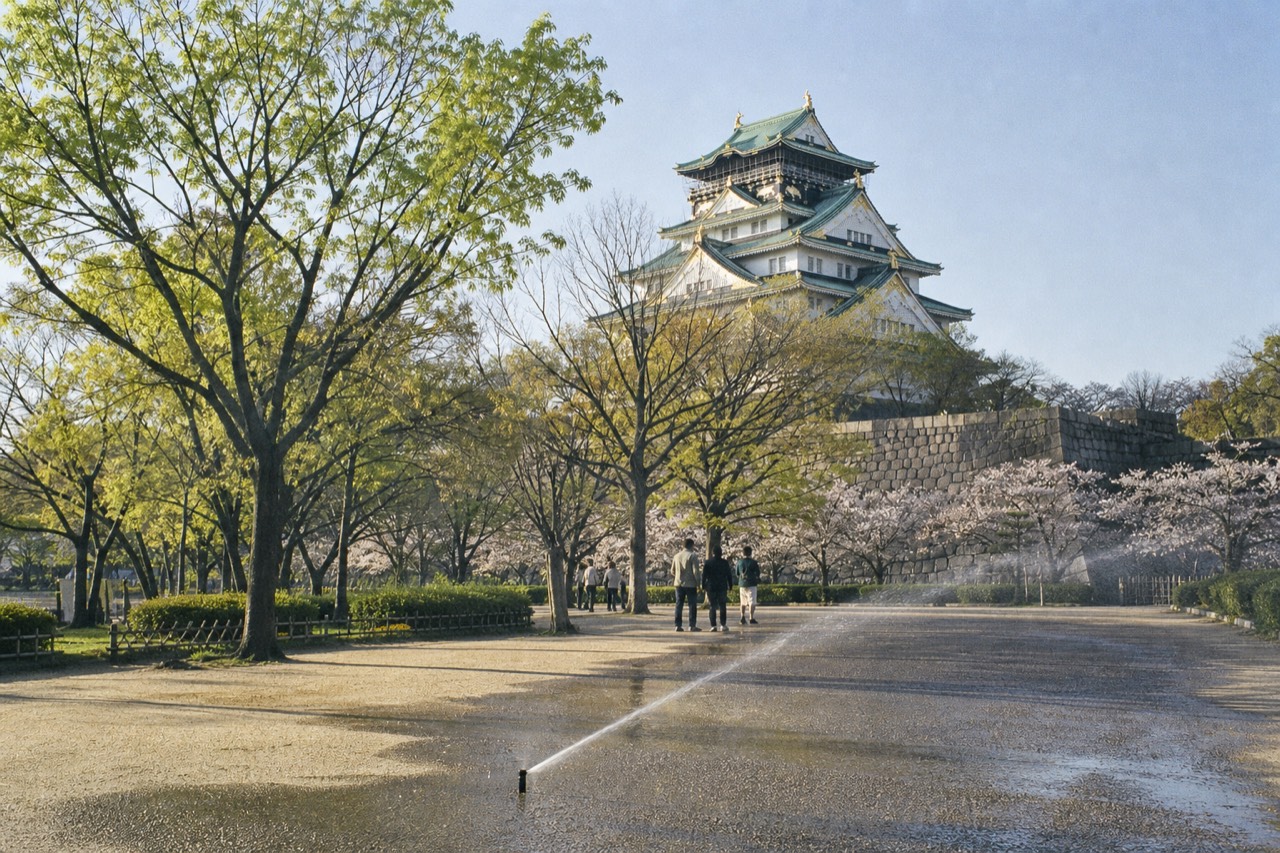
For the castle grounds specifically, late March into early April is the best window: roughly 3,000 cherry trees sit inside Osaka Castle Park and the park runs its Kan'o Nighter evening opening for them. If you would rather avoid the blossom crowds, October is the strongest runner-up, since the heat has gone, typhoon season is fading and the gardens keep full hours. Summer is the weakest stretch, and the rainy season sits right before it.
That answer comes with an honesty clause. The park does not publish a fixed cherry-blossom window, so there is no official "blossom runs from X to Y" date you can book a flight against. What the park publishes instead is a mechanism: the official Somei-Yoshino specimen tree for the whole of Osaka stands inside Nishinomaru Garden, and when the Japan Meteorological Agency observes five or six flowers open on that tree, Osaka's blossom opening is declared. Everything else in the spring calendar hangs off that announcement, including the one night a year the tower is floodlit in cherry-pink from sunset until midnight.
The park does commit to one spring date range of its own: the Kan'o Nighter, the evening garden opening, ran 20 March to 12 April in 2026, with Nishinomaru Garden open until 21:00 and the tower lit behind about 300 cherry trees. The dates are announced separately every year, so treat that window as the park's own judgement of when blossom is worth seeing, not a guarantee. In 2026 the JMA recorded full bloom in Osaka on 3 April, which landed squarely inside it.
For a wider read on the question, the pages on when the castle grounds change character and how long to spend at the castle carry the detail for the spring season and the timing of a visit.
How Do Osaka's Months Actually Compare?
The Japan Meteorological Agency's 1991-2020 climate normals put August as Osaka's hottest month at a 29.0°C mean and July at 27.7°C, June as the wettest at 185.1 mm of rain, and January as the coldest at 6.2°C; the driest comfortable months are April at 101.9 mm and October at 136.0 mm, with October averaging 19.5°C, which is why it keeps coming up as the practical answer.
Those normals are the JMA's own 30-year averages, and they are the only climate figures worth planning around. What they say in plain terms: Osaka has a hot, humid summer and a short, mild winter, and the shoulder months on either side are where the city is at its most walkable. A castle visit is mostly an outdoor affair, since you cross moats and gates and park paths before you ever reach the tower door, so the temperature you walk in matters more than the temperature inside the museum.
| Month | Mean temp (JMA normals) | Rain (JMA normals) | What the castle grounds are doing |
|---|---|---|---|
| January | 6.2°C | 47.0 mm | Bare trees, quiet paths, camellia colour; tower open 9:00-18:00 |
| February | 6.6°C | 60.5 mm | Plum Grove begins flowering, tracked live by the park |
| March | 9.9°C | 103.1 mm | Plum peak, cherry buds, Spring Festival season begins |
| April | 15.2°C | 101.9 mm | Cherry blossom, Kan'o Nighter evening openings, biggest crowds |
| May | 20.1°C | 136.5 mm | Fresh green canopy, comfortable walking, crowds thin |
| June | 23.6°C | 185.1 mm | Rainy season, the wettest month on the 30-year averages |
| July | 27.7°C | 174.4 mm | Heat and humidity build; late-blooming trees long finished |
| August | 29.0°C | 113.0 mm | Peak heat; evening visits and the free floodlighting pay off |
| September | 25.2°C | 152.8 mm | Typhoon season overlaps; check closures before travelling |
| October | 19.5°C | 136.0 mm | Dry, mild, quiet; the strongest non-spring month |
| November | 13.8°C | 72.5 mm | Late colour in the Momiji-en, thin crowds |
| December | 8.7°C | 55.5 mm | Bare branches and the free floodlighting from sunset to 00:30 |
The rainy-season and typhoon lines in that table come with the same caveat as everything weather-related: a 30-year normal tells you the odds, not the forecast. The JMA declares the rainy season's start and end for the Kinki region each year only after the fact, so a June trip should be planned with indoor alternatives, not written off.
What Does The Castle Park Look Like Month By Month?
The grounds run a full annual cycle: plum blossom from late winter, cherry blossom as the headline act in spring, deep green through summer, and quiet, colourful walks in autumn, with the free exterior floodlighting running from sunset to 00:30 every night of the year except one annual inspection day, so the castle never fully closes to the eye even when the trees are bare.
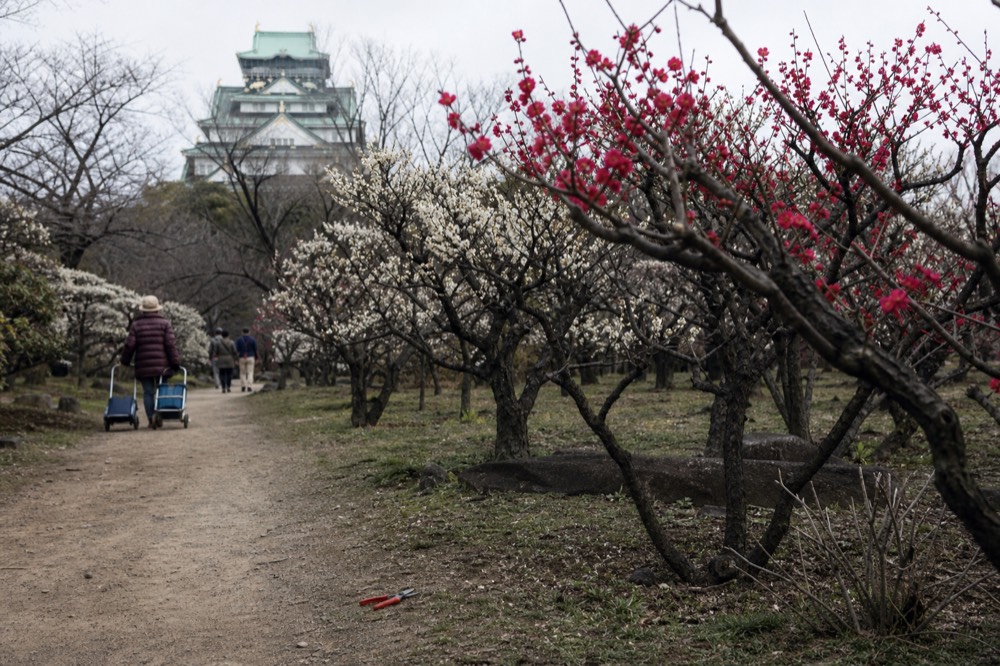
February belongs to the Plum Grove. It sits on the east side of the inner moat across about 1.7 hectares, with about 1,245 trees of 105 varieties, and the park publishes a live per-variety bloom table rather than a calendar, compiled by the Osaka Castle Plum Grove Club. Early varieties open the season and late ones close it, and because the grove was planted for variety rather than a single mass bloom, it holds interest for weeks. It is also dramatically quieter than the cherry season that follows.
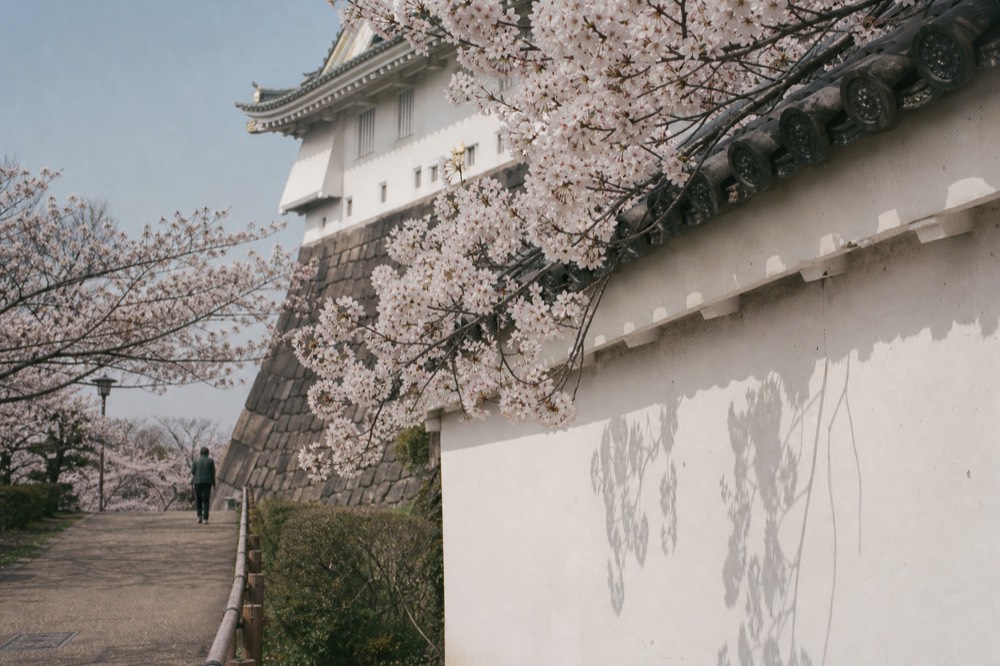
March and April are what the park is famous for. The Spring Festival umbrella ran 10 March to 24 May in 2026, covering events well beyond blossom, but the core of it is the Somei-Yoshino display: about 3,000 trees, with Nishinomaru Garden's roughly 300 the most photographed, because the floodlit tower stands directly behind them. The Kan'o Nighter opens that garden to 21:00. On the day the JMA declares Osaka's blossom opening, the tower itself is floodlit cherry-pink from sunset to midnight, a single announced-on-the-day event. If your dates are flexible rather than fixed, the honest advice is to follow the JMA's specimen-tree announcements rather than book blind against a date range.
May is the underrated month. The canopy is fresh green, temperatures average 20.1°C, and the blossom crowds have gone. The late-blooming yae-zakura at Tamatsukuri-guchi carry a last flush of flower into the month's start.
June through August is the stretch to weigh carefully. The rains come first, then the heat, with August's 29.0°C mean making the walk from the station, which the castle's own map puts at roughly 18 to 21 minutes from any nearby station, a genuinely sweaty proposition by late morning. The compensation is the evening: the exterior illumination is free, runs from sunset to 00:30, and the tower is at its best from across the outer moat at dusk. The tower's air-conditioned interior is a legitimate midday refuge, and the museum says most visitors spend 50 to 60 minutes inside, longer if you read properly.
September, October and November are the connoisseur's months. The heat breaks, the typhoon risk tapers through September, and by October you get 19.5°C averages, modest rain and a park at its least crowded since February. The Momiji-en maple garden carries colour late in the season, though the park publishes no official peak-colour dates, so treat November colour the way you treat blossom: check the live park pages, not a fixed window. Recent travellers asked directly about the best month repeatedly name October, and their reasoning, fewer people and comfortable walking weather, matches the data.
Winter is quiet, cold but not brutal, and photogenic. Bare branches open sightlines across the moats that the summer canopy hides, and the free floodlighting makes an early-evening visit worthwhile. The tower itself closes only 28 December to 1 January, and its 9:00 to 18:00 hours with last admission at 17:30 hold for the rest of the winter.
Which Months Should You Avoid?
June is the month to avoid on the weather alone, with the wettest 30-year average at 185.1 mm, and August is the one to avoid for comfort, with a 29.0°C mean. Beyond weather, sidestep the big Japanese holiday blocks in spring and autumn, when the park's paths and the tower's ticket-purchase queue swell, and the castle's own guidance notes the queue can be capped before the 17:30 last admission when conditions demand it.
from $7.69 The from-price you see online and the price at the castle window are the same adult admission, so booking ahead costs nothing extra.
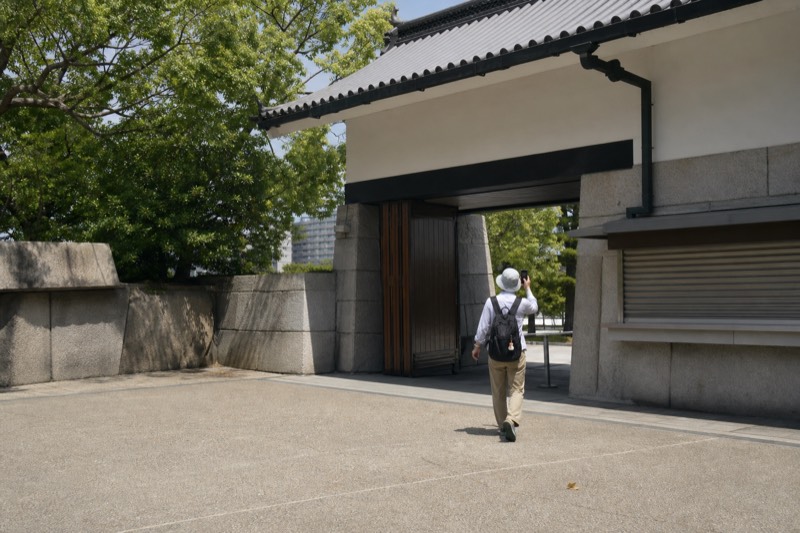
Your ticket into the tower
Official E-Ticket
- Osaka Castle Main Tower entry
- Osaka Castle Toyotomi Stone Wall Museum
- QR code entry
- Valid 30 days
- No fixed time slot
- No viewing time limit
Buying the official e-ticket ahead saves you the ticket-purchase line, not money, since the online price matches the window. You exchange nothing at the gate, you simply show the voucher and go in.
The real flexibility here is the voucher's 30-day validity, with no fixed time slot and no set viewing time limit.
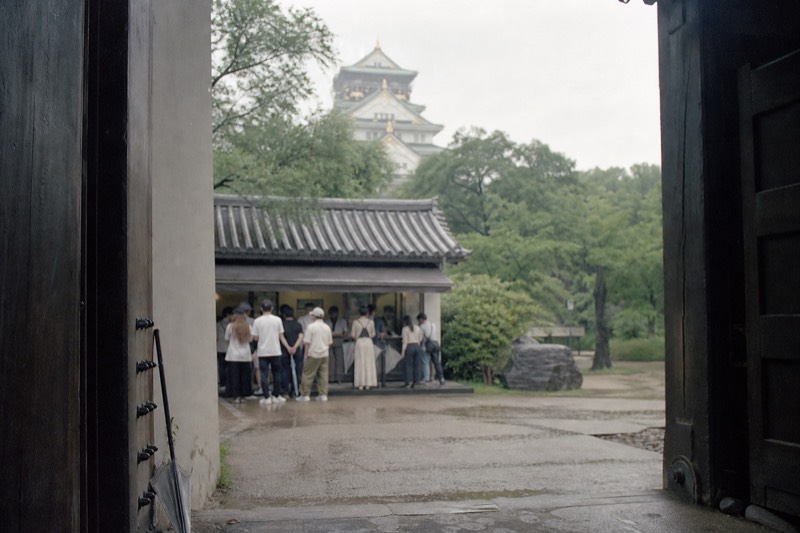
At The Gate
Adult, per person Group rate from 15 paying visitors Free categories at the window
¥1,200
The window price is identical to the online price, so nothing is lost by paying in person. Students and under-15s should buy here, because proof-of-age discounts are handled face to face and not through an e-ticket.
Students with ID and visitors aged under 15, since discounted and free rates are only applied at the window.
See what it covers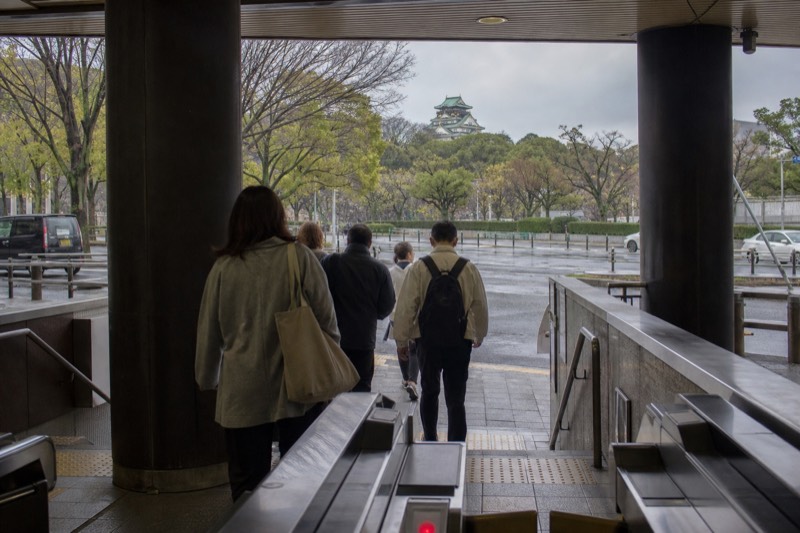
Osaka Amazing Pass
One-day pass On sale 25 March 2026 to 31 March 2027
¥3,500
The one-day pass costs 3,500 yen against the 1,200 yen castle ticket on its own, so it only pays off with two or more other paid sights. Add transport and the maths tips further in its favor.
Visitors packing several paid sights plus metro and bus rides into one day, who will clear the pass price easily.
See what it covers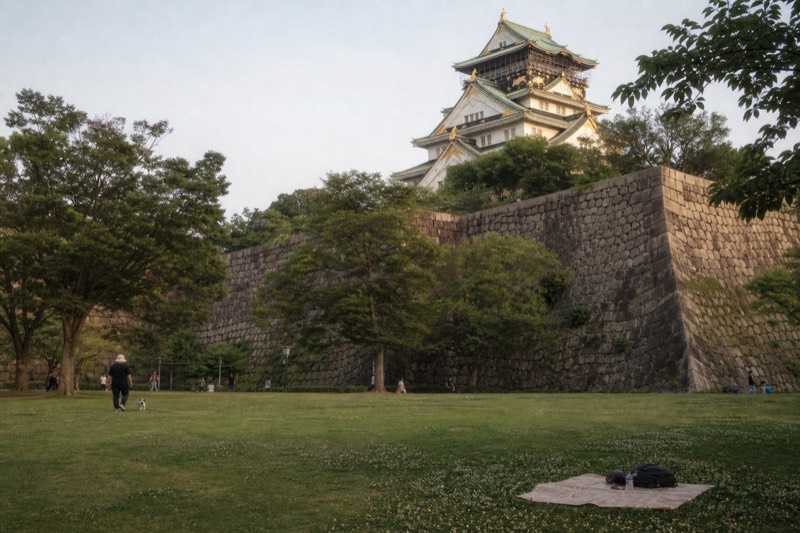
Free Park Areas
No admission charge
Free
The park grounds, moats, stone ramparts and exterior views of the tower cost nothing at all, and they fill a half day on their own. The paid line falls only at the Main Tower entrance and the Toyotomi Stone Wall Museum.
Anyone who wants the castle views, moats and grounds without paying to go inside the buildings.
See what it covers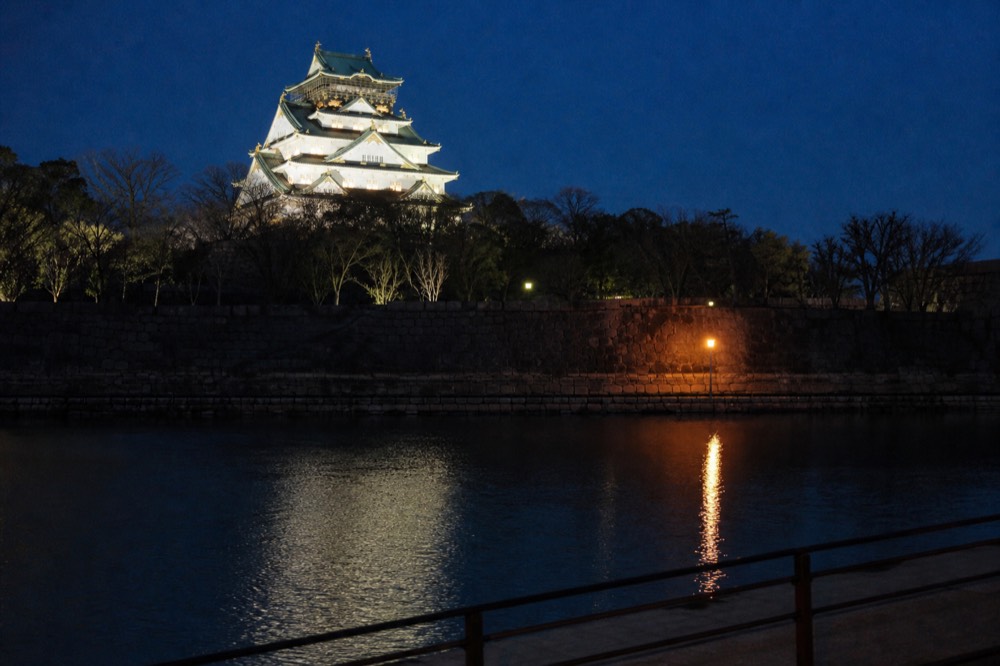
The holiday question deserves specifics rather than vagueness. Japanese public holidays cluster in the late-April to early-May stretch commonly called Golden Week and again around late September, and on those days every major sight in the country runs hot. Social posts from Golden Week 2026 described the castle crowds as intense, with the queue capped early, and a Reddit thread the same season pointed to October instead: no typhoons and fewer people around once the Expo had wrapped up. Chatter is opinion, not measurement, but it points the same direction the calendar does.
The queue-capping note is worth taking seriously in any busy month. The castle's official guidance states plainly that depending on conditions they may restrict the ticket-purchase line before 17:30, which is the practical reason a late-afternoon visit in peak season is riskier than a morning one. Arriving early in the day costs you nothing but sleep. A morning arrival also matters if you want the free audio guides, which are lent in Japanese, English, Korean and Chinese in limited numbers from 9:00.
One planning footnote that affects every month equally: Osaka Prefecture's accommodation tax changed on 1 September 2025, with the exemption threshold dropping from 7,000 to 5,000 yen per person per night and bands of 200, 400 and 500 yen above it, so cheap-room budgets shift slightly no matter when you travel.
Does The Castle Ticket Change With The Season?
No. The Main Tower's adult admission is 1,200 yen year-round, set on 1 April 2025, and the same ticket includes the Osaka Castle Toyotomi Stone Wall Museum in every month, with hours fixed at 9:00 to 18:00 and last admission at 17:30; the only seasonal price movement in the park is at Nishinomaru Garden, which charges 300 yen normally and 350 yen during the Kan'o Nighter.
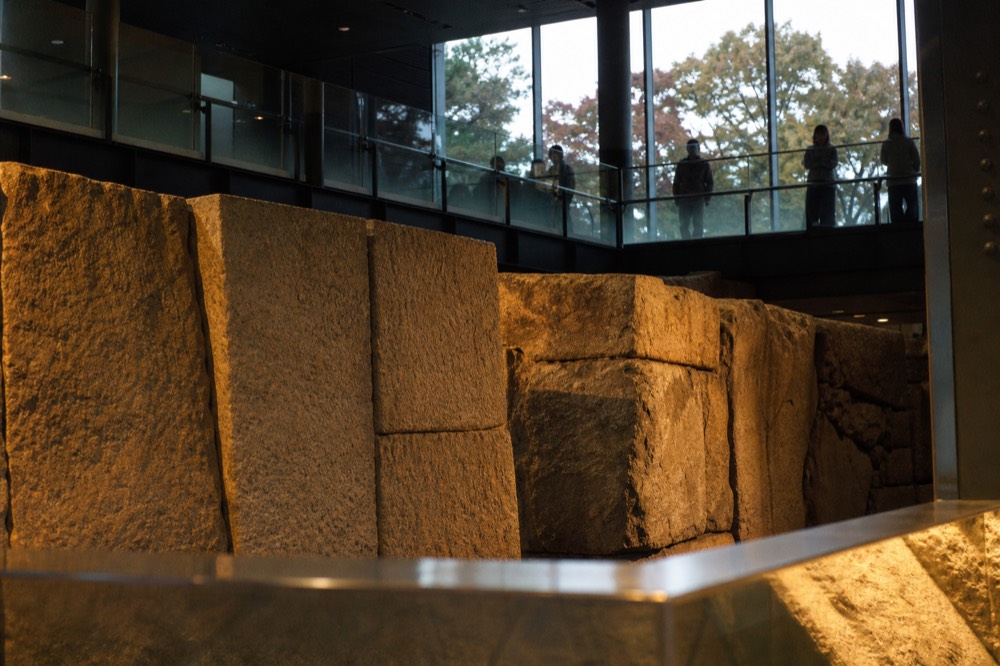
That stability makes the month question purely about weather, crowds and what the trees are doing, not about money. The 1,200 yen ticket, roughly $7.69, buys the tower's eight floors, the observation deck about 50 m above ground, and the underground Stone Wall Museum where the buried Toyotomi-era wall is exposed, and none of that varies by season. The Osaka Castle Tickets e-ticket at that same price adds a QR scan that skips the ticket-purchase line and a voucher valid for 30 days with no fixed time slot, which is exactly the flexibility a weather-dependent spring trip wants: if the rain comes on your planned day, you go the next.
Two seasonal notes do touch the visit. Photography is banned on floors 3F and 4F year-round, which matters in autumn when the 8F deck is the draw. And during the turret special openings, which in 2026 ran in spring, summer and autumn legs on weekends and holidays, separate Yagura tickets apply, a different product from the tower ticket, worth checking against your month before you travel.
The guided walking tour is the other option that interacts with the calendar. A live English-speaking guide around the castle grounds, private or small group, from $28.85, makes most sense in the months when the grounds are the main event: plum season, blossom season, and the green or colourful shoulder months, rather than the August heat.
For the full month-by-month events picture beyond the grounds, the pages on what to do near the castle and the castle after dark cover how the surrounding area changes through the year.
So Which Month Should You Actually Pick?
Pick early April if blossom is your whole reason for going and you accept crowds as the price, timing your visit around the JMA's specimen-tree announcements rather than a fixed window. Pick October for the castle experience at its most comfortable and least crowded, or February and November for quiet grounds and a softer kind of beauty, while avoiding June for rain, August for heat, and the national holiday blocks for crowds.
There is no single wrong month except the ones that combine bad weather with nothing compensating for it. Winter's bare park is atmospheric and cheap to visit in time. The Stone Wall Museum, the tower museum floors, and the evening floodlighting are constants that hold the visit together whenever you land. The grounds are the variable, and they are at their most generous for about six weeks a year, split across the plum and the cherry, and at their most pleasant for another eight.
Whichever month you choose, book the tower ticket ahead rather than joining the day-of line, especially in spring: the castle entry ticket guide has the full price detail.
The short answers repeat themselves across the year, so here they are in one place: early April for blossom, October for comfort and quiet, June and August as the months the weather data argues against, and a ticket price that never moves with the season. The details below cover the blossom mechanism, the heat, the rain, the pricing and the winter hours, each in a sentence or two.
Common Questions About The Best Month To Visit Osaka
What Is The Best Month To Visit Osaka?
Early April for cherry blossom, if you follow the JMA's announcement rather than a fixed date, and October for comfortable weather and far smaller crowds. The park's own Kan'o Nighter window, 20 March to 12 April in 2026, is the best published proxy for the blossom period.
When Do The Cherry Blossoms Bloom At Osaka Castle?
The park publishes a mechanism, not dates: the official Somei-Yoshino specimen tree for Osaka stands in Nishinomaru Garden, and the JMA declares the city's blossom opening when five or six flowers open on it. In 2026 the JMA recorded full bloom on 3 April. Book flexibly and follow the announcement.
Is Osaka Too Hot To Enjoy The Castle In Summer?
August averages 29.0°C in the JMA 1991-2020 normals, and the walk from any station to the tower is roughly 18 to 21 minutes on the castle's own map. Mornings and evenings are manageable, the tower interior is a cool refuge, and the free exterior floodlighting runs from sunset to 00:30.
What Is The Rainiest Month In Osaka?
June, at 185.1 mm on the 30-year JMA normals, followed by July at 174.4 mm and September at 152.8 mm. September also overlaps typhoon season, so check any closure notices before travelling then.
Does The Castle Ticket Price Change By Season?
No. The Main Tower's adult admission is 1,200 yen year-round and includes the Toyotomi Stone Wall Museum. The only seasonal price movement in the park is Nishinomaru Garden, 300 yen normally and 350 yen during the Kan'o Nighter blossom opening.
Is The Castle Open In Winter?
Yes. The tower keeps 9:00 to 18:00 hours with last admission at 17:30, closing only 28 December to 1 January. Nishinomaru Garden has shorter winter hours and Monday closures, and the free exterior floodlighting runs nightly from sunset to 00:30 apart from one annual inspection day.