Is Osaka Castle Made Of Real Gold?
The castle is not a gold building, but real gold leaf covers the shachihoko and the tiger reliefs on the roof, and golden artefacts are inside.
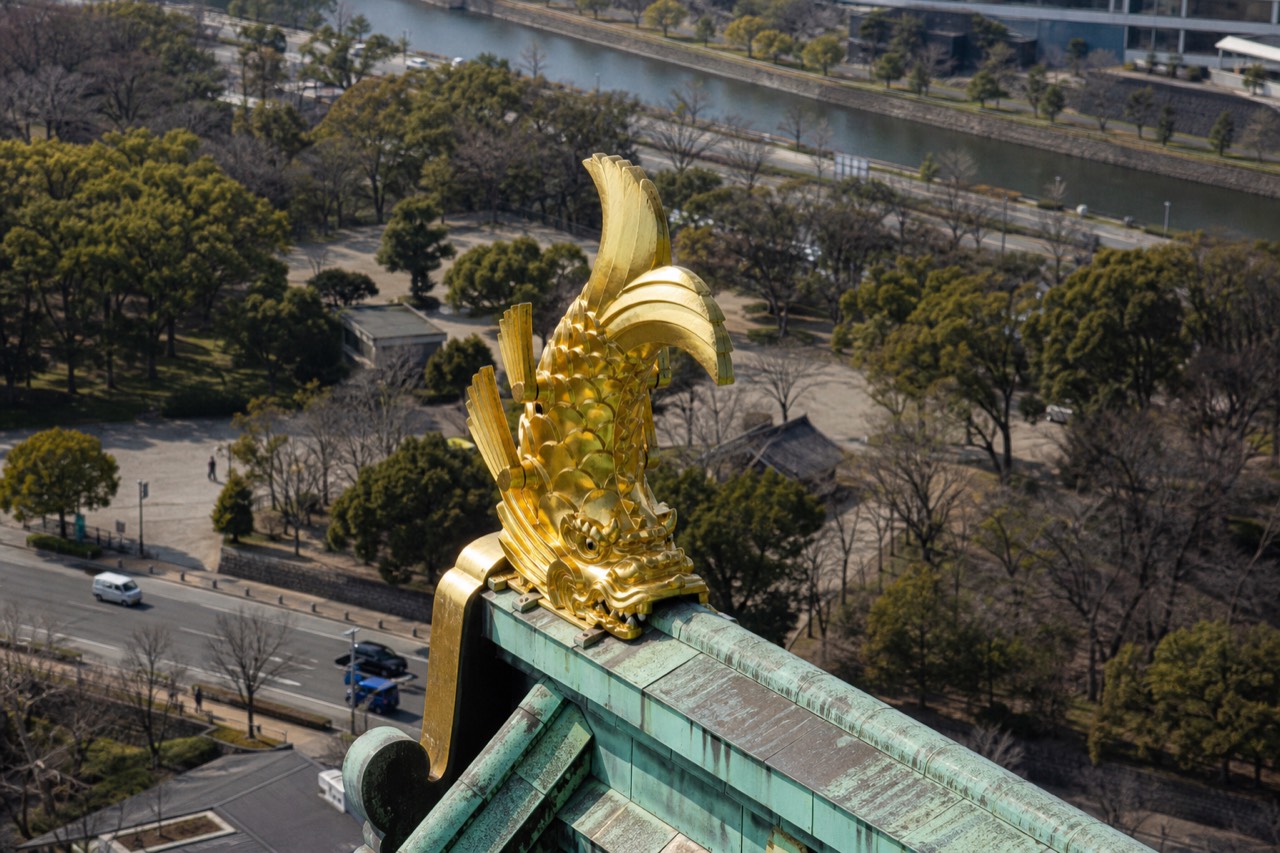
Osaka Castle gleams from a distance, the gold ornament on its roof catching the sun. That gold is not paint, and it is not a modern imitation. It is genuine gold leaf, hand-applied in the same way it was four centuries ago. The question "Is Osaka Castle made of real gold?" comes from a real place: the castle's gold is so prominent that it is the first thing many visitors notice. The answer is more interesting than a simple yes or no, because the gold is real, but only on specific parts of the building, and the story of why it is there goes back to Toyotomi Hideyoshi.
Is Osaka Castle Made Of Real Gold?
Osaka Castle is not a solid gold building. The gold on the roof is real gold leaf, applied to the shachihoko and the tiger-and-dragon reliefs on the fifth tier. The golden tea room inside the museum uses real gold leaf too, and a 2025 excavation found gold-foil roof tiles from the original castle.
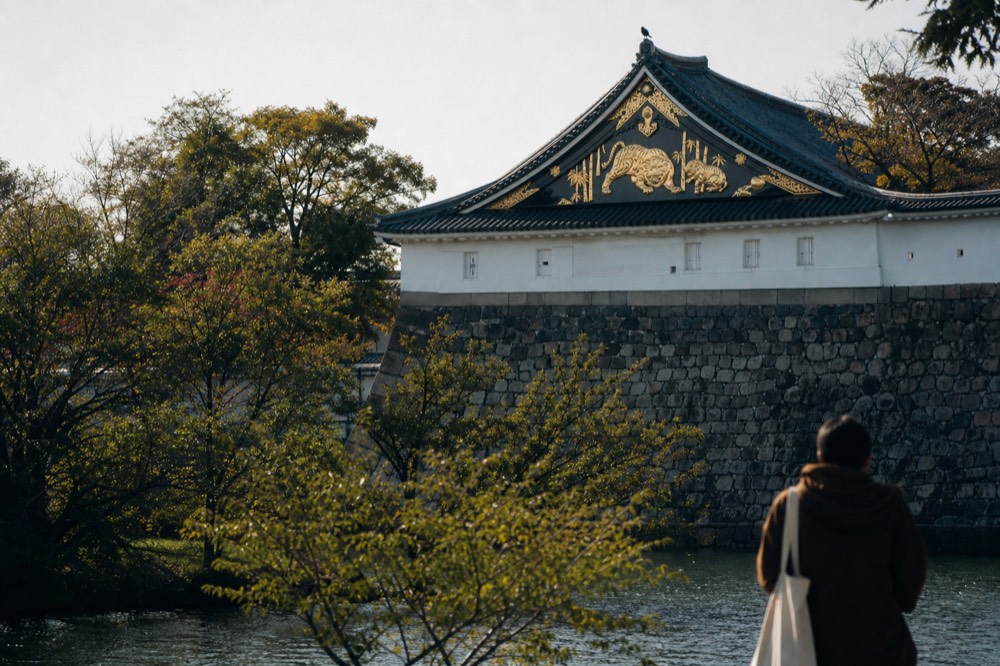
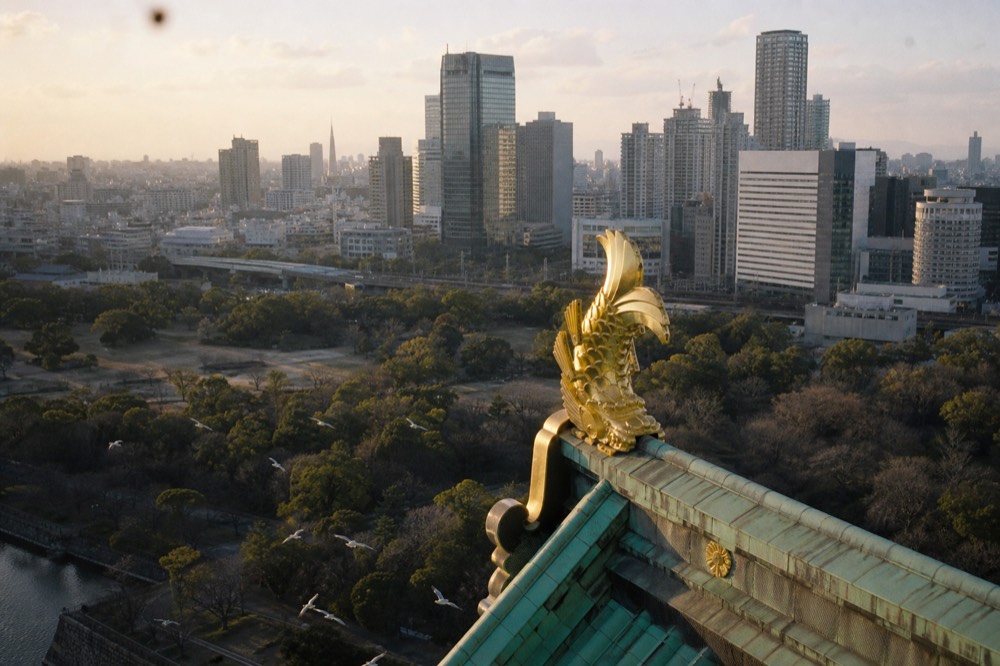
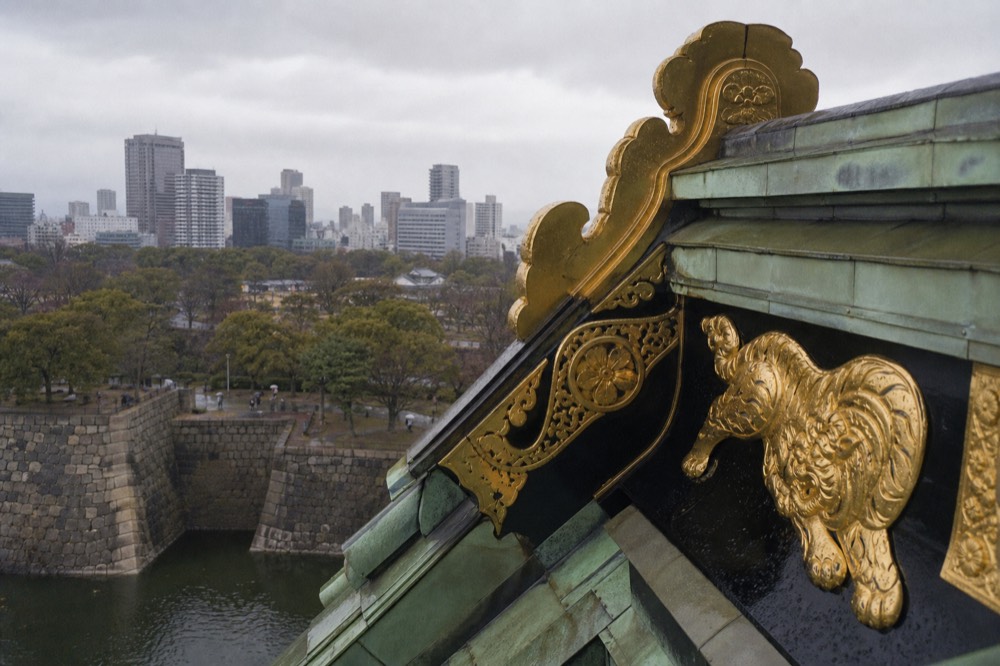
The castle's gold is concentrated on the roof, not spread across the entire structure. The shachihoko on the ridge ends are the most visible: two golden fish-dolphin hybrids that are believed to protect the building from fire. The tiger reliefs, also on the fifth tier, show a tiger and a dragon in gold leaf. These are reproductions of the Tokugawa-era originals, but the gold leaf is real. The rest of the tower is ferro-concrete, painted white and green, with no gold anywhere else.
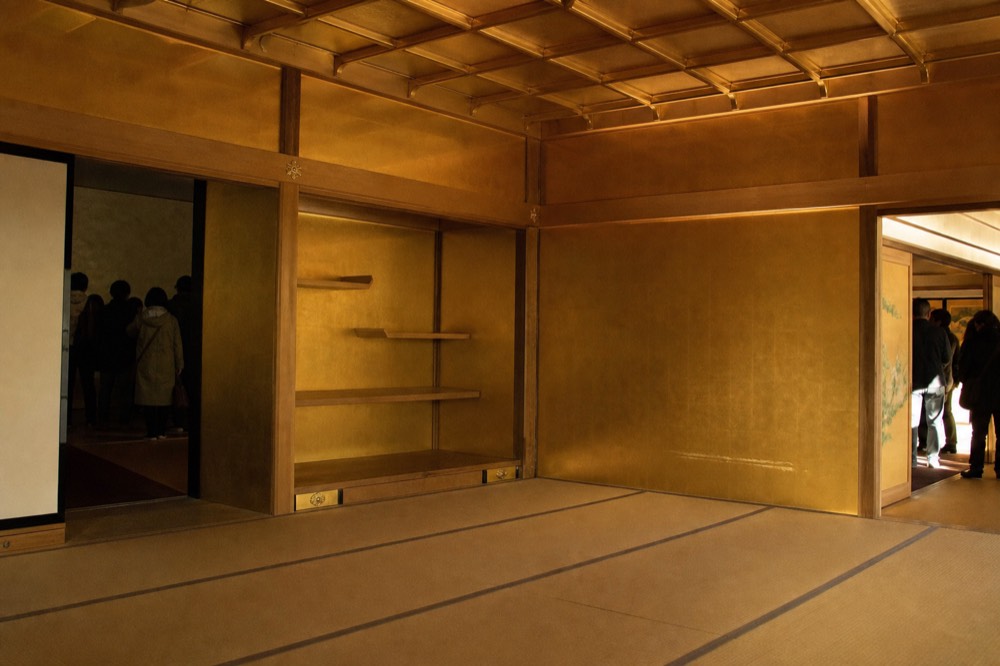
The golden tea room is on the third floor of the museum. It is a full-scale reproduction of the one Hideyoshi built, and every surface, walls, pillars, ceiling, is covered in gold leaf. The tea room is a museum exhibit, not a functioning room, but it gives you a sense of what Hideyoshi's original must have looked like. The gold leaf is real, and the museum's own curatorial notes describe it as an attempt to recreate the overwhelming opulence that Hideyoshi used to project power. The full inside Osaka Castle experience, including the museum floors where the golden tea room sits, is covered by the entry ticket.
What Parts Of Osaka Castle Are Actually Gold?
The gold is on the roof ornaments and the golden tea room. The two shachihoko on the ridge ends are gilded in real gold leaf, and so are the tiger-and-dragon reliefs on the fifth tier. Inside, the golden tea room on the third floor is a reproduction with real gold leaf on every surface. There is no gold on the walls, the window frames, the corridors or the observation deck.
The shachihoko are the most photographed gold elements. They are reproductions of the Tokugawa-era originals, which were destroyed in the 1945 air raids. The current shachihoko were installed during the 1997 Heisei Great Repair, and the gold leaf was applied by craftsmen using the same hammering and pressing methods that have been used for centuries. The tiger reliefs are also reproductions, and they are gilded in the same way.
The golden tea room is on the museum's third floor, inside the photography-restricted area. It is a reproduction of Hideyoshi's famous golden tea room, which he built to demonstrate his wealth and power. The room is small, about three tatami mats, and every surface is covered in gold leaf. The tea utensils on display are also gilded. The museum describes it as one of the most valuable exhibits, and it is often the answer to visitors who ask "where is the gold inside the castle?"
The roof ornaments are visible from the observation deck on the eighth floor, but you cannot walk up to them. The shachihoko and the tiger reliefs are on the fifth tier, which is not accessible. The observation deck is about 50 metres above ground, and from there you can look across at the gold on the roof. The golden tea room is on the third floor, which is a photography-restricted zone, so you can look but not photograph.
| Gold feature | Location | Real gold? | Accessible? |
|---|---|---|---|
| Shachihoko (two) | Roof ridge ends | Yes, gold leaf | Visible from observation deck and park |
| Tiger reliefs | Fifth tier, roof | Yes, gold leaf | Visible from observation deck |
| Golden tea room | Museum, third floor | Yes, gold leaf | Yes, but no photography |
| Gold-foil roof tiles (original) | Excavation finds | Yes, real gold | On display in Stone Wall Museum or Osaka Museum of History |
The excavation finds from the Toyotomi-period castle, announced in March 2025 and exhibited at the Osaka Museum of History in early 2026, included gold-foil roof tiles. According to the museum's exhibition report, these tiles were found in the Toyotomi-period building remains at the Ryuzoji-cho site, alongside Chinese and Korean ceramics. They are the first direct physical evidence that Hideyoshi's original castle was gilded, and they confirm that the gold on the current tower is a faithful recreation of the original.
Why Is Gold Associated With Osaka Castle?
Gold was Toyotomi Hideyoshi's signature material. He used it to project power, wealth and his claim to authority. The golden tea room, the gold-foil roof tiles and the gilded roof ornaments were all part of his strategy to overwhelm visitors with the scale of his wealth. The current castle's gold is a reproduction of that original display.
Hideyoshi rose from a peasant background to become the unifier of Japan, and he used gold to legitimise his rule. The golden tea room was one of his most famous creations. He had it built to showcase his wealth, and it was portable, he could take it with him to Kyoto or to his other castles. The room was entirely covered in gold leaf, and the tea utensils were made of gold as well. It was a statement: this man who was once a sandal-bearer could now drink tea in a room made of gold.
The gold on the castle roof served a similar purpose. It was visible from the city and from the approach roads, and it told everyone who saw it that the man inside was powerful beyond measure. The shachihoko, in particular, were chosen because they were believed to protect buildings from fire, and gilding them made them even more prominent. The tiger reliefs are a symbol of strength and authority, and the gold leaf made them shine.
The current castle, rebuilt in 1931, was a deliberate attempt to recreate the appearance of the Tokugawa-era castle, which in turn was based on Hideyoshi's original. The gold was part of that recreation. The 1997 restoration renewed the gold leaf, and the museum's golden tea room was added to give visitors a sense of what Hideyoshi's original looked like. The gold is not a modern addition; it is a historically accurate reproduction of the original.
The museum's own exhibition on the seventh floor, about the life of Toyotomi Hideyoshi, includes replicas of the golden tea utensils and a display about the gold-foil roof tiles. The museum's own curatorial column notes that the gold was not just for show, and you can book entry through Osaka Castle Tickets; it was also a practical choice, because gold leaf is durable and weather-resistant, and it can last for decades if properly maintained.
The association between gold and Osaka Castle is so strong that it appears in popular culture. The 2025 video game Assassin's Creed Shadows, which features Osaka Castle as a location, depicts the castle with gold-leaf adornment on the roof and the interior, reflecting the historical record. The game's rendering of the Toyotomi-era castle, still under construction, shows the five-floor keep with gold leaf on the ridge ends and the tiger reliefs, and the underground levels are described as having gold-foil decorations. This is a faithful recreation of the historical gold, and it has introduced a new generation of visitors to the castle's golden appearance.
How Much Gold Was Used On The Castle?
There is no official figure for the total amount of gold leaf on the tower. The shachihoko are about 2.5 metres tall each, and the tiger reliefs are similar in scale, but the castle's own pages do not state a weight or surface area. The gold leaf is applied in the traditional manner, using sheets of hammered gold a few microns thick.
The gold leaf is extremely thin, which means a small amount of gold goes a long way. The shachihoko and the tiger reliefs are coated in multiple layers, and the total area of gold leaf is estimated to be a few square metres. The castle's maintenance records do not publish a figure, and the museum's curators have not stated a weight. The gold leaf is applied by hand, and the cost of the gold is a small fraction of the overall restoration budget.
The original Toyotomi-era castle may have used more gold. The 2025 excavation found gold-foil roof tiles, which suggests that the roof of the original main tower was partially gilded. The tiles were found in the Toyotomi-period building remains, and the gold foil was still attached to the ceramic tile fragments. The museum's exhibition report notes that the gold was applied to the tiles in the same way as the current roof ornaments, using a thin layer of gold leaf pressed onto the surface. The golden tea room, which was a portable structure, would have used a significant amount of gold leaf, but Hideyoshi's own records do not survive.
The current tower's gold is maintained by the castle's own conservation team. The gold leaf is inspected regularly, and damaged sections are replaced. The gold is real, but it is not a solid gold object; it is a thin coating that wears away over time. The 1997 restoration was a major overhaul, and the gold was replaced entirely. The shachihoko and the tiger reliefs were removed, re-gilded and reinstalled, and the new gold leaf was applied by craftsmen who had trained in the traditional techniques.
Is The Gold In The Castle Real Or Imitation?
The gold on the roof and in the golden tea room is real gold leaf. It is not paint, it is not anodised aluminium, and it is not a modern synthetic substitute. The gold leaf is applied by hand, using the same traditional techniques that have been used in Japan for centuries.
The confusion often comes from the fact that the castle is a concrete reconstruction. Because the tower is not a wooden structure, some visitors assume the gold is fake. The gold is real, but the building it is attached to is a modern reproduction. The shachihoko and the tiger reliefs are made of metal, not wood, and the gold leaf is applied directly to the metal surface. The technique is called kinpaku, and it involves hammering gold into sheets so thin that they are almost transparent, then pressing them onto a prepared surface with a special adhesive.
The golden tea room is a reproduction, but the gold leaf is real. The room is a permanent exhibit, not a functioning tea room, and the gold leaf is applied to wooden panels. The museum's curatorial notes explain that the reproduction was built to the exact dimensions of Hideyoshi's original, using the same materials and techniques. The gold leaf is the same type used in the original, and the effect is identical.
The gold-foil roof tiles from the Toyotomi-period castle are the best evidence that the original gold was real. The gold on these tiles has survived for over 400 years, and it is still visibly gold. The tiles are on display at the Osaka Museum of History, and the gold leaf is intact. The museum's exhibition report notes that the gold was applied to the tiles in the same way as the current shachihoko, confirming that the traditional technique has not changed.
The castle's gold is not the only real gold in the city. The nearby Osaka Museum of History, which is a short walk from the castle, has a permanent exhibition about the Toyotomi period, and it includes more gold-foil tiles and golden artefacts. The castle's own museum, which is included in the entry ticket, has the golden tea room and the shachihoko replicas, and the Stone Wall Museum has the Toyotomi-era stone walls and the exhibition about the excavation.
Can You See The Gold Today?
Yes, the gold is visible from the park, from the observation deck and inside the museum. The shachihoko and the tiger reliefs are on the roof, catching the sun from mid-morning to late afternoon. The golden tea room is on the third floor, open to all visitors with a valid entry ticket. The gold-foil roof tiles are on display at the Osaka Museum of History nearby.
The best time to see the gold on the roof is on a clear day, when the sun is high. The shachihoko are on the ridge ends, and they are visible from the park, from the Nishinomaru Garden, and from the approach roads. The tiger reliefs are on the fifth tier, and they are harder to see from the ground, but the observation deck on the eighth floor gives you a close-up view. The observation deck is about 50 metres above ground, and it is open from 9:00 to 18:00, with the last admission at 17:30.
from $7.69 The from-price you see online and the price at the castle window are the same adult admission, so booking ahead costs nothing extra.
Your ticket into the tower
Official E-Ticket
- Osaka Castle Main Tower entry
- Osaka Castle Toyotomi Stone Wall Museum
- QR code entry
- Valid 30 days
- No fixed time slot
- No viewing time limit
Buying the official e-ticket ahead saves you the ticket-purchase line, not money, since the online price matches the window. You exchange nothing at the gate, you simply show the voucher and go in.
The real flexibility here is the voucher's 30-day validity, with no fixed time slot and no set viewing time limit.
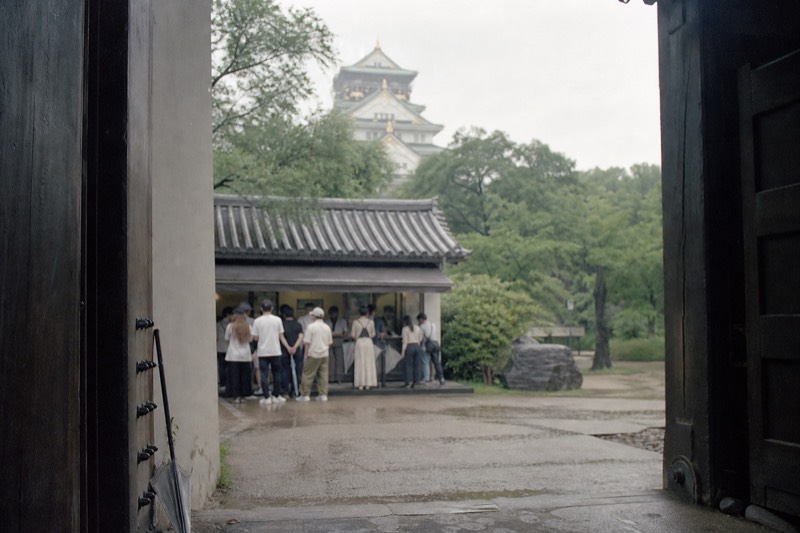
At The Gate
Adult, per person Group rate from 15 paying visitors Free categories at the window
¥1,200
The window price is identical to the online price, so nothing is lost by paying in person. Students and under-15s should buy here, because proof-of-age discounts are handled face to face and not through an e-ticket.
Students with ID and visitors aged under 15, since discounted and free rates are only applied at the window.
See what it covers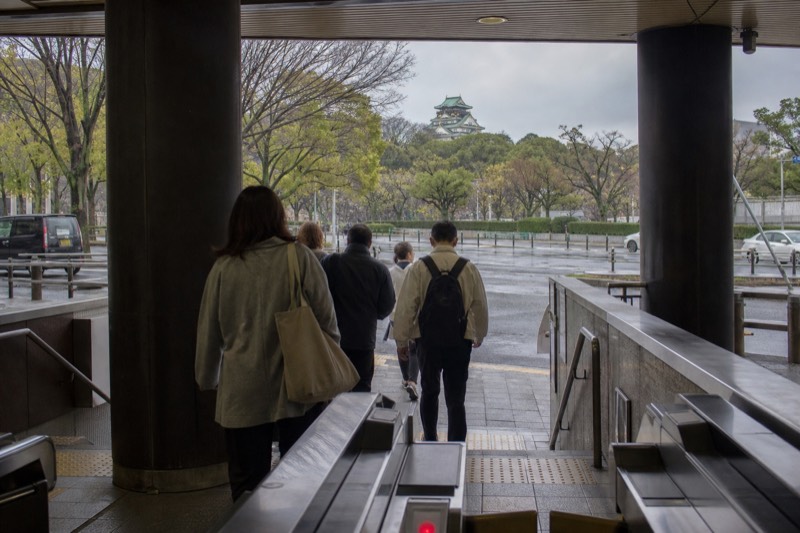
Osaka Amazing Pass
One-day pass On sale 25 March 2026 to 31 March 2027
¥3,500
The one-day pass costs 3,500 yen against the 1,200 yen castle ticket on its own, so it only pays off with two or more other paid sights. Add transport and the maths tips further in its favor.
Visitors packing several paid sights plus metro and bus rides into one day, who will clear the pass price easily.
See what it covers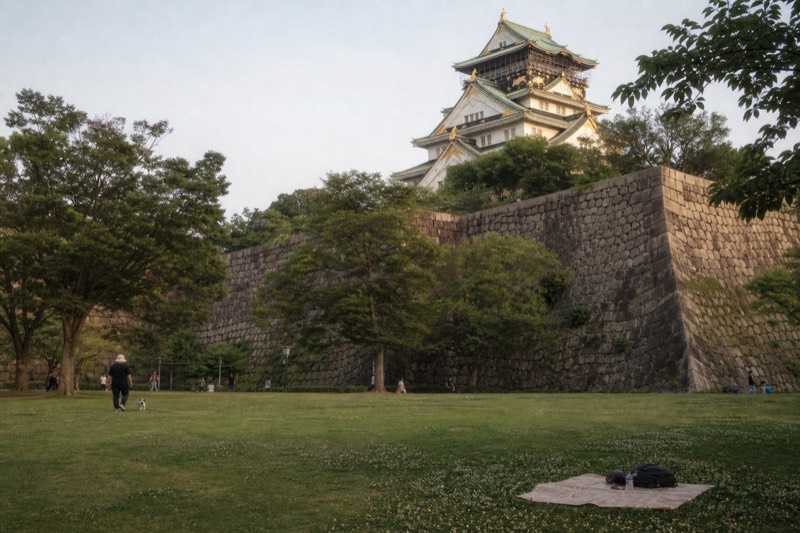
Free Park Areas
No admission charge
Free
The park grounds, moats, stone ramparts and exterior views of the tower cost nothing at all, and they fill a half day on their own. The paid line falls only at the Main Tower entrance and the Toyotomi Stone Wall Museum.
Anyone who wants the castle views, moats and grounds without paying to go inside the buildings.
See what it coversThe golden tea room is inside the museum, on the third floor. It is a permanent exhibit, and it is included in the entry ticket. The third floor is a photography-restricted zone, so you cannot take photos, but you can look as long as you like. The tea room is a full-scale reproduction, and it is one of the most detailed exhibits in the museum. The gold leaf on the walls and ceiling is real, and the tea utensils on display are gilded.
The entry ticket to the Main Tower also includes the Osaka Castle Toyotomi Stone Wall Museum, which opened on 1 April 2025. The museum is underground, and it displays the original Toyotomi-period stone walls that were buried by the Tokugawa shogunate. The excavation that found the gold-foil roof tiles was carried out at the Ryuzoji-cho site, near the castle, and the tiles are now on display at the Osaka Museum of History. The museum is a short walk from the castle, and it is open from 9:30 to 17:00, closed on Tuesdays. The admission is 600 yen for adults, and the museum's permanent exhibition includes the gold-foil tiles and other Toyotomi artefacts.
What Is The History Of The Gold On Osaka Castle?
The gold on the castle dates back to Toyotomi Hideyoshi, who built the original castle starting in 1583. He used gold leaf on the roof tiles, the shachihoko and the interior to project power. The Tokugawa shogunate rebuilt the castle after 1620 and retained the gold. The current tower, rebuilt in 1931, recreated that appearance, and the 1997 restoration renewed the gold leaf.
Hideyoshi's original castle was built between 1583 and 1598, and it was four to five times the size of the current castle. The tower was a wooden structure, and it was covered in gold leaf. The shachihoko were gilded, and the roof tiles were decorated with gold foil. The golden tea room was a portable structure that Hideyoshi took with him on his travels. The tea room was entirely covered in gold leaf, and it was used to impress visitors and rivals.
The original castle was destroyed in the Summer War of Osaka in 1615, and the Tokugawa shogunate rebuilt it in the 1620s. The Tokugawa tower was larger and taller than Hideyoshi's, and it was also gilded. The shachihoko and the tiger reliefs were retained, and the roof was decorated with gold leaf. The Tokugawa tower burned down in 1665 after a lightning strike, and the gold was lost. The castle was not rebuilt again until 1931, when the current tower was constructed as a museum and a symbol of Osaka's recovery.
The 1931 tower was a ferro-concrete reconstruction, but the gold was applied in the traditional way. The shachihoko and the tiger reliefs were gilded with real gold leaf, and the tower was designed to look like the Tokugawa-era castle. The 1997 Heisei Great Repair renewed the gold leaf, and the golden tea room was added as a permanent exhibit. The tea room is a reproduction of Hideyoshi's original, and it is one of the most popular exhibits in the museum. The full history of Osaka Castle explains how the gold survived through the Toyotomi, Tokugawa and modern eras.
The 2025 excavation of the Toyotomi-period castle remains found gold-foil roof tiles, which confirmed that the original castle was gilded. The tiles were found at the Ryuzoji-cho site, and they are the first direct physical evidence of the gold on Hideyoshi's castle. The tiles are on display at the Osaka Museum of History, and they are a powerful reminder that the gold on the current castle is a faithful recreation of the original.
The guided walking tour of the castle grounds is a good way to learn about the gold and the history of the castle. The tour is led by English-speaking guides, and it covers the stone walls, the moats and the history of the Toyotomi and Tokugawa periods. The tour does not include the tower admission, but it gives you a thorough understanding of the castle's layout and the significance of the gold.
What Is The Gold On The Roof Called?
The gold ornaments on the roof are called shachihoko and tiger reliefs. The shachihoko are mythical fish-dolphin hybrids, gilded in real gold leaf. The tiger reliefs are large metal panels on the fifth tier, showing a tiger and a dragon, and they are also gilded. The shachihoko are the most famous gold elements, visible from the park and the city.
The shachihoko are a traditional Japanese roof ornament, believed to protect the building from fire. They are usually made of ceramic or metal, and they are often gilded. The shachihoko on Osaka Castle are reproductions of the Tokugawa-era originals, and they are about 2.5 metres tall. The tiger reliefs are less common, and they are a symbol of the castle's power and authority. The tiger and the dragon are traditional Chinese symbols, and they were adopted by the Japanese feudal lords.
The shachihoko are sometimes called "golden dolphins" or "golden fish" in English, but the correct name is shachihoko. The museum's own description uses the term "shachihoko", and the English leaflet translates it as "mythical fish-shaped roof ornaments". The tiger reliefs are described as "tiger-and-dragon reliefs", and they are on the fifth tier of the tower.
The gold leaf on the shachihoko and the tiger reliefs is renewed every few decades. The 1997 restoration was a major overhaul, and the gold was replaced entirely. The current gold is in good condition, and it is maintained by the castle's conservation team. The gold is real, and it is one of the most distinctive features of the castle.
How Does The Gold Compare To Other Japanese Castles?
Osaka Castle is the most gold-heavy of the major Japanese castles. Himeji Castle has no gold on its roof, and Nagoya Castle has golden shachihoko but they are smaller and less prominent. Osaka Castle is the only one with a golden tea room inside the museum. The gold is a deliberate part of the castle's design and makes it unique.
Himeji Castle, which is a UNESCO World Heritage site, is a wooden structure with no gold on the roof. Its shachihoko are ceramic, not gilded, and the roof is covered in grey tiles. The castle is famous for its white plaster walls and its elegant silhouette, but it has no gold. Nagoya Castle, which was rebuilt in 1959, has two golden shachihoko on the roof, but they are smaller than Osaka's and they are the only gold elements. The castle's interior is a museum, but it does not have a golden tea room.
Osaka Castle's gold is the most extensive, and it is the most visible. The shachihoko and the tiger reliefs are large, and they are on the roof, where they catch the sun. The golden tea room is a unique exhibit, and it is a direct link to Hideyoshi's original castle. The gold is a key part of the castle's identity, and it is one of the reasons why Osaka Castle is the most popular castle among foreign visitors to Japan, according to a 2025 Navitime analysis of navigation data reported by Kyodo News.
The gold on Osaka Castle is also a reminder of the castle's history. Hideyoshi used gold to project his power, and the current castle's gold is a recreation of that original display. The gold is not just a decoration; it is a statement about the castle's importance. The fact that the gold is real, and that it is applied in the traditional way, makes it all the more impressive. The inside of Osaka Castle reveals how the gold fits into the larger museum experience, from the shachihoko replicas on the second floor to the golden tea room on the third.
Common Questions About Osaka Castle's Gold
Is Osaka Castle Made Of Real Gold?
The gold you see on the roof is real gold leaf, applied to the shachihoko and the tiger reliefs. The golden tea room inside the museum is a reproduction, but it uses real gold leaf. The castle is not a solid gold building, but the gold that is there is genuine.
Can You Go Inside The Golden Tea Room?
No, the golden tea room is a museum exhibit, and it is not a functioning tea room. You can look at it from the doorway, but you cannot enter. The room is on the third floor of the museum, and it is a photography-restricted zone.
How Old Is The Gold On The Roof?
The current gold leaf was applied during the 1997 Heisei Great Repair. The shachihoko and the tiger reliefs are reproductions of the Tokugawa-era originals, which were destroyed in 1945. The gold leaf is real, and it is renewed every few decades.
Is The Gold On The Roof Visible From The Ground?
Yes, the shachihoko are visible from the park and from the approach roads. The tiger reliefs are harder to see from the ground, but the observation deck on the eighth floor gives you a close-up view. The gold is best seen on a clear day, when the sun is high.
Did The Original Castle Have Real Gold?
Yes, the original Toyotomi-era castle was gilded. A 2025 excavation found gold-foil roof tiles from the original castle, confirming that the gold was real. The current castle's gold is a recreation of that original display.
Is The Gold On The Castle Protected?
The gold leaf is maintained by the castle's conservation team, and it is inspected regularly. The gold is real, and it is replaced when it wears away. The shachihoko and the tiger reliefs are removed and re-gilded during major restorations.