Is Osaka Castle In Shogun Real?
The FX series Shogun did not film at Osaka Castle. Here is what the show built on set in Canada, what the real castle is, and what a visitor can actually stand in today.
Is Osaka Castle In Shogun Real?
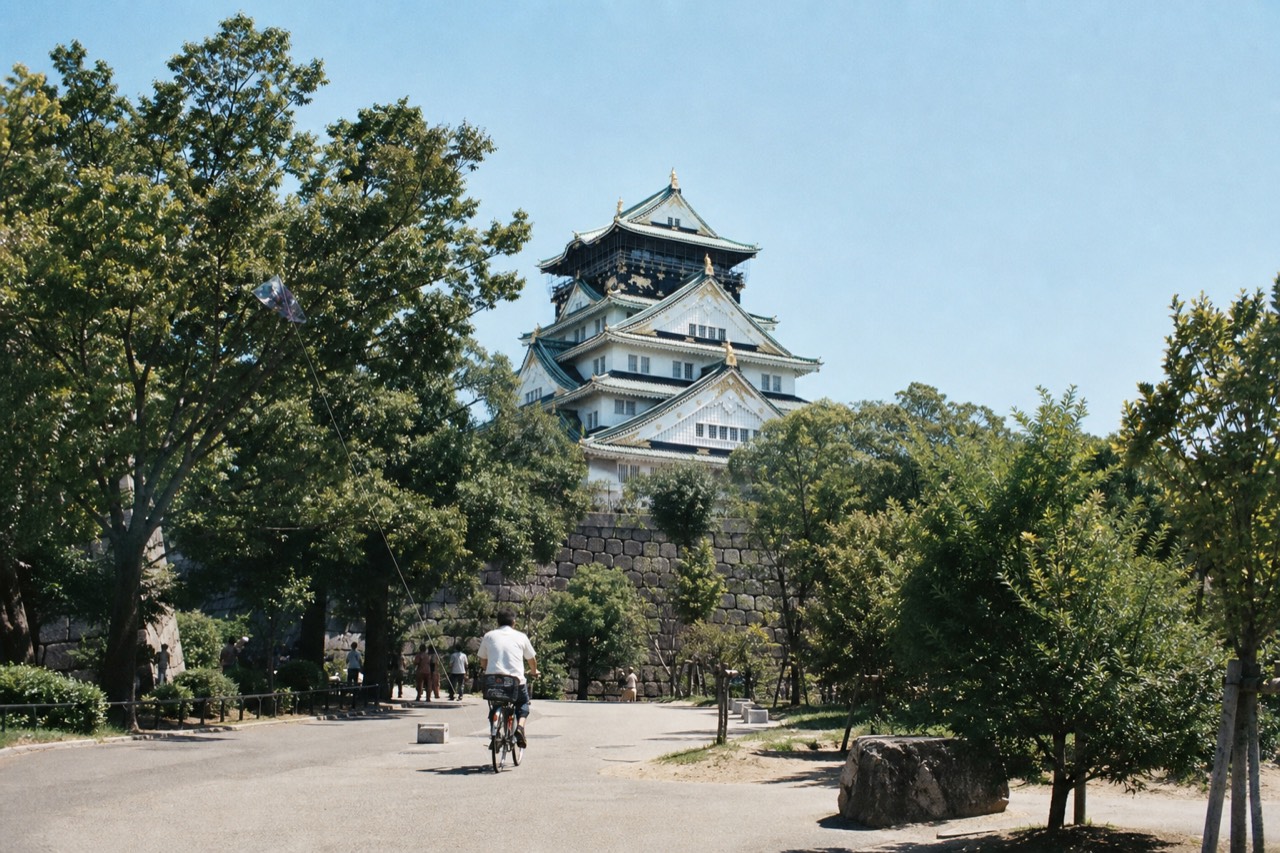
No, not the one on screen. FX's Shogun season 1 did not film at the real Osaka Castle; production built the castle's entrance as a set in Port Moody, British Columbia. The actual castle in Osaka is real and visitable, but the tower you photograph today is a 1931 ferro-concrete reconstruction, and everything above ground is the Tokugawa-era rebuild, not the Toyotomi castle the show's story centres on.
So the honest answer splits into three parts, and each part is more interesting than a simple yes or no. The show is real, the castle is real, but they never met. Shogun's first season was filmed in and around Vancouver, with the Flavelle sawmill site in Port Moody standing in for feudal Osaka Harbour and, according to production reporting, the entrance to Osaka Castle. Nobody on the crew set foot in Osaka to shoot it.
The castle the characters talk about in the show is the Toyotomi castle, the vast fortress Toyotomi Hideyoshi began building in 1583 on the site of Ishiyama Honganji. That castle is real history. It was 4 to 5 times the scale of the present castle, with a gold-gleaming tenshu at the centre of the honmaru, and it was destroyed in the Summer War of Osaka in 1615. When the Tokugawa shogunate rebuilt the site from 1620, it buried Hideyoshi's castle under a mass of fill, as if to erase the authority of the Toyotomi family. Nothing of that castle can be seen above ground anywhere today.
What a visitor can actually stand in is the third tower: a five-tier, eight-floor ferro-concrete reconstruction completed in 1931 on the proposal of the then mayor, funded by public subscription from the citizens of Osaka, standing on the stone base of the Tokugawa-era keep. It has been a museum since the moment it was rebuilt. If you came here because of the show, that is the thing to buy a ticket for, and the honest pitch is that the interior is a modern museum, not a feudal hall. Before you plan anything around a visit, the practical basics live at Osaka Castle Tickets, and the honest framing there is the same as here.
| What you are looking at | What it actually is | Can a visitor see it? |
|---|---|---|
| The castle entrance in Shogun | A purpose-built set at the former Flavelle sawmill site in Port Moody, British Columbia | No, it is a private production site |
| The Toyotomi castle in the story | Begun in 1583, 4 to 5 times the present scale, burned in 1615 | Above ground, no; its buried wall, yes |
| The tower in Osaka today | A 1931 ferro-concrete reconstruction, a museum since it opened | Yes, with a ticket |
| The moats, gates and turrets | Tokugawa-era rebuild begun in 1620, 13 structures designated Important Cultural Property in 1953 | Yes, freely walkable |
| The buried Toyotomi stone wall | The tsumenomaru wall, discovered about 1 m below the surface in 1984 | Yes, in the Toyotomi Stone Wall Museum |
What Did Shogun Actually Build In Canada?
Production built the Osaka Castle entrance, and the harbour it fronts, as sets at the former Flavelle sawmill site in Port Moody, near Vancouver. Season 2 began principal photography in Vancouver in January 2026 with a planned wrap around early September 2026, and an expected premiere in 2027. Trade reports say the updated Port Moody sets return for the new season.
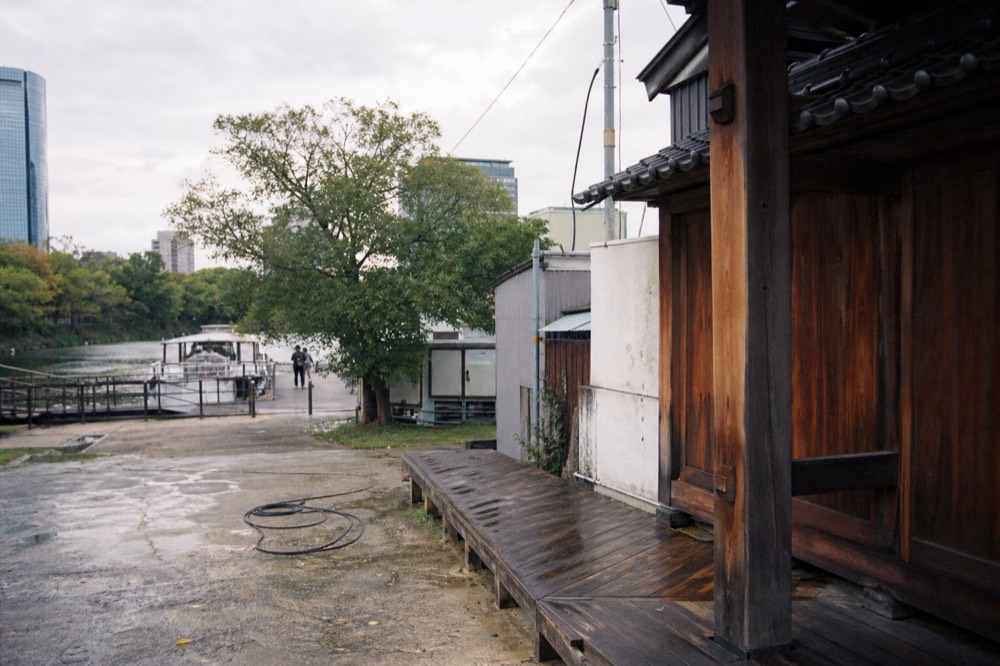
The reporting on this is specific, which is what makes the answer better than a hedge. Screen Rant's coverage of season 2 filming describes the Port Moody site standing in for the Osaka Castle entrance, and Hollywood North Buzz reported a season 2 wrap party at the same "Big Port Moody set" in August 2026, complete with live music and fireworks. For a show lauded for its production design, the choice to build rather than film in Japan was deliberate: an Osaka of the era the show depicts could not be shot on location even if the crew had wanted to. The real city is 400 years and several rebuilds away from what the story needs.
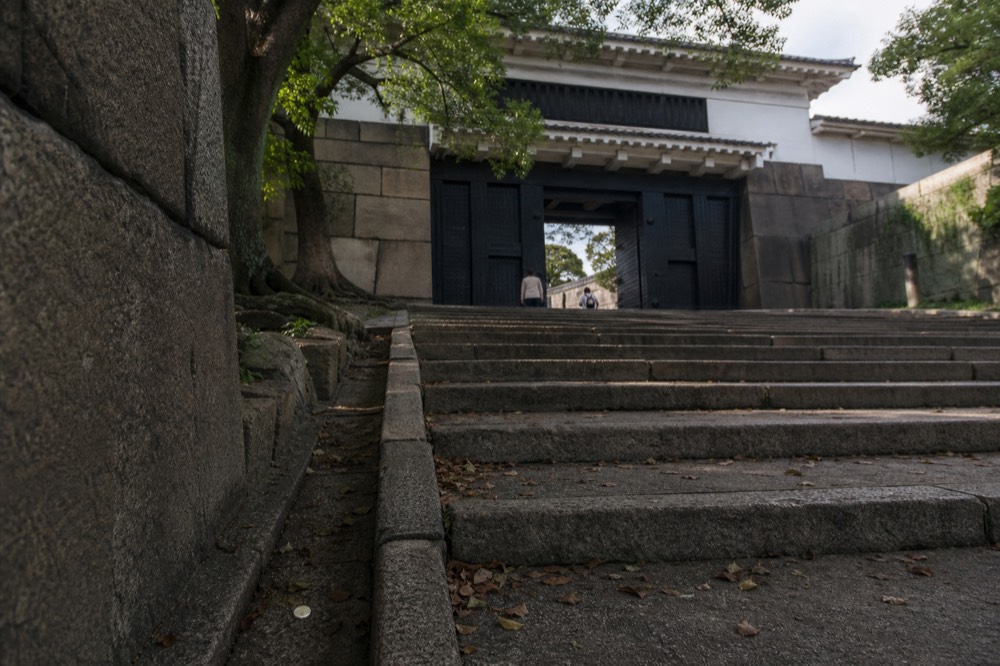
That is worth sitting with. The castle in the show is a meticulously researched set representing a castle that burned in 1615. The real castle in Osaka is a museum building from 1931 standing on 17th-century foundations. A fan standing at the Otemon gate today is looking at stonework laid under the Tokugawa shogunate, some of it designated Important Cultural Property since 1953, but the gleaming white tower above it is twentieth century through and through. Both things are real; neither is the show's castle.
Visitors who know this going in enjoy the real site more, not less, because the payoff shifts. The thrill is not "I am standing where Toranaga stood." It is "the wall Hideyoshi built is right under my feet, underground, and I can walk down to it." That is a claim no film set can make, and it is the one the Toyotomi Stone Wall Museum exists to deliver.
What Is Actually Real When You Visit Osaka Castle?
The moats, the gates, the turrets and the stone walls are genuine Tokugawa-era construction, much of it designated National Important Cultural Property since 1953. The tower is a 1931 reconstruction, and beneath the honmaru lies the buried Toyotomi wall, about 6 metres of fill deep, viewable in the Toyotomi Stone Wall Museum with the same ticket.
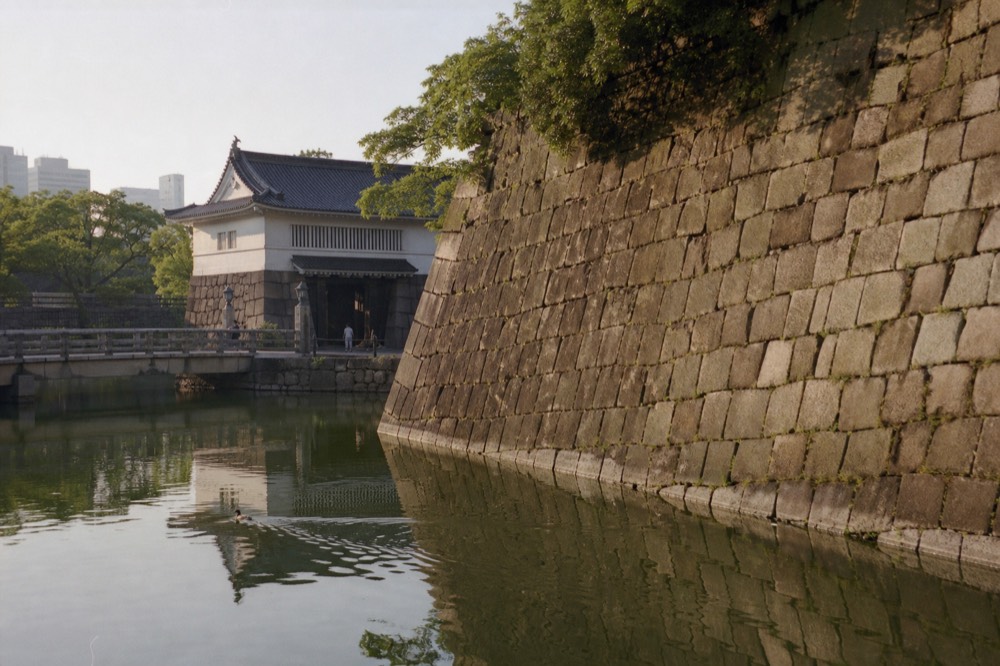
Start with what survived. The park lists 13 Important Cultural Property structures, including the Otemon gate, the Tamon-yagura, Sengan-yagura and Inui-yagura turrets, the Ensho-gura powder magazine and the Sakuramon. The two turrets inside Nishinomaru Garden, Sengan-yagura and Inui-yagura, both built in 1620, are together the oldest surviving buildings at Osaka Castle. If you want to touch something that existed in the era Shogun dramatises, these are it, and the walls that carry them are the same masonry the shogunate raised to bury and supersede Hideyoshi's fortress.
The tower itself has an honest, checkable lineage. The original Toyotomi tenshu burned in 1615. The Tokugawa replacement, about 58 metres tall per the castle museum's own curatorial research, burned in a lightning strike in 1665 and was never rebuilt. The rest of the surviving buildings largely burned in the turmoil of the Meiji Restoration and the Pacific War. The current tower went up in 1931, was restored again in 1997, and in 2025 was designated an Osaka City Tangible Cultural Property. So when people ask whether Osaka Castle is a replica, the answer has layers, and we lay them out in is Osaka Castle a replica.
The deepest layer is the best one. In 1984, the tsumenomaru stone wall of Toyotomi's Osaka Castle was discovered about a metre below the current surface, and in 2025 the Osaka Castle Toyotomi Stone Wall Museum opened to put the public in front of it. The museum's own English leaflet records that the Tokugawa government piled about six metres of earth at the nakanodan tier, completely burying the Toyotomi-period stone walls. That wall, the one that actually protected the quarters where Hideyoshi and his family lived, is the closest any visitor gets to the castle the show is about.
from $7.69 The from-price you see online and the price at the castle window are the same adult admission, so booking ahead costs nothing extra.
Your ticket into the tower
Official E-Ticket
- Osaka Castle Main Tower entry
- Osaka Castle Toyotomi Stone Wall Museum
- QR code entry
- Valid 30 days
- No fixed time slot
- No viewing time limit
Buying the official e-ticket ahead saves you the ticket-purchase line, not money, since the online price matches the window. You exchange nothing at the gate, you simply show the voucher and go in.
The real flexibility here is the voucher's 30-day validity, with no fixed time slot and no set viewing time limit.
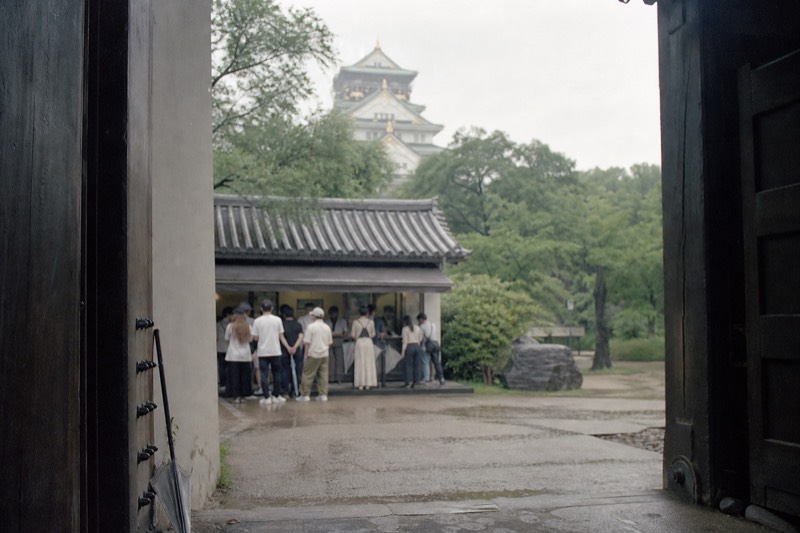
At The Gate
Adult, per person Group rate from 15 paying visitors Free categories at the window
¥1,200
The window price is identical to the online price, so nothing is lost by paying in person. Students and under-15s should buy here, because proof-of-age discounts are handled face to face and not through an e-ticket.
Students with ID and visitors aged under 15, since discounted and free rates are only applied at the window.
See what it covers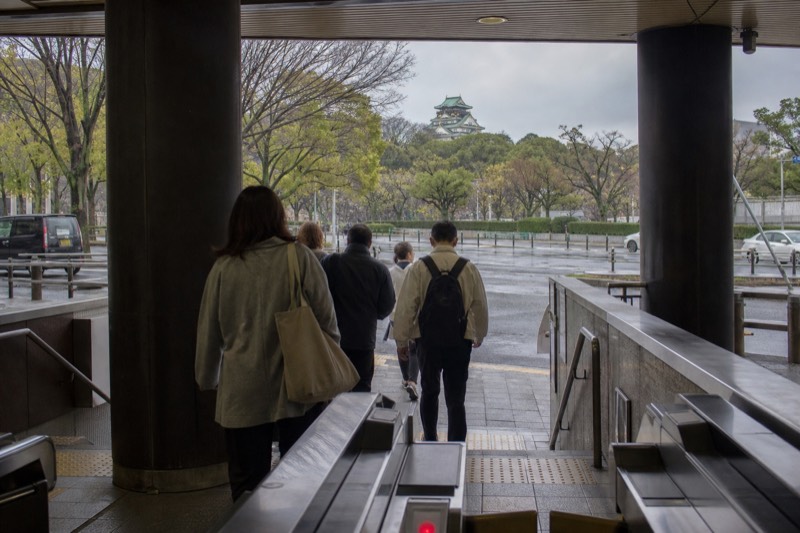
Osaka Amazing Pass
One-day pass On sale 25 March 2026 to 31 March 2027
¥3,500
The one-day pass costs 3,500 yen against the 1,200 yen castle ticket on its own, so it only pays off with two or more other paid sights. Add transport and the maths tips further in its favor.
Visitors packing several paid sights plus metro and bus rides into one day, who will clear the pass price easily.
See what it covers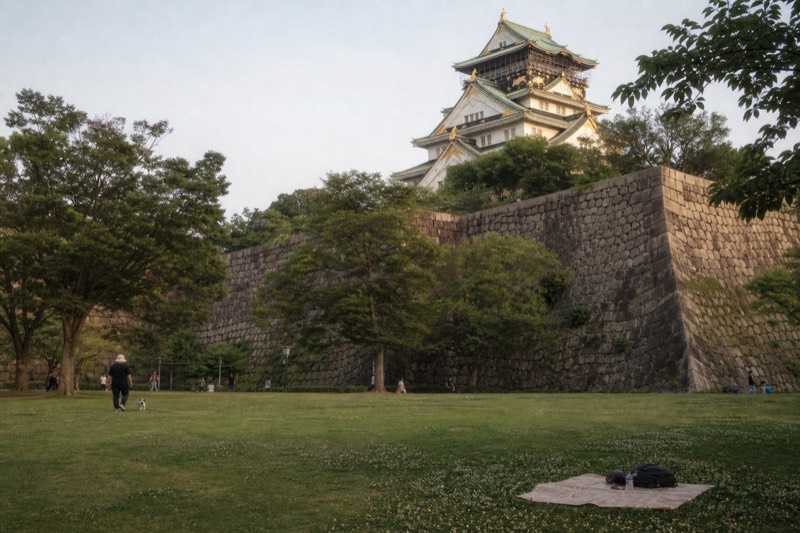
Free Park Areas
No admission charge
Free
The park grounds, moats, stone ramparts and exterior views of the tower cost nothing at all, and they fill a half day on their own. The paid line falls only at the Main Tower entrance and the Toyotomi Stone Wall Museum.
Anyone who wants the castle views, moats and grounds without paying to go inside the buildings.
See what it coversHow Does Assassin's Creed Shadows Show It?
The 2025 game depicts Osaka Castle as the Toyotomi-era fortress still under construction, a five-floor keep with underground levels and gold-leaf adornment, which is the opposite of what a visitor sees in Osaka today. Player guides describe exactly that in-game castle, making the game arguably a closer visual match to the show's setting than the real site is.
There is an irony here worth naming. Someone who finished Shogun and then played Assassin's Creed Shadows has already "visited" a more historically Hideyoshi-flavoured Osaka Castle than the one in Osaka. The game, released in March 2025, puts players inside a castle under construction, gold and half-finished, a fortress in the middle of becoming. Game guides for the Izumi Settsu region walk players through that keep, hunting samurai daisho and a legendary chest. It is a digital version of the castle that burned in 1615.
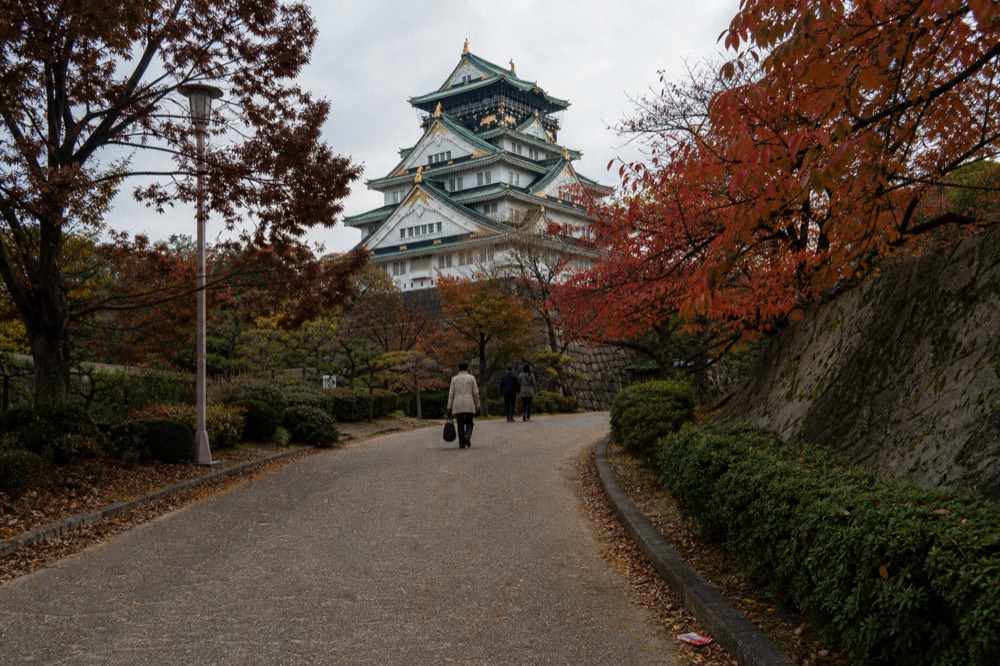
A visitor standing at the real castle is looking at the inverse: a completed Tokugawa silhouette in white plaster and green tiles, a museum since 1931, with the floors holding exhibits on Hideyoshi and the Sengoku period rather than anything from the tenshu's original interior. The floor guide runs from the 8F observation deck at about 50 metres above ground, down through the Hideyoshi exhibits on 7F and the Summer War of Osaka material on 5F, to the theater room on 1F. Photography is banned on floors 3F and 4F because Important Cultural Properties are displayed there, and free elsewhere.
That contrast, set versus reconstruction versus buried original, is the whole reason this question keeps getting asked. Pop culture keeps rebuilding Osaka Castle, in foam and timber in Canada, in polygons in a game engine, and in ferro-concrete in 1931 Osaka. The one nobody can rebuild is the original, which is precisely why the underground wall matters. Our inside Osaka Castle guide covers what is on each floor if you want the full run-down.
Can You Visit The Castle From The Show?
No set survives to visit, and the Toyotomi castle itself burned in 1615, but you can stand on its exact ground. The Osaka Castle Museum and Tower Entry Ticket includes the Main Tower and the Toyotomi Stone Wall Museum for ¥1,200 at the gate, from $7.69 as an e-ticket, with a QR voucher that is valid 30 days, has no fixed time slot, and no set viewing time limit once inside.
For practical purposes, the castle is easy. Hours are 9:00 to 18:00 with last admission at 17:30, and it closes only 28 December to 1 January. The castle's own guide page warns that the ticket-purchase queue can be capped before 17:30 depending on conditions, which is the honest argument for holding a QR voucher before you arrive. There are no coin lockers inside the tower; bags check at ¥100 per item. High school and university students pay ¥600 with proof, and junior high and under are free, so students should buy at the gate rather than online, since the e-ticket sold here covers only the adult ticket type. Students should simply buy at the gate, and that advice is not negotiable with the arithmetic.
The e-ticket is not a discount: at about 156 JPY to the dollar, the from $7.69 price is the same ¥1,200 the gate charges. What it buys is the skipped ticket-purchase line, nothing more. Audio guides are a castle facility, not part of either product: the tower lends them free in Japanese, English, Korean and Chinese, in limited quantity, with reception from 9:00 to 17:00 and returns by 17:30. Say it plainly: they are available at the castle, they do not come with a ticket.
If the show has you curious about the era rather than the building, a guided walking tour with a live English-speaking guide over the castle grounds runs 1.5 to 3 hours, private or small group. It is a different product, not an upgrade: its base price does not include tower admission, and the listing's own excludes line says so. A reader can take the walk and still need admission. The two answer different questions, one about the grounds and the story, one about getting inside the tower.
How Close Is The Show To The Real History?
Closer than most viewers expect on the politics, and unavoidably loose on the architecture. The show's power struggle around Osaka is real history, the Toyotomi and Tokugawa rivalry ended in the 1615 Summer War of Osaka, and the castle that fell then was Hideyoshi's, begun in 1583 and 4 to 5 times the scale of the present castle.
The skeleton of the story is documented. Hideyoshi took the site of Ishiyama Honganji and began building Osaka Castle in 1583 as his base for unifying Japan; it took about 15 years to finish. After his death in 1598, the Toyotomi house held out at Osaka until the Summer War of 1615 destroyed it and burned the whole castle. The Tokugawa shogunate then began its own rebuild in 1620, took 10 years, raised a tenshu 15 metres taller, and made the result completely different from Hideyoshi's castle, per the park's official history text. That is the castle whose gates you walk through today.
The drama compresses and invents in the usual ways, but the underlying contest for Osaka is why the castle exists in its present form at all. Everything a visitor sees is a monument to that outcome: the shogunate's walls, the buried loser underneath, and a 1931 citizen-funded tower that decided the site mattered enough to rebuild a third time. The Osaka Castle history guide carries the full timeline.
One last honest note on expectations. The verified record says the tower is a museum with a theater room, exhibit floors and a shop, and recent visitors say exactly that in their reviews: a modern museum inside, panoramic views from the top. People arriving expecting the show's candlelit corridors are the ones who write the disappointed posts. People arriving knowing they will get real 1620 stone, a wall buried since the rebuild, and a good view report the opposite.
Whether you come for the show or the games, the site itself rewards knowing what it is. A castle that has been destroyed, buried and rebuilt by citizens, and now floodlit from sunset until 00:30, is its own kind of story, and unlike the set in British Columbia, this one you can walk through. If a film-set gate sent you here, the walls that replaced the thing it depicts are the reason to stay.
One decision worth making early is whether your interest is the era or the interior. The guided walk spends its time on the grounds, the gates and the story, while the entry ticket is what actually puts you in the tower and the underground wall gallery. Plenty of visitors do both in a single morning, since they stack rather than substitute, and the walk's base price simply does not cover admission, a fact the listing states itself. Whichever you choose, arriving before the queue builds is the one lever every visitor controls.
Common Questions About Osaka Castle In Shogun
Is Osaka Castle In Shogun Real?
No. FX's Shogun season 1 built the Osaka Castle entrance as a set in Port Moody, British Columbia, near Vancouver. The real Osaka Castle in Japan was not used for filming. The castle in the story is the Toyotomi-era fortress begun in 1583, which burned in 1615; the tower standing in Osaka today is a 1931 ferro-concrete reconstruction over Tokugawa-era walls.
Did Shogun Film In Japan At All?
Season 1 was filmed in and around Vancouver, Canada, with sets at the former Flavelle sawmill site in Port Moody standing in for feudal Osaka Harbour and the Osaka Castle entrance. Season 2 began principal photography in Vancouver in January 2026, with trade reporting placing the wrap around early September 2026 and an expected premiere in 2027.
Can You Visit The Castle From The Show?
The set is a private production site, not an attraction, and the Toyotomi castle it depicts burned in 1615. What you can visit is Osaka Castle in Osaka: Tokugawa-era gates, walls and turrets designated Important Cultural Property, the 1931 reconstruction that serves as a museum, and the Toyotomi Stone Wall Museum, an underground gallery on the buried wall, included in the same ¥1,200 tower ticket.
Is The Osaka Castle In Assassin's Creed Shadows The Real One?
The game depicts Osaka Castle as the Toyotomi-era fortress still under construction, with a five-floor keep, underground levels and gold-leaf adornment, per player guides published around its March 2025 release. That is a digital reconstruction of the castle as it stood before 1615, which is the opposite of what a visitor sees today: the white Tokugawa-style 1931 reconstruction and the buried original wall beneath it.
Is The Real Osaka Castle A Genuine Historic Building?
Partly. The moats, gates, turrets, storehouses and stone walls are genuine Tokugawa-era construction from the 1620s rebuild, with 13 structures designated National Important Cultural Property in 1953. The tower above them is a 1931 reconstruction, funded by public subscription and built as a museum, which became an Osaka City Designated Tangible Cultural Property in 2025.
Where Can You See Something From Hideyoshi's Castle?
In the Osaka Castle Toyotomi Stone Wall Museum, opened 1 April 2025 inside the honmaru. It walks visitors down to the tsumenomaru stone wall discovered about a metre below the current surface in 1984, buried under about 6 metres of Tokugawa fill. The ¥1,200 tower ticket includes it, with no separate admission, and it keeps the tower's hours and closure dates.